Get Full Government Meeting Transcripts, Videos, & Alerts Forever!
Get email alerts on the Zoning Moratorium topic
No spam. Unsubscribe anytime.
Sponsor pulls proposed moratorium and density change after Hamilton County residents, builders debate roads and sewer capacity
Summary
Two proposals that would have limited development in unincorporated Hamilton County were pulled from consideration Friday after a public and commissioner-led debate about roads, sewer capacity and how density is calculated.
Two proposals that would have limited development in unincorporated Hamilton County were pulled from consideration Friday after a public and commissioner-led debate about roads, sewer capacity and how density is calculated.
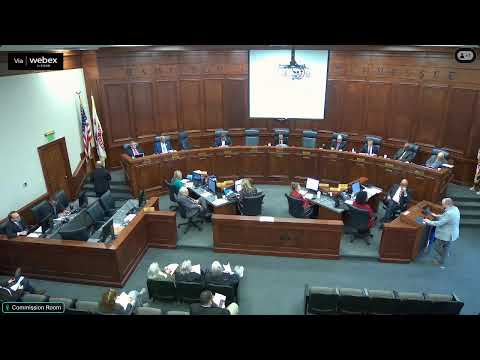
Commissioner Highlander, sponsor of the measures, told the Hamilton County Commission that he would "go ahead and pull these 2" resolutions and said he will seek compromise with Planning staff after hearing public input. The resolutions read into the record were Resolution 3 25-4, which would have required building permits in unincorporated county to be granted based on a site's buildable area rather than its total acreage, and Resolution 3 25-5, which would have imposed a moratorium on zoning changes in Area 9 (County Commission Districts 9 and 10) until Plan Hamilton is adopted.
The debate drew more than a half-dozen residents and industry representatives who argued sharply over the proposals' likely effects. Kim Helton, a resident of 8618 Snow Hill Road who said she was speaking for many neighbors, urged a moratorium or at least a time-limited pause so the county could finish its new Plan Hamilton, saying there are "close to 4,000 already approved still to come in our area, in District 9 And 10." By contrast, Julian Bell, speaking for home builders and realtors, said the building industry opposed both measures as an unnecessary "blunt force instrument" and urged case-by-case review of rezoning requests.
Public commenters focused on three recurring concerns: evacuation and road safety in areas near the Sequoyah (Sequoia) nuclear power plant evacuation zone and narrow two-lane roads around Snow Hill and Mountain View roads; limits on wastewater/sewer capacity in several service areas; and confusion about how the county calculates residential density (gross acreage versus buildable/net acreage).
Several residents described narrow roads, limited shoulders and higher-than-average crash rates on local two-lane roads, saying that evacuation planning and traffic safety should be addressed before approving additional residential rezonings. "We feel a large sense of frustration that our current plan that is old ... is not followed even though the roads may remain the same," Kim Helton said.
Speakers also raised wastewater capacity. Tommy Farmer and others warned against widespread use of decentralized septic or advanced on-site treatment systems without long-term data or clear county oversight. Farmer said county and regional wastewater issues have already driven large expenditures and argued that ad hoc on-site systems could shift long-term costs to taxpayers; he noted the county had allocated more than $53,000,000 in recent years toward wastewater work. Commissioner Shipley and other commissioners asked county wastewater leaders to brief the commission on decentralized systems.
Representatives of the Regional Planning Agency, which staffs the county planning commission, presented a technical briefing on how density is measured in county zoning. Scott Schultz of Bridal Schultz RPA said that the zoning code defines density as the number of dwelling units divided by total acreage and that, in practice, planned-unit developments (PUDs) often produce net densities lower than the theoretical maximum once minimum lot sizes, setbacks and unbuildable areas are accounted for. Schultz emphasized his presentation was explanatory and not a recommendation.
Commissioners traded sharply worded viewpoints. Commissioner Brown said he opposed a moratorium, arguing it would send the wrong signal to business and that the county must pair growth-management policy with a funding plan for infrastructure. Commissioner Mackey and others said the county has lagged peers on infrastructure and needs both planning and revenue to keep pace. Commissioner Sharp urged commissioners to tour decentralized treatment systems before deciding.
After public comment and discussion, County Attorney and Clerk staff advised that because the items were filed as committee matters they should be formally withdrawn at the next full commission meeting. Commissioner Highlander said he would pursue compromises with RPA staff and withdrew the items from the present agenda, with an announced intent to file formal withdrawal at the next regular meeting. Commissioners agreed to schedule further committee work: RPA to present density calculations during a zoning committee meeting, and a technical presentation on decentralized wastewater systems (with WWTA or other wastewater experts) was requested for an upcoming session.
The commission will consider the formal withdrawal next week; its agenda notice will continue to show the items pending that formal action. The commission adjourned the agenda session and scheduled committee hearings to follow.