Get Full Government Meeting Transcripts, Videos, & Alerts Forever!
Get email alerts on the Transportation Budget topic
No spam. Unsubscribe anytime.
House fiscal analyst briefs committee: Michigan transportation budget about $6.8 billion, funding driven by vehicle registrations and federal grants
Summary
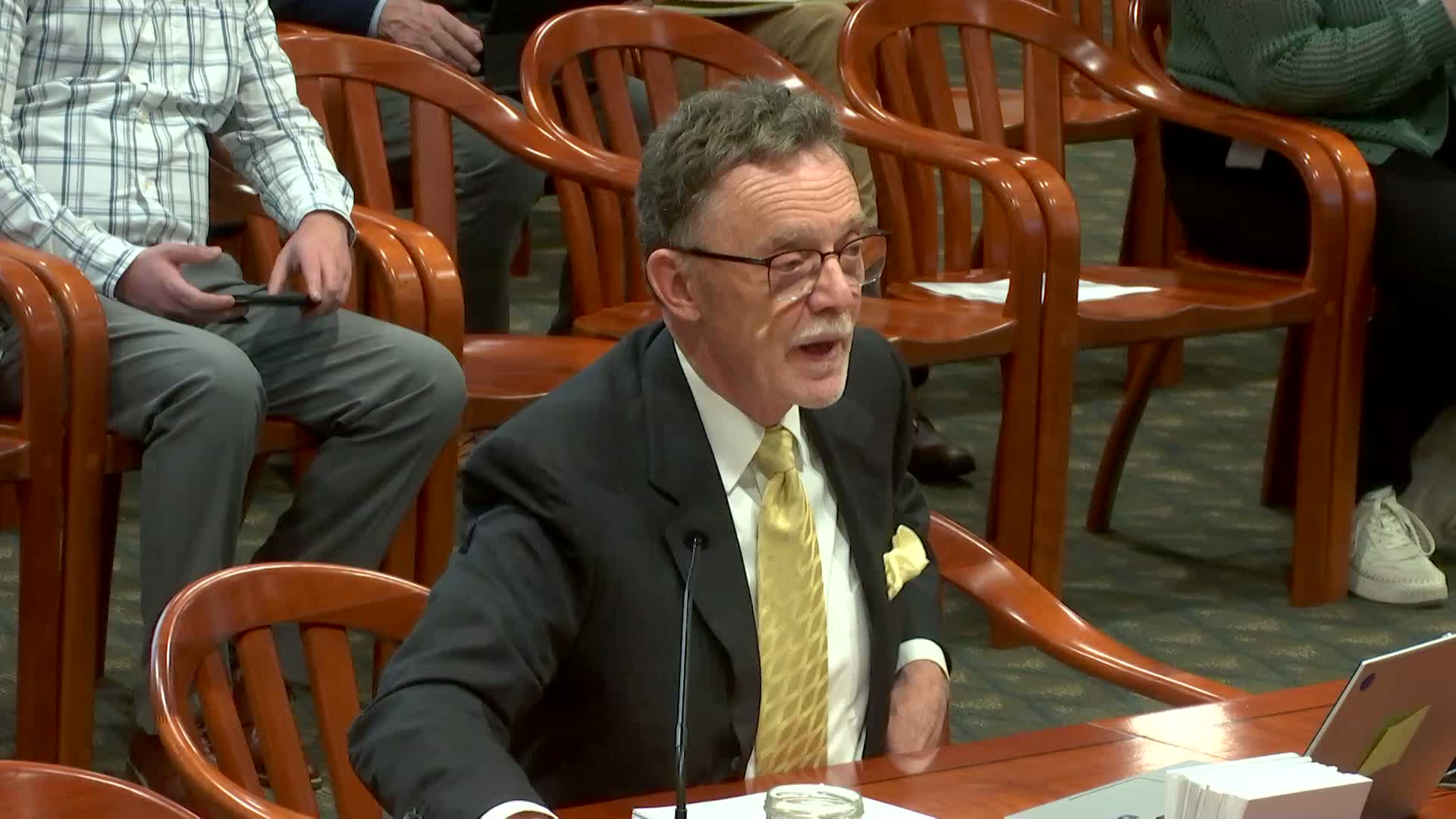
William "Bill" Hamilton, senior fiscal analyst for the Michigan House Fiscal Agency, briefed the House Transportation and Infrastructure Committee on state transportation budgets and funding sources, saying the current-year transportation gross appropriation is roughly $6.8 billion and is funded primarily by state restricted revenue and federal grants.
William "Bill" Hamilton, senior fiscal analyst for the Michigan House Fiscal Agency, briefed the House Transportation and Infrastructure Committee on state transportation budgets and funding sources, saying the current-year transportation gross appropriation is roughly $6.8 billion and is funded primarily by state restricted revenue and federal grants.
Hamilton told committee members the budget supports state and local road and bridge programs, capital and operating assistance for about 80 public transit systems, rail passenger capital, and capital assistance for publicly owned airports. He summarized major revenue sources and how they flow into the Michigan Transportation Fund (MTF).
Hamilton said state restricted revenue is the largest funding source and highlighted three major categories: vehicle registration revenues, motor fuel taxes, and federal aid. "The biggest program area, state and local road and bridge programs," Hamilton said, noting those programs make up the largest share of appropriations. He said approximately two-thirds of the budget comes from state restricted revenue and about one-third from federal sources.
Hamilton provided several figures and program shares: the budget's gross appropriation is about $6.8 billion; state restricted revenue accounts for roughly $4.2 billion of that total; federal revenue is about $2.3 billion; and general fund support in the current year is about $193 million. He said vehicle registration revenue is the single largest component of state restricted funds (about 38 percent of the restricted-revenue pie) and that motor fuel taxes (combined gasoline and diesel) contribute an amount roughly comparable to registrations. He noted motor fuel taxes are currently 31 cents per gallon and have received inflation adjustments since the November 2015 road-funding package took effect.
Hamilton described the statutory framework that governs distribution of restricted funds: the Michigan Transportation Fund is established and guided by Public Act 51 of 1951, and many distributions to local road agencies are formula-driven rather than subject to annual appropriator discretion. He said roughly 83 percent of the transportation appropriation is for road and bridge programs, with public transit at about 12 percent (roughly $805.6 million) and aeronautics near $330 million.
On longer-term funding needs, Hamilton said MDOT projects an additional investment need of about $2.5 billion per year to achieve and sustain its 90 percent "good condition" pavement performance target for the state trunk line highway system. He also noted that federal surface transportation authorization (referred to in his briefing as "IGJA") currently expires on Sept. 30, 2026, and will require reauthorization for continuation of many federal programs.
Committee members asked questions about specific topics. Representative Brock asked whether Michigan is a federal "donor" or "receiver" state; Hamilton replied that the traditional donor/receiver analysis is complicated today because federal transportation programs now include substantial federal general fund support and that Michigan is not clearly a donor state in the simple sense. On grade separations over rail lines, Hamilton said those projects are very expensive, typically prohibitively so for cities, and that the state has made targeted appropriations for some rail grade separations but lacks an ongoing established program to fund them.
Representative Koontz asked for lane-mile breakdowns; Hamilton said he would ask MDOT for that information. Hamilton described the state's bond authority for transportation: he said MDOT has sold roughly $2.8 billion in trunk-line bonds and retains authority to sell approximately $700 million more under current authorizations, and that debt-service estimates for the state trunk-line bond program are on the order of $220–$258 million per year in recent years.
Representative Preston asked about motor fuel tax trajectory amid rising fuel-efficiency and EV adoption; Hamilton said motor fuel tax revenue is a per-gallon consumption tax, consumption peaked in about 2002 and has declined slowly since, while the per-gallon tax rate has increased under the 2015 package. He added there are about 12 million vehicle registrations in Michigan and roughly 100,000 electric or hybrid vehicles at present, so declines in fuel consumption are a long-term trend but currently still modest in scale. Representative Frisbie asked whether MDOT estimates the cost of inaction tied to pavement PASER ratings; Hamilton deferred that detailed, pavement-specific analysis to MDOT.
Hamilton closed by pointing committee members to House Fiscal Agency publications posted on the agency website for detailed tables, flowcharts of MTF distributions, and additional explanations of bond issues, federal aid, and program detail. "We have a number of other publications on the agency website about the distribution from the MTF, about federal transportation sources," he said.
The committee's consideration of the presentation was discussion only; no committee action on policy or budget items was taken during the briefing.
For additional detail, Hamilton said the HFA's transportation briefing (slides and text) is available on the House Fiscal Agency website.