Get Full Government Meeting Transcripts, Videos, & Alerts Forever!
Get email alerts on the Housing Affordability topic
No spam. Unsubscribe anytime.
Housing advisory committee pitches framework to address affordability, proposes local incentives and land strategies
Summary
A year-old New Kent County Housing Advisory Committee presented a framework that catalogs housing needs, sets five policy goals and lists funding tools; committee members urged the county to identify parcels, consider tax incentives and pilot land‑trust or land-acquisition funds to build homes in a $125,000–$225,000 price band.
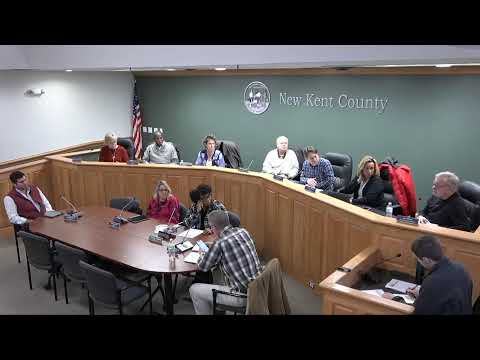
The New Kent County Housing Advisory Committee told the Planning Commission on Feb. 20 that it has compiled a housing framework intended to guide county action on affordability, senior housing, housing quality and new construction.
"My name is Andy Shine. I am the chairperson of your New Kent County Housing Advisory Committee," Shine said at the start of the presentation. Vice chairman Bill Dismalar and other committee members summarized more than a year of research, noting the group formed by resolution R-19-23 and that two citizens from each supervisor district plus county staff serve on the committee.
The committee outlined five policy goals: adopt tax incentives to encourage affordable development; increase local public investment in housing; prioritize affordable housing on county‑owned or surplus land; pilot a land acquisition fund; and support state initiatives and grants. Committee members proposed concrete tools including a county housing trust fund, use of Colonial Downs "Rosie" revenue or bonds for housing investments, tax abatements in exchange for deed‑restricted units, waived water/sewer hookup fees and voluntary affordable-housing proffers from large developments.
Bill Dismalar framed the urgency with local housing-market data: committee slides cited a Zillow median sale price of about $405,000 and a median list price of $455,000. Under the committee's affordability examples, a buyer putting 5 percent down on a $405,000 home at contemporary interest rates would need an annual income near $98,000 to qualify; the committee said many local workers cannot meet those thresholds. The presentation also reported rents of roughly $1,900 per month in the county and noted the absence of apartment buildings.
Committee proposals address both rental and ownership paths. Recommendations include targeting construction of smaller-footprint starter homes and townhouses in the $125,000–$225,000 range, increasing manufactured-housing options where appropriate, piloting land‑trust homeownership models, and streamlining permitting to cut costs and build time. The committee identified funding sources and best-practice examples from other jurisdictions, including tax-credit programs and land trusts such as the Maggie Walker Community Land Trust.
Planning commissioners asked operational questions: how affordable units would be allocated (committee: by area median income thresholds such as 30, 50 and 80 percent AMI and often with state/federal subsidy); whether deed restrictions and proffers could prevent private-equity acquisition of affordable units; and where infrastructure (water/sewer) would be extended to support multifamily or higher-density housing. The committee said identifying suitable parcels and resolving utility costs are priorities for next steps.
The committee will complete its full framework document, make slides available to commission and supervisors, and then present the framework to the Board of Supervisors for potential adoption or modification. If accepted, the committee recommended developing a five-year strategic housing plan with concrete implementation steps and funding pathways.
Clarifying details: the committee operates under Resolution R-19-23; it has three subcommittees (new housing, safe housing, research/grants); cited median sale price $405,000 and median list $455,000 (Zillow); the suggested target price band for locally delivered homeownership was $125,000–$225,000; the committee identified state tax-credit programs and recommended exploring a county housing trust fund and use of specific county revenues.
Next steps: the committee will finish its framework, distribute the full report to the Planning Commission and present recommendations to the Board of Supervisors for policy and funding consideration.