Get Full Government Meeting Transcripts, Videos, & Alerts Forever!
Get email alerts on the Hr19 Immigration Funding Restrictions topic
No spam. Unsubscribe anytime.
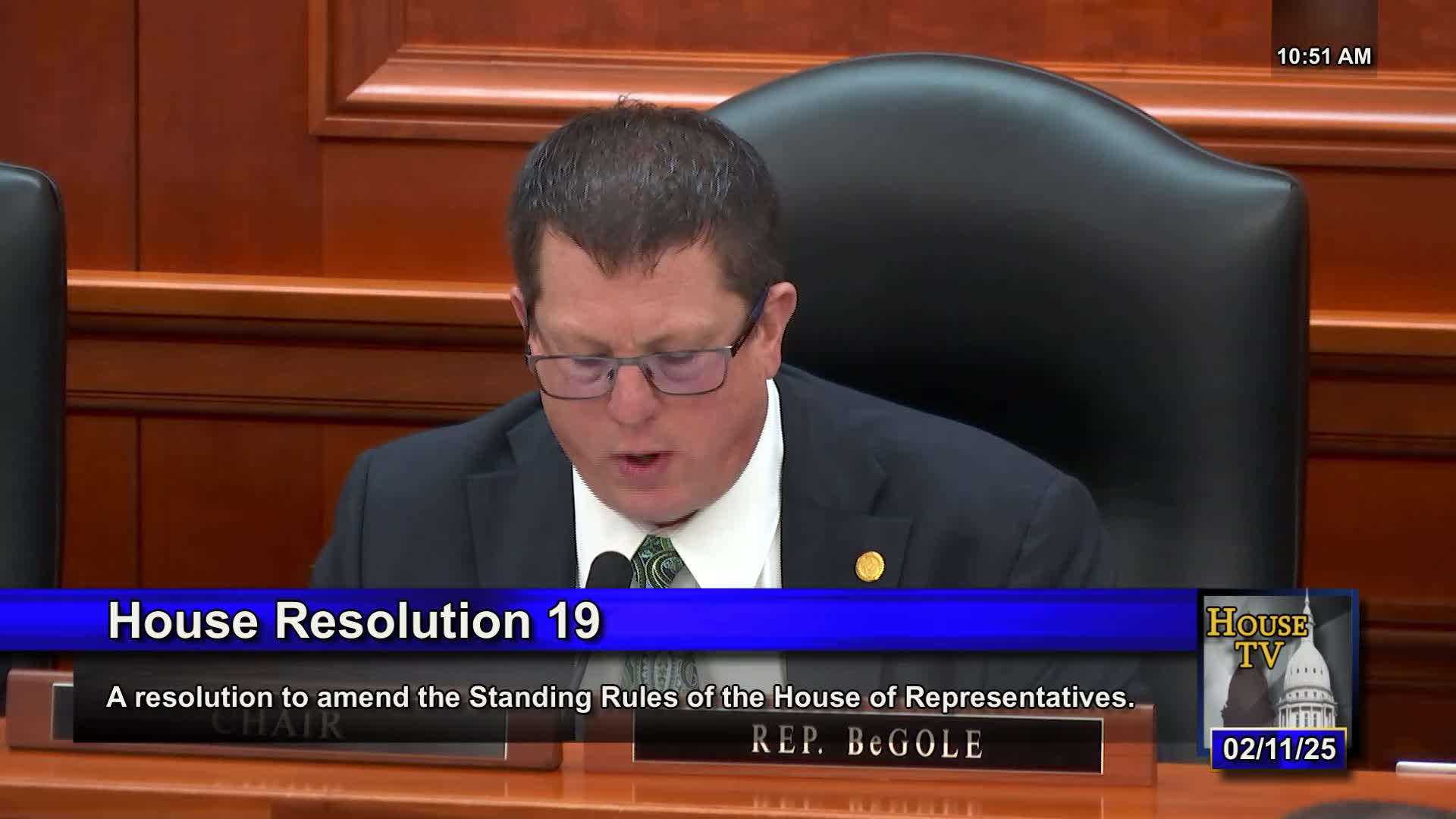
Committee advances HR 19 after hours of testimony; resolution would bar earmarks to jurisdictions that refuse federal immigration enforcement
Summary
The House Government Operations Committee reported House Resolution 19 (as substituted) after testimony from Representative Mike Harris in support and several civil‑rights and immigrant‑advocacy witnesses in opposition. The committee rejected multiple amendments that would have narrowed or exempted certain funding categories.
The House Committee on Government Operations reported House Resolution 19, a procedural rule change that would bar legislatively directed spending to municipalities or universities that certify policies "subverting" federal immigration enforcement, after several hours of testimony and unsuccessful amendment attempts.
Representative Mike Harris, testifying in support on behalf of the resolution introduced by Speaker Hall, said the measure "reinforces the importance of rule of law in our state's municipalities and universities" and argued sanctuary‑style policies create inconsistency in enforcement. Harris cited recent criminal incidents and said, "Simply put, taxpayer dollars should not be funneled into local governments that willfully, defy federal law." He described the resolution as a measured response requiring certification by a municipality or university to access legislatively directed spending.
Opponents, including civil‑rights and immigrant‑advocacy organizations, told the committee the resolution is unnecessary, vague, and risks harming public safety. Liz Balck, identified in testimony as a policy strategist at the ACLU of Michigan, said "immigration law is civil in nature. It is not criminal, code," and argued immigration enforcement is a federal responsibility. Monique Stanton, president and CEO of the Michigan League for Public Policy, called HR 19 "a solution in search of a problem" and said the rule could force localities to spend staff time and local dollars to comply.
Other witnesses echoed concerns that the resolution's undefined terms — for example, what constitutes "subverting immigration enforcement" — could create confusion and impose an unfunded mandate on local police and municipal staffs. The Michigan Immigrant Rights Center and other legal advocates warned the measure could chill reporting of crimes and erode trust between immigrant communities and local law enforcement.
Amendments: Representative Harris offered an H‑1 substitute that the committee adopted by roll call (5 yes). Representative Mike McFaul moved an amendment to clarify the resolution would not impede constitutional or statutory revenue sharing to municipalities; that amendment failed on a 2‑yea, 3‑nay roll call. Representative John Fitzgerald offered multiple amendments to exempt critical public safety equipment and to limit ineligibility to unlawful policies; both of Fitzgerald’s amendments failed on roll calls that produced 2 yeas and 3 nays.
Final committee action: The clerk recorded the final motion to report HR 19 (substituted) with these roll results: Chair Beagle — yes; Representative Mike Harris — yes; Representative VanderWaal — yes; Representative Fitzgerald — pass; Representative McFaul — pass. The clerk announced "3 ayes, 0 nays, 2 pass." The committee reported House Resolution 19 with recommendation as substituted.
Ending: The committee’s recommendation advances HR 19 for further consideration; the resolution, as presented, would change internal House rules to condition legislatively directed spending on local certification of compliance with federal immigration enforcement policies. Opponents urged the full House to consider the policy’s vagueness, potential costs, and public‑safety impacts before adoption.