Get Full Government Meeting Transcripts, Videos, & Alerts Forever!
Get email alerts on the Constitutional Amendment Lame Duck topic
No spam. Unsubscribe anytime.
House committee backs constitutional change to require two-thirds vote for lame‑duck bills
Summary
The House Committee on Government Operations on the record reported House Joint Resolution A, a proposed amendment that would require a two‑thirds majority in each chamber to pass bills during the post‑election lame‑duck period.
The House Committee on Government Operations on the record reported House Joint Resolution A, a proposed amendment that would require a two‑thirds majority in each chamber to pass bills during the post‑election, pre‑sine die "lame duck" period.
Representative Anne Bolen, sponsor of House Joint Resolution A, told the committee the measure would amend Article 4, Section 26 of the Michigan Constitution and requires 74 votes in the House and 26 in the Senate to pass bills during lame duck. "This resolution is a narrowly tear tailored solution to a very real problem," Bolen said, arguing the change would help "preserve this institution and restore public confidence in the process." She said the amendment responds to a recent lame‑duck session marked by many consequential bills that, in her view, lacked broad public support.
The resolution’s nut graf is the sponsor’s claim that a higher threshold would limit politically timed or rushed legislation after elections. Bolen said lawmakers have ample time during the regular session to advance legislation and that reserving lame‑duck for truly critical matters would increase transparency and ethical governance.
Committee members asked about practical effects. Representative Mike McFaul said he supported the idea in principle but worried about unintended consequences when noncontroversial bills are delayed in committee and then miss a lame‑duck window. "Sometimes, due to scheduling, things don't happen in a proper way," McFaul said, noting bills can languish in committee for reasons unrelated to partisanship. Representative Bolen responded that the measure should prompt earlier stakeholder engagement and more consistent legislative scheduling.
Representative John Fitzgerald asked whether similar approaches exist in other states and whether the change could unnecessarily block bipartisan bills that fail to reach the floor before the election. Bolen said other states have used different variants but framed Michigan’s proposal as a narrowly targeted reform intended to encourage work earlier in the session.
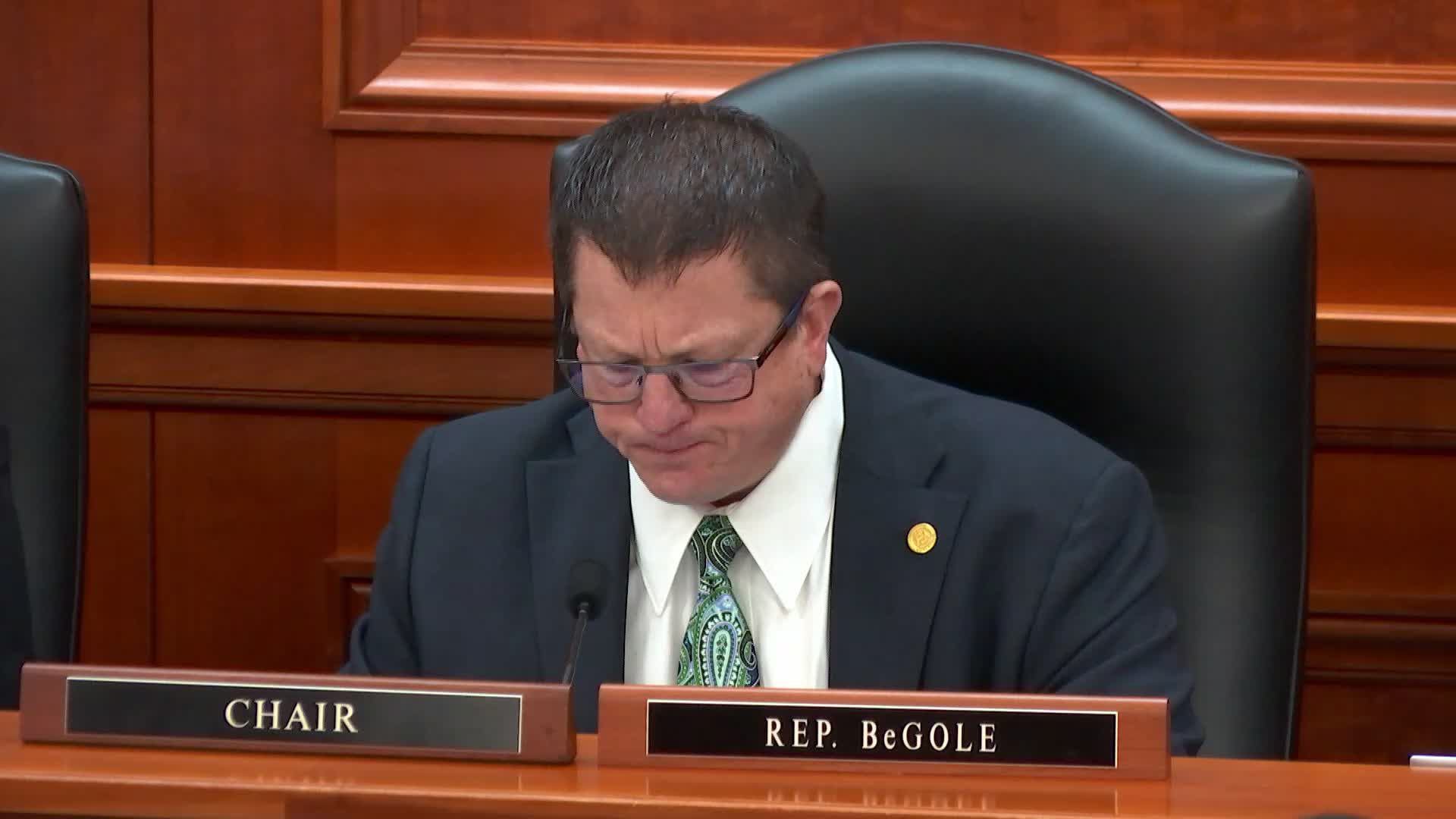
Procedural action: Representative Harris moved to report the resolution with recommendation. On the roll call the votes were recorded as: Chair Beagle — yes; Representative Harris — yes; Representative VanderWaal — yes; Representative Fitzgerald — pass; Representative McFaul — yes. The clerk announced "3 ayes, 0 nays, 2 pass." The committee reported House Joint Resolution A with recommendation.
The committee also adopted its uniform committee rules and a regular meeting day/time and location by separate unanimous procedural votes earlier in the session.
House Joint Resolution A now goes forward from committee; the resolution would still require consideration and final votes in the full legislature and, if amended to the constitution, the multi‑step constitutional amendment process specified in Michigan law.
Ending: The resolution’s next steps are committee referral outcomes and floor action; the committee’s recommendation does not alter the heightened thresholds HJRA would impose if placed before voters or enacted by the constitutional amendment process.