Get email alerts on the Water Infrastructure topic
No spam. Unsubscribe anytime.
County commissioners authorize resolution opposing DEP changes to SRF intended-use plan
Summary
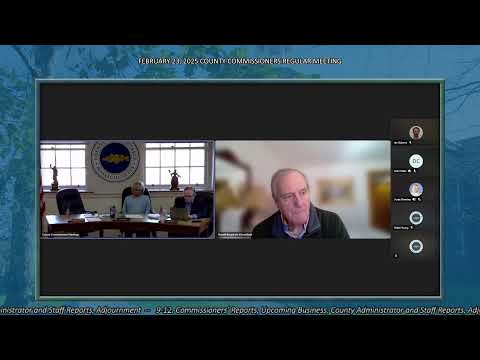
Barnstable County commissioners on Feb. 25 authorized a resolution and a letter opposing proposed changes to the Massachusetts Clean Water State Revolving Fund intended‑use plan that would impose a $50 million annual borrower cap and change multi‑year financing rules.
Barnstable County commissioners on Feb. 25 authorized a resolution and a letter to the Massachusetts Department of Environmental Protection opposing proposed language in the Clean Water State Revolving Fund (SRF) intended‑use plan that would limit annual borrower awards and change the treatment of multi‑year projects.
Andrew Gottlieb of the Association to Preserve Cape Cod (APCC) told commissioners the SRF intended‑use plan has traditionally been a largely ministerial document that lists projects eligible for low‑interest loans and determines eligibility for Cape Cod’s 25 percent principal forgiveness from the Cape Cod Water Protection Fund. Gottlieb said two previously undisclosed changes in the 2025 draft are especially significant: an annual borrower limit of $50 million and a requirement that multi‑year project financing be applied for year‑by‑year rather than preserved across years.
Gottlieb said the borrower cap and change to year‑by‑year financing will make it harder for Cape Cod towns to present clear multi‑year financing plans, undermining voter support for large wastewater projects that rely on those financing assurances. He urged the commissioners to submit comments at the public hearing and to request that the SRF intended‑use plan revert to the terms used in the 2024 list. Gottlieb also said APCC has proposed the governor include a $500 million authorization in a draft environmental bond (allocated in $100 million annual amounts) that could strengthen SRF capacity in future years.
The change to a $50 million annual borrower limit, Gottlieb said, “can get eaten up pretty quickly,” particularly for Cape projects that include treatment plants and sewer laterals. He described the 30‑day comment period in which DEP will finalize the list after a public hearing on March 3 and asked the county to join other local governments and organizations in opposing the rule change.
Commissioners raised concerns about the timing of the changes and their effect on ongoing town financing and voter information. Commissioner comments emphasized seeking a regulatory rollback to the 2024 approach, participating in the DEP hearing, and coordinating county and town comments to press the state for additional long‑term funding. Commissioner Bergstrom and others noted the need for state partnership and urged pursuing the proposed bond or other statewide measures to expand financing capacity.
The commissioners voted to “authorize the proposed resolution ____ opposing the Clean Water State Revolving Fund intended use plan language and execute a letter to the Department of Environmental Protection.” The motion was seconded by Commissioner Heitel. Named roll‑call votes in the transcript include ‘‘Marce’’ and ‘‘Sheila’’ voting aye; the motion was recorded as approved.
Why it matters: the SRF intended‑use list is the primary mechanism for allocating low‑interest municipal wastewater loans in Massachusetts and determines eligibility for certain principal‑forgiveness programs. Changes to borrower caps and multi‑year rules could force towns to revise bond and voter materials for major multi‑year projects and may reduce the availability of principal forgiveness used by Cape Cod towns.
Next steps: DEP’s public hearing is scheduled for March 3; written comments submitted before that date will be considered. Commissioners and APCC indicated the county will submit formal comments and coordinate with towns and the Cape Cod Water Protection Fund board.
AI generated
The text on this page is AI generated. Summaries, highlights, analysis, and video transcripts are all produced from the original source material.
AI can make mistakes, so if you spot one, and we will fix it for everyone.
Note: the source content is unaltered by us. Any content source we link to, be it a video, an audio recording, or a document, is presented exactly as its publisher released it. That publisher is usually a government body, sometimes an individual official or another organisation.