Get Full Government Meeting Transcripts, Videos, & Alerts Forever!
Get email alerts on the Cigarette Tax topic
No spam. Unsubscribe anytime.
Panel weighs governor—s proposed 50¢ cigarette tax increase; health and retailers outline trade-offs
Summary
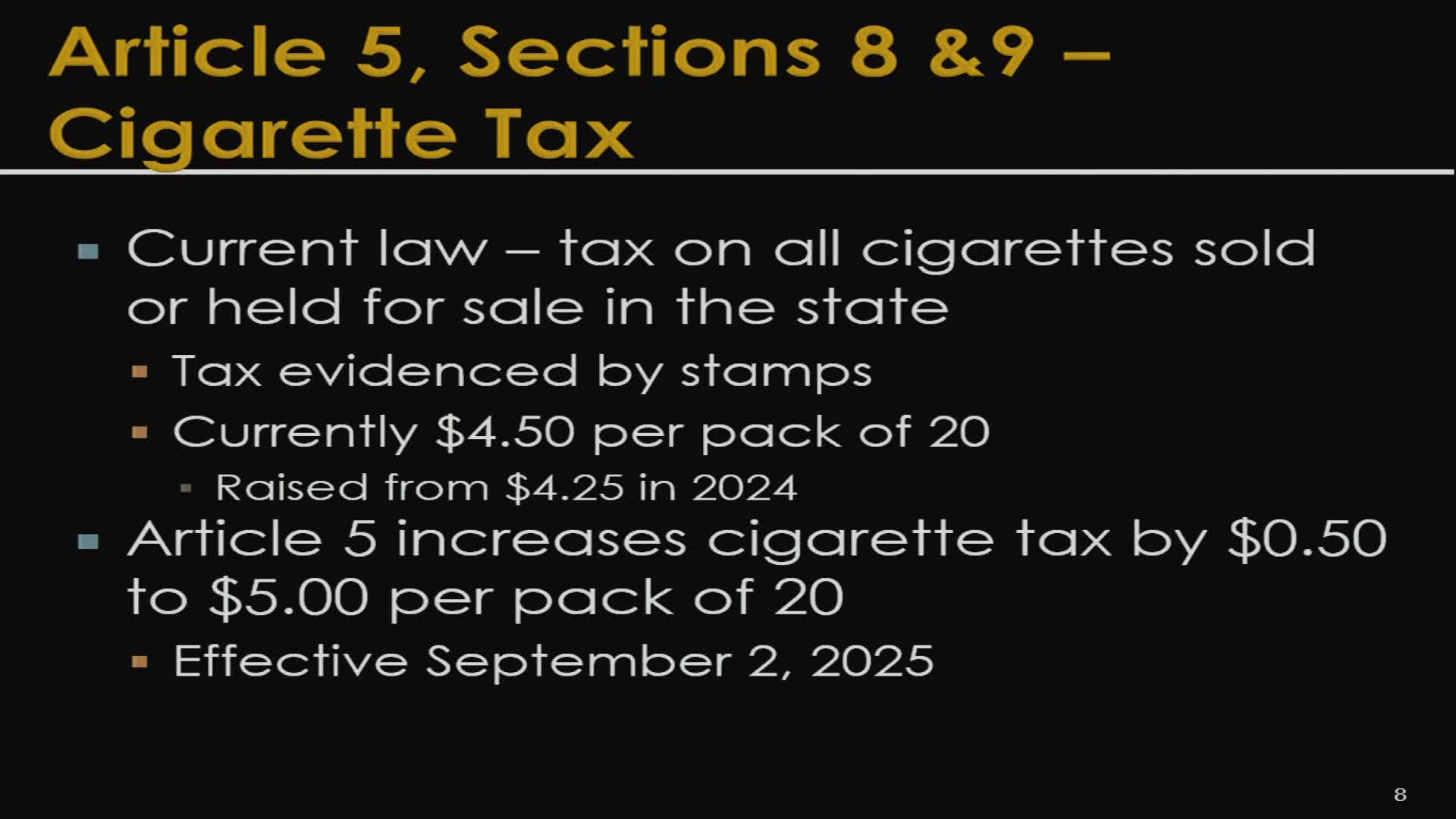
The committee heard testimony about a proposed 50¢ per-pack cigarette excise increase in Article 5. The administration estimated $4.4 million in additional revenue in fiscal 2026; health officials said higher prices reduce use while retailers and distributors warned of revenue decline and cross-border purchases.
Lawmakers questioned administration and public-health witnesses about the governor—s proposal to raise the cigarette excise tax by 50¢ per pack, and heard competing evidence about the revenue, health and business effects.
The administration—s presentation said the budget assumes $4.4 million in additional revenue in fiscal 2026, including a floor-stock tax on inventory, with lower net receipts in later years as consumption falls. Revenue staff said their models assume a decline in sales of roughly 1 million packs (from about 19.9 million to just over 18 million packs) under the proposal. Department of Revenue staff also noted Rhode Island—s current per-pack rate would be among the highest in the United States if the increase is adopted.
Public-health witnesses and administration officials described the tax as part of a multi-year effort to reduce smoking and vaping and to lower smoking-related health costs. Neil Hytenen of the Rhode Island Department of Health told the panel that tobacco use is the leading cause of preventable death and estimated annual smoking-related health-care costs in Rhode Island at about $744 million; he said research consistently links price increases to reduced use.
Retailers, convenience-store groups and tobacco distributors urged caution. Peter Brennan of the New England Convenience Store and Energy Marketers Association and other retailers said last year—s 25¢ increase coincided with lower cigarette volumes and that pushing the tax higher risks more cross-border purchases and illicit market activity. Brennan told the committee the first four months after last year—s increase showed a 2.5% decline in cigarette excise collections for cigarettes alone; wholesale distributors reported a reduced pack volume and urged the committee to wait and assess the prior increase before raising the tax again.
Committee members asked whether any of the new revenue would be dedicated to cessation programs. Brian Daniels, OMB director, said no portion of the proposed revenue was statutorily dedicated to cessation in the budget proposal, and Neil Hytenen described the health department's existing tobacco-control efforts but said the current budget did not add cessation funding tied to this increase.
Questions also addressed enforcement and whether electronic nicotine delivery systems (ENDS) would be affected; the panel was told the prior session established an excise on ENDS and that the current proposal does not change that policy.
No formal vote occurred. Lawmakers sought more data on pack-level revenue trends and the distributional effect of the tax; retailers urged study of cross-border impacts and small-business effects before changing the rate again.