Get Full Government Meeting Transcripts, Videos, & Alerts Forever!
Get email alerts on the Special Education topic
No spam. Unsubscribe anytime.
Advocates tell State Board Michigan must fix special-education funding and foster‑youth records transfers
Summary
Parents, foster‑youth advocates and disability groups told the Michigan State Board of Education the system still fails students with disabilities and children in foster care, urging the board and state leaders to implement funding reforms and to make the Immediate transfer of records required under federal law a working reality.
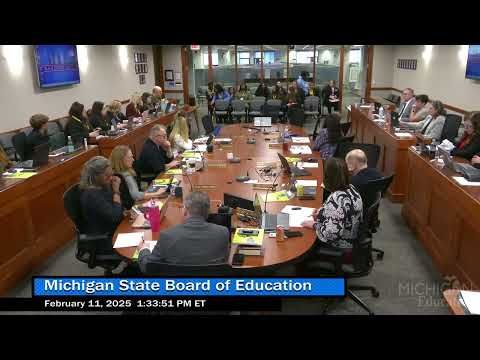
Advocates for students with disabilities and young people who have been in foster care urged the Michigan State Board of Education on Feb. 11 to act on funding inequities and to ensure prompt transfer of school records when children change placements.
Heather Eckner, Statewide Director of Education for the Autism Alliance of Michigan, told the board the alliance’s Special Education Experience Survey and an accompanying working paper, Funding Our Future, identify “significant concerns for students with disabilities and their families,” and call for a new, student‑centered special‑education finance framework. “The top priority to address is school funding and resources,” Eckner said, urging board members to engage with the alliance’s findings.
Foster‑youth speakers described repeated, practical barriers that disrupt schooling. Danella Anderson, a foster‑youth advocate for FYTech, said students face “lost records, delayed enrollment, and no clear advocate,” and called the current situation “a betrayal of the very youth it was meant to protect.” Cassandra McLaurin and other young speakers explicitly cited the Every Student Succeeds Act’s protections for foster students and urged Michigan to comply with ESSA requirements for immediate transfer of records and family‑school collaboration.
Multiple speakers, including Sabra Jabrai and Alyssa Andrews of Park West Foundation, said young people who helped craft recommendations feel sidelined from implementation after department leadership changes. Andrews said stakeholders and youth leaders put hundreds of hours into policy work and “it feels like not only have you stolen our voice, but you have also taken our accomplishments and celebrated them without us.”
Speakers outlined specific remedies they want the board and state agencies to pursue: creating clear statewide policies and accountability for immediate transfer of records, developing a statewide electronic records system, giving schools and child‑welfare agencies shared training, and establishing foster‑youth advocacy coordinator roles. Advocates also urged closer coordination between the Michigan Department of Education (MDE) and the Michigan Department of Health and Human Services (MDHHS).
Board members acknowledged the testimony and asked staff to follow up. President Michael Rice noted the board would return to foster‑youth recommendations during the legislative committee discussion next month. Several board members voiced support for continuing stakeholder engagement with youth and families and for examining the survey’s recommendations during upcoming budget and policy discussions.
The public‑comment period that produced these remarks was informational only; the board did not take formal action during the session.