Get Full Government Meeting Transcripts, Videos, & Alerts Forever!
Get email alerts on the Education Scholarship Trust Fund topic
No spam. Unsubscribe anytime.
House committee advances Senate Bill 62 on education scholarships after hours of testimony; vote 13-4
Summary
The House Education and Public Works Committee voted 13-4 on Thursday to report Senate Bill 62 favorably as amended after a daylong hearing that included presentations by state education and fiscal officials and more than two dozen public witnesses.
Columbia Jan. 30, 2025
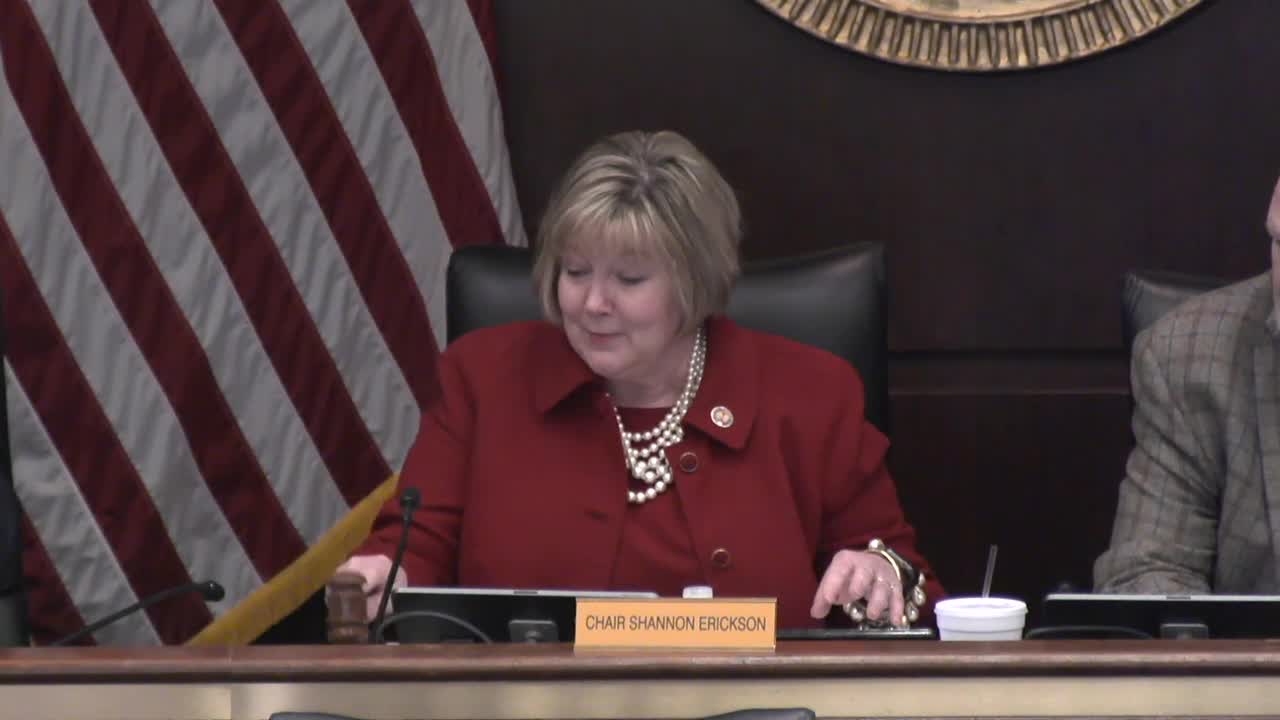
The House Education and Public Works Committee voted 13-4 on Thursday to report Senate Bill 62 favorably as amended, sending a revised framework for the Education Scholarship Trust Fund to the House calendar after more than four hours of testimony and committee debate.
The bill would re-establish the Education Scholarship Trust Fund (ESTF) under state statute and preserve several elements of the program the department ran last year: a scholarship worth $6,000 per pupil, a process for approving education service providers (schools, tutors and vendors), and a set of application windows and enrollment priorities. The committee adopted an early strike-all amendment and a separate provision specifying minimum qualifications for the ESTF trustee before approving the measure.
Why it matters: The ESTF is the legislature's main mechanism for sending public education funding to families who choose nonpublic K-12 services. Backers say it expands options for low-income and special-needs students; opponents say it risks diverting scarce state education dollars away from public schools and raises constitutional questions about public support for nongovernmental schools.
Department numbers and program design
Mika Childs, representing the South Carolina Department of Education, told the committee the department has already run the program and supplied data from the pilot year. Childs said nearly 8,000 families applied for 5,000 slots last year and the state enrolled roughly 3,000 students; roughly 1,700 participants had already submitted renewals for the next school year when she spoke. "There is high demand for the educational freedoms the ESTF programor K-12 scholarship represent. It's popular among its existing participants, and applications continue to exceed available slots," Childs said.
Childs summarized participation and spending patterns: about 80% of participants met Medicaid eligibility, roughly 60% were elementary-aged, about half identified as African-American, and only about 6% were military-affiliated. Department officials said about half the program dollars were spent through a marketplace for goods and services (computers, tutoring, therapies and supplies); the remainder was used for tuition and fees paid to approved providers.
Fiscal context from Revenue and Fiscal Affairs
Frank Rainwater, executive director of the state Revenue and Fiscal Affairs Office, briefed the committee on broader state revenue trends. Rainwater said the state is moving back toward more normal revenue growth after pandemic-driven volatility and that lottery revenues which some have proposed as a funding source in other draftsare mature and fluctuate by jackpot cycles. Rainwater's slides showed lottery net proceeds in recent years near the $500 million to $600 million range and noted that lawmakers should be cautious about relying on jackpot-driven spikes when budgeting long-term programs.
What the amended bill does
Key elements adopted in committee debate:
- Per-participant amount: $6,000 per scholarship in the first years, with a statutory escalator tied to the same percentage increases used to raise state funding for local districts in later years. - Enrollment windows and priorities: current recipients and their siblings receive first priority; later windows prioritize students who are military-affiliated, in Department of Social Services custody, or have exceptional needs before a general open application window. - Trustee structure: a trustee will administer the ESTF once the legislature appropriates funds; the committee added a requirement that the trustee meet professional fiduciary qualifications and not be a public entity or state employee. - Caps and funding: the statute removes a permanent statutory cap after the first years and leaves overall funding levels to annual appropriations by the General Assembly. (Committee debate included failed and tabled proposals to add shorter-term numerical caps.)
Public testimony: wide split
More than two dozen people testified for and against the amended bill. Supporters included advocacy groups and many parents who said the scholarship had changed outcomes for their children.
- Miranda Williams, Southeast legislative director for Accelinet in Action, urged restoration of the program after a South Carolina Supreme Court decision last year disrupted families who were using the scholarships.
- Shaka Mitchell of the American Federation for Children described the bill as a path to broader access and said he supported prioritizing lower-income, military and foster children early in the program rollout.
Parents and school leaders who support the program described personal improvements in attendance, behavior and academic progress after children transferred to other schools or private programs with scholarship help. Maria Valenzuela and Sandra Gray, both parents who told the committee their children were able to attend private schools with ESTF funds, said the scholarship had produced academic and social gains.
Opponents included public-education advocates, legal and civil-rights groups and some researchers who warned of budgetary and academic risks.
- Susana Saravia, speaking as a taxpayer and citizen, called the program a "Trojan horse" and warned lottery or general-fund financing would create long-term obligations. She said the program risks greater state oversight of private and home-based education.
- Jennifer Rainville, an education policy attorney at Appleseed Legal Justice Center, urged clear parental notification for students with individualized education plans and stronger accountability for private providers; she told the committee that private providersif they accept public dollarsshould have clear reporting on how funds are spent and how students fare.
- Paul Bowers, a journalist who covered education, summarized recent national research and said studies in multiple states showed mixed or negative impacts on academics in some voucher programs and noted severe fiscal pressures elsewhere after rapid program growth.
Student voices and school leaders
Two students who had left public schools described improved outcomes after alternative placements. "I personally believe it would be great for other kids like me to have the same opportunity through universal school choice," said Liam, a homeschooled junior who told the committee he had struggled in public school.
Several independent and religious-school leaders also testified that the scholarship helped them serve low-income, special-needs and foster children. Robbie Brzezinski, executive director of the South Carolina Independent School Association, said the typical independent-school tuition in the state is lower than some commenters assume and emphasized that many member schools offer significant tuition assistance.
Committee action and next steps
After debate, the committee voted to report Senate Bill 62 favorably as amended. The bill now moves toward the House calendar and additional floor consideration and must be funded by the General Assembly in annual appropriations for scholarships to be disbursed.
Votes at a glance
- Committee report (final): Senate Bill 62 (Education Scholarship Trust Fund), reported favorably as amended. Motion to report: passed 13 yeas, 4 nays, 1 absent. Yeas (13): Representatives Bowers, Bradley, Duncan, Gillum, Gilreath, Hartnett, Huff, Kilmartin, McGinnis, Teeple, Terabeil, Vaughn, Chair Erickson. Nays (4): Representatives Alexander, Garvin, Grant, Rivers. Absent: Representative Frank.
- Key committee amendments: strike-all amendment adopted (vote recorded earlier in committee proceedings); trustee-qualification amendment adopted (specifying minimum fiduciary credentials); several proffered amendments on caps and funding approaches were tabled.
What lawmakers said
"We are seeing high demand and, in some places, families are using these funds for tutoring, therapies and transfers that they say help their children," Mika Childs, South Carolina Department of Education official, told the committee.
"Policymakers must weigh the needs of the most vulnerable students while recognizing budget realities," said Frank Rainwater, executive director of Revenue and Fiscal Affairs, in his fiscal briefing to the committee.
The coming weeks will determine whether the House adopts the committeeamended version and how the General Assembly will choose to fund scholarships in the context of the state's budget outlook.
Ending
Lawmakers and advocates said they expect intensive negotiations on funding formulas and oversight language on the House floor. The bill's backers said they hope the trustee provisions and enrollment priorities agreed to in committee make the program more administrable and legally defensible; opponents said they will continue to press for tighter guardrails on funding and accountability.
(Reporting from the committee hearing at the Statehouse.)