Get Full Government Meeting Transcripts, Videos, & Alerts Forever!
Get email alerts on the Dmv Regulation topic
No spam. Unsubscribe anytime.
Committee adopts amendment to HB 3856 that removes DMVrandom retest requirement for third-party testers
Summary
A House Education and Public Works subcommittee adopted Amendment 1 to House Bill 3856, a Department of Motor Vehicles (DMV) cleanup bill. The amendment removes a statutory requirement for randomized retesting of applicants who passed exams administered through licensed driving schools; the committee approved the amendment by voice/recorded ayes.
The Education and Public Works subcommittee adopted Amendment 1 to House Bill 3856, a broad DMV cleanup bill, removing a statutory requirement that the DMV randomly retest applicants who previously passed driving exams administered by third-party driving schools.
The amendment was offered by Representative Tipple. "We are placing a significant amount of undue burden of time and money on our constituents," Representative Tipple said, describing a constituentexperience in which a newly approved driver was told to retest and was not offered an immediate retest appointment, delaying the start of a planned job. Tipple said about 1,000 applicants a year — roughly 2% of applicants, he said — are selected for the random retest and that retest results show about an 80% success rate for those applicants.
Pedro Adamasky, speaking for DMV staff, explained why the agency uses randomized audits: "That process is essentially to reduce fraud, waste, and abuse," he said, and added that the DMV is "open and ... willing to look at another process by which we can do that." Adamasky said the randomized checks hold third-party testers and driving schools accountable but confirmed DMV would discuss alternative review procedures.
Why it matters: The change removes a statutorily prescribed audit mechanism that some lawmakers said imposes time costs on applicants who already passed accredited driving-school tests. Supporters of the amendment argued the DMV can still pursue other review procedures to ensure tester integrity, while opponents expressed concern about reducing oversight of third-party testers.
Bill scope and related provisions: House Bill 3856 is a multi-section cleanup bill for the DMV that adjusts definitions (including aligning the definition of a bus to title 12), adds the voluntary inclusion of blood type to identification cards consistent with last year's Act 167, clarifies dealer license thresholds (removing inconsistent references to 20 vehicles and affirming a 15-sales threshold), extends validity periods for wholesale dealer licenses to match dealers at three years, and clarifies statutory language that enables the DMV to suspend, revoke or deny dealer licenses for specified serious violations.
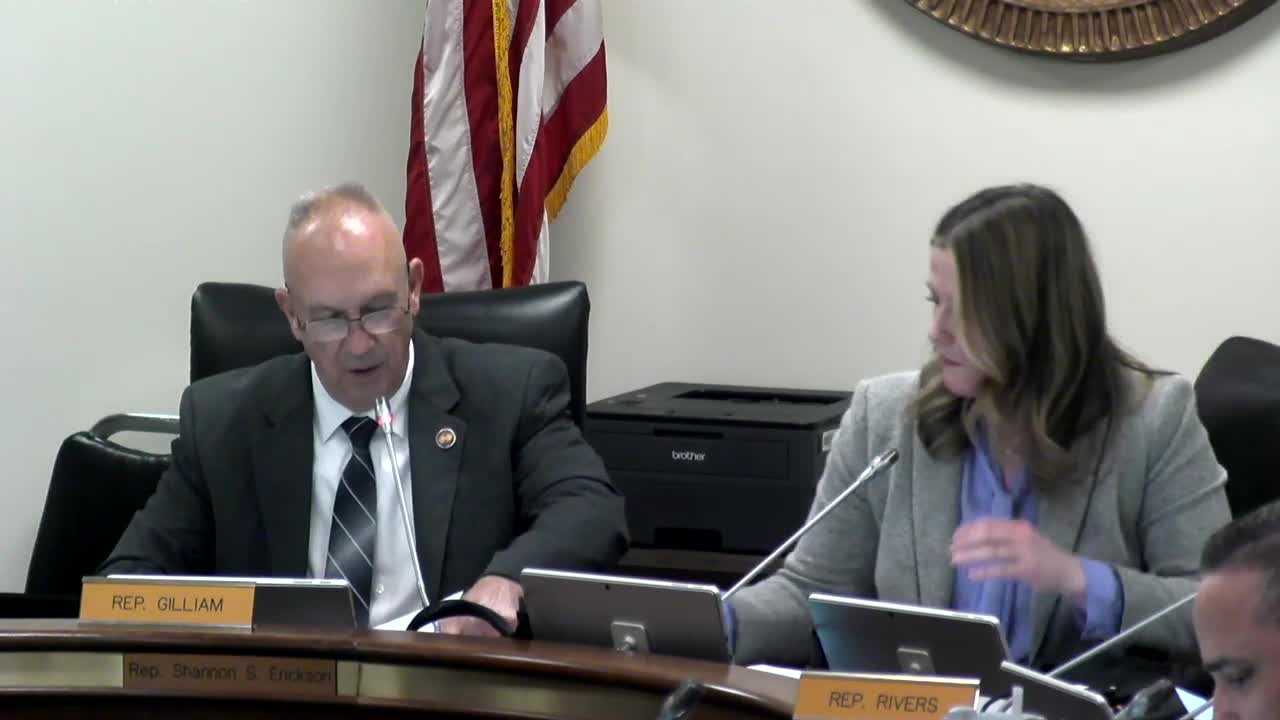
Committee action: The committee took up Amendment 1 (to strike the randomized retest requirement in section 56-1-15(c) as cited by the amendment text). Representative Tipple moved the amendment; a second was recorded but the transcript does not name the second. The committee then recorded a string of ayes from members present: Representative Duncan (aye), Representative Frank (aye), Representative Grant (aye), Representative Rivers (aye), Representative Tipple (aye), Chairman Gillum (aye) and Chair Lady Erickson (aye); the amendment was adopted and the transcript shows the committee moving on to other agenda items.
Discussion notes and outstanding questions: Committee members and staff discussed operational alternatives to randomized retesting (for example, internal DMV reviewers or targeted reviews), the fairness of requiring retests of students from licensed driving schools, and DMV's willingness to revisit policy. Lawmakers also raised dealer-notification procedures (certified mail versus regular mail and electronic notice) and emphasized the need to balance due process for licensed dealers with effective enforcement against fraudulent actors.
Next steps: The committee adopted the amendment and continued consideration of other portions of the cleanup bill at a later date. The transcript shows debate on other sections was suspended for future consideration.