Get Full Government Meeting Transcripts, Videos, & Alerts Forever!
Get email alerts on the Liquor Liability Insurance topic
No spam. Unsubscribe anytime.
Subcommittee advances bill 34‑97 to revise liquor‑liability rules; adds DUI penalties and server‑training mandate
Summary
The House Judiciary Committee's Constitutional Law Subcommittee voted to adopt an amendment and give a favorable report to bill 34‑97, a package of changes to liquor‑liability law that includes limits on joint-and-several liability, a proposed codified DRAM‑shop tort, a statewide server‑training mandate and expanded DUI penalties.
The Constitutional Law Subcommittee of the House Judiciary Committee voted to adopt Amendment 1 and gave a favorable report to bill 34‑97, a measure that would revise South Carolina’s liquor‑liability framework and add new DUI penalties and training requirements.
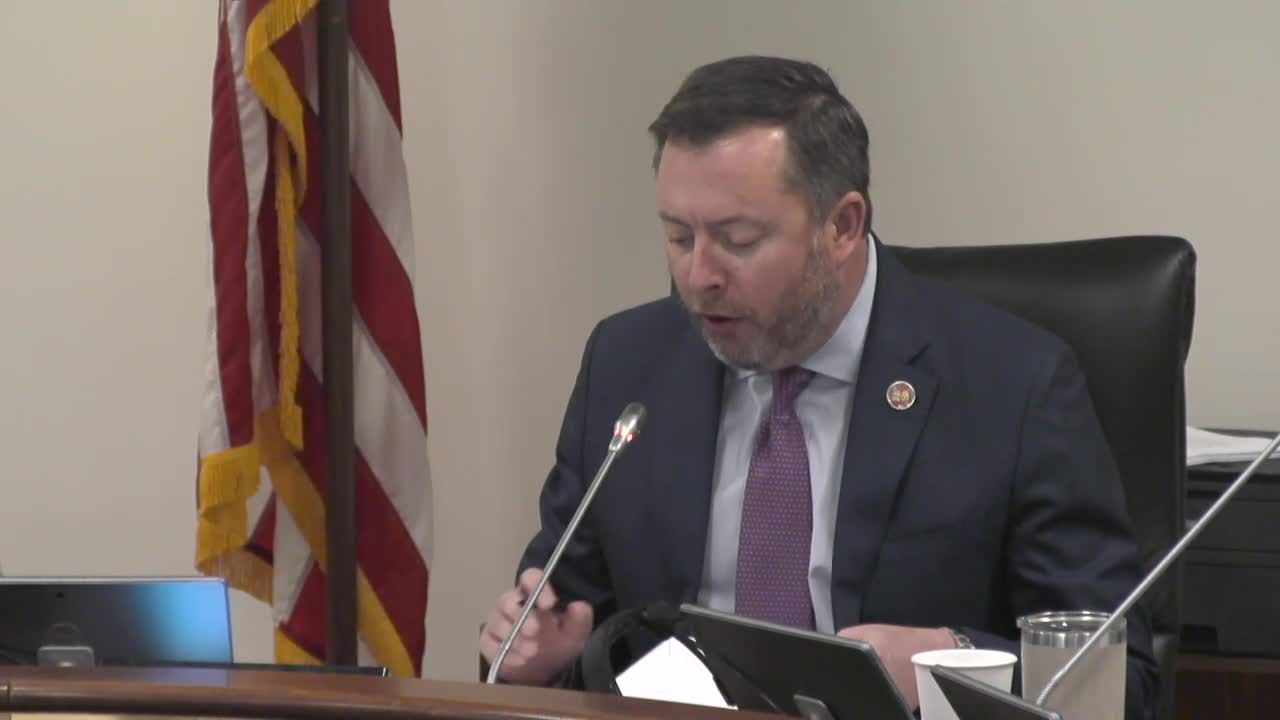
The move came after testimony from Sean Blake, an attorney in Columbia representing the Responsible Hospitality Reform Association, and extensive debate among subcommittee members. Amendment 1 was adopted by voice vote and the subcommittee later recorded a roll call producing a favorable report with four votes in favor and one not voting.
Why it matters: Supporters say the changes aim to stabilize insurance markets for restaurants and other hospitality businesses while preserving remedies for people injured by intoxicated drivers or over‑service. Opponents and some witnesses warned the drafting details — especially how policy limits are described — could unintentionally change available policy forms and affect rates.
Sean Blake said stakeholders representing restaurants, nightlife venues and other hospitality businesses negotiated compromise language intended to address insurers’ concerns and preserve injured parties’ tort remedies. "We have come up with compromise language that really addresses every concern that we believe affects the stakeholders today," Blake testified.
The amendment and discussion included several core elements described by witnesses and members: - Closing the current alcohol‑related joint‑and‑several liability ‘‘loophole’’ so that a business would generally be liable only for its proportionate share unless it is more than 50 percent at fault or acted with willful, reckless or wanton conduct. - Codifying a DRAM‑shop (liquor‑liability) tort to define the duties of servers and establishments, including standards tied to visibly intoxicated patrons and recognized server‑training practices. - A statewide mandate that all alcohol servers complete approved training within 60 days of employment. - A Department of Insurance (DOI) reporting requirement for insurers and underwriters to provide annual data so the legislature can monitor the market and determine whether further changes are necessary.
Members and staff also addressed insureds' access to different policy forms. Several witnesses cautioned that wording in the bill about per‑occurrence limits could be read to require occurrence‑form policies rather than claims‑made forms; occurrence forms generally are more expensive because they keep coverage tied to the policy year in which an incident occurred. Blake warned that an unintended drafting shift toward occurrence coverage could raise costs for some establishments rather than lower them.
The amendment further clarified captive‑insurer provisions to state captive insurers may write liquor‑liability coverage but may not issue eroding or declining limits where defense costs reduce the available indemnity. The amendment also added a 30‑day notice period for lapses in coverage and clarified mitigation‑program participation applies to both the licensed person and the licensee entity.
Representative Robbins, who helped draft the amendment’s DUI provisions, described four categories of changes intended to reduce impaired driving. Those provisions include increased criminal and administrative consequences for collisions involving intoxicated drivers (an optional additional fine of $400 or 30 days’ imprisonment or 48 hours of public service in some first‑offense collision cases); longer license suspensions for drivers testing at or above 0.15 blood‑alcohol concentration (BAC) — for example, a first‑offense suspension of three months for BAC 0.15+, rising on subsequent offenses — and stepped increases for refusals to submit to testing. The amendment also proposes a new felony DUI second‑degree offense for drivers who proximate‑cause moderate bodily injury while impaired, punishable by a mandatory fine between $2,500 and $5,000 and up to 10 years in prison.
Representative Wetmore emphasized the breadth of the compromise, saying the package addresses joint‑and‑several liability, training incentives and DUI penalties and that "when nobody loves it, that might mean that we're on the right track." Chairman Newton said the subcommittee would monitor whether the changes reduce rates and whether DOI reporting will provide data needed to evaluate the law's impact.
Votes at a glance - Amendment 1 (clarifying captive coverage, adding notice timeframe, mitigation program language, removing alcohol carve‑out from comparative negligence and adding DUI reforms): Adopted by voice vote. (No roll call recorded in transcript.) - Bill 34‑97 as amended: Favorable report — roll call recorded: Representatives Jordan (Aye), Mitchell (Aye), Newton (Aye), Wetmore (Aye); Representative Bamberg not voting. Tally: Yes 4, No 0, Not voting 1. Outcome: favorable report/approved by subcommittee.
Background and next steps: The subcommittee began the meeting noting two bills were on the agenda but that Senate bill 271 had been recalled to the floor and would not be taken up. Members repeatedly framed 34‑97 as an attempt to balance reducing insurance‑market instability for hospitality businesses with preserving legal remedies for people harmed by intoxicated drivers or negligent service. The subcommittee approved Amendment 1 and issued a favorable report; the bill will proceed according to the House Judiciary Committee’s procedures.