Get Full Government Meeting Transcripts, Videos, & Alerts Forever!
Get email alerts on the Ai Generated Child Exploitation topic
No spam. Unsubscribe anytime.
Subcommittee advances bill criminalizing obscene visual depictions of minors including AI-generated images
Summary
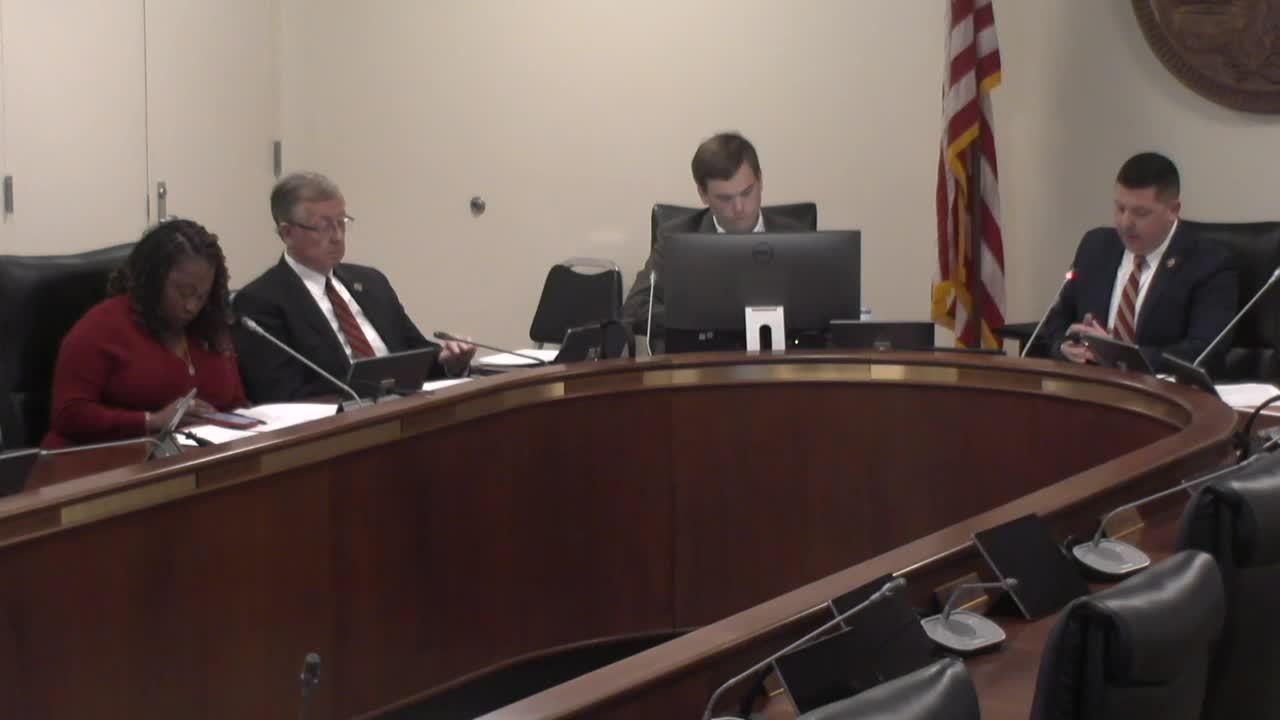
House Bill 3045, which would criminalize obscene visual depictions of minors — including AI-generated images — and adjust registry procedures, was reported favorably as amended by the Artificial Intelligence, Cybersecurity and Special Law Subcommittee on a 4-0 vote.
House Bill 3045, a proposal to criminalize the creation, distribution, and possession of obscene visual depictions of minors — including AI-generated images and other electronically produced media — received a favorable report as amended from the Artificial Intelligence, Cybersecurity and Special Law Subcommittee by a 4-0 roll-call vote.
The bill, as explained to the panel, would treat as criminal the production, distribution, receipt, or possession (with intent to distribute) of obscene visual representations depicting a minor, including fictitious imagery, when the material is obscene under the law’s stated criteria: that the material appeals to prurient interests, offends community standards, lacks serious literary, artistic, political or scientific value, and is not otherwise constitutionally protected. The chair summarized penalties read from the bill text: producing, distributing, receiving, or possessing such material with intent to distribute carries a sentencing range with a minimum of two years and up to 10 years’ imprisonment; simple possession without intent to distribute is punishable by up to 10 years with no mandatory minimum stated in committee remarks.
The bill also modifies aspects of the sex-offender registry framework: the bill’s sponsors described a process that may classify some convictions under this section as tier 1 offenses (excluding minors adjudicated in family court) and clarified procedures by which tier 1 and tier 2 registrants may petition for removal after specified periods (the bill text discussed 15 years for tier 1 and 25 years for tier 2 as thresholds mentioned in committee remarks). The measure includes an explicit exemption for law-enforcement personnel acting in investigations so they are not penalized when possession or distribution is part of official duties.
Matthew Gates of the Attorney General’s Office told the subcommittee the bill “plugs a hole in our existing law as it relates to prosecuting folks trafficking in child sexual exploitation,” adding that “right now our prosecutors have to prove that there was a live victim that the images were taken of. This makes it so that if you're using AI to generate child sexual exploitation and you're possessing and distributing that, our prosecutors can take legal action against you.” The chair also offered and the subcommittee passed a technical amendment clarifying that the bill is not intended to criminalize telecommunications service providers that supply infrastructure for communications; the amendment states the bill does not apply to service providers acting in their ordinary role as carriers or platforms.
Representative Tiffany Spann Wilder asked whether the amendment’s wording would extend protections to solicitors and victim advocates who must access sensitive materials in prosecutions; the chair and the AG’s representative said the bill’s investigative exemptions and ordinary prosecutorial protocols protect essential personnel involved in investigations.
The subcommittee adopted the amendment and then ordered a roll-call favorable report of H 3045 as amended. The roll-call recorded: Representative Travis Moore — Aye; Representative Jerry Govan — Aye; Representative Tiffany Spann Wilder — Aye; Representative Paul Wickenheimer — Aye. The chair announced H 3045 received a favorable report as amended by a 4-0 vote.