Get Full Government Meeting Transcripts, Videos, & Alerts Forever!
Get email alerts on the Family Court Rule 21 topic
No spam. Unsubscribe anytime.
SC Supreme Court proposes Rule 21 changes to curb 'trial by ambush' in family court
Summary
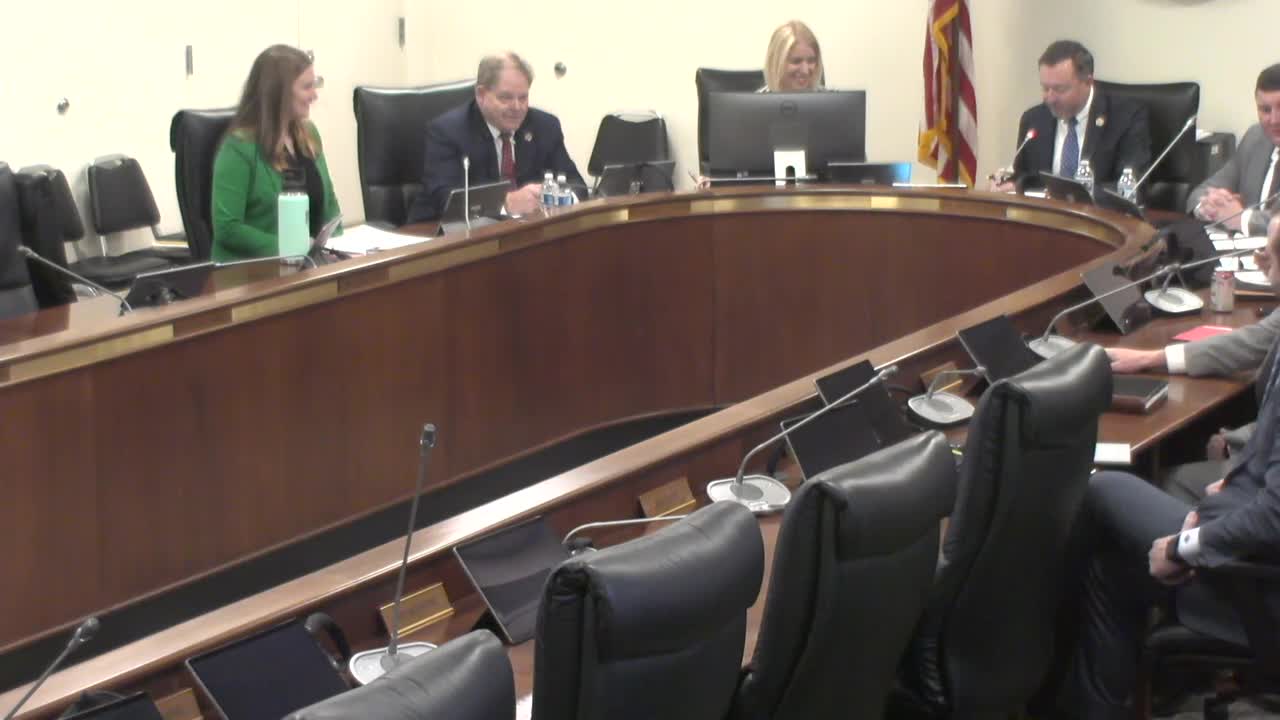
South Carolina Supreme Court Chief Justice Kitchard urged the House Judiciary Committee's Constitutional Law Subcommittee to approve proposed amendments to Rule 21 of the South Carolina Rules of Family Court, saying the changes would reduce unfair surprise at temporary hearings and promote statewide uniformity.
South Carolina Supreme Court Chief Justice Kitchard urged the House Judiciary Committee's Constitutional Law Subcommittee to approve proposed amendments to Rule 21 of the South Carolina Rules of Family Court, saying the changes would reduce unfair surprise at temporary hearings and promote statewide uniformity.
Chief Justice Kitchard said the proposal seeks to end what he called “trial by ambush” at temporary hearings and noted Article V, Section 4(a) of the South Carolina Constitution requires amendments to court rules be submitted to the judiciary committee and become effective 90 calendar days after submission unless disapproved. He asked lawmakers to view the change in the context of broader family-court caseload pressures and variation in local practice.
Kitchard gave five main reasons for the change: (1) family court needs prompt access to resolve time-sensitive cases, (2) temporary orders now often function as de facto final orders, (3) a patchwork of county practices undermines uniformity, (4) the rule includes catchall provisions to allow judicial discretion in particular cases, and (5) the Supreme Court will monitor and tweak the rule after implementation if needed. “The days of trial by ambush at temporary hearings must come to an end,” Kitchard said. “This rule accomplishes that.”
Practitioners and legislators pressed specifics of how the timing changes would work in practice. Representative Bamberg asked whether paragraphs G (ex parte relief) and H (court discretion) would allow judges to deviate from fixed timelines; Kitchard and family-court judges present agreed those paragraphs preserve judicial discretion to address individual fairness concerns. Bamberg framed the issue as one of balancing uniform rules with equity for defendants seeking counsel shortly before hearings.
Family-law attorneys split on the rule's effects. Jim McLaren, a Columbia family-court practitioner, supported the proposal as a way to move away from rushed on-the-bench decisions, saying the proposed timeline would provide judges advance access to affidavits, financial declarations and exhibits instead of exchanging them in the courtroom. “The goal of this rule is to get rid of trial by ambush,” McLaren said.
By contrast, former Representative Doug Brannan and other practitioners warned the new timing could produce scheduling burdens and more continuances in rural counties where service and mailing delays are common. Brannan described clients who secure counsel the day before a hearing and said the strict timing could force more in-person trips to clerk offices or increase continuances: “What it will do is increase the number of temporary hearings,” he testified.
Rebecca Creel, a domestic-practice attorney who helped review the draft, said the principal benefits are the extended time for service and clearer, uniform presentation of materials statewide, but she urged attention to implementation details — forms, clerk training and a public-facing notice so pro se defendants know new deadlines. She noted the rule will be implemented under the 90-day statutory timeline after submission unless the General Assembly disapproves.
Key procedural specifics discussed in the hearing included: the proposal requires a response to be served no later than 10 days before the hearing, affidavits and exhibits to be exchanged five days before the hearing, and hearings to be set between 21 and 45 days after a motion is filed; practitioners warned these windows create challenges in counties with sparse hearing calendars and slower mail service. Representative Bamberg and several lawyers emphasized paragraphs G and H retain judicial discretion to address good-cause scenarios such as a defendant securing counsel late.
The subcommittee took no formal vote on the rule at the hearing; the chair said the submission would be “taken under advisement” and no action was necessary at this point. Kitchard and Justice Verdon pledged to monitor implementation and recommended adjustments if aspects proved unworkable.
The committee heard multiple practitioners request more outreach and the chance to revisit the rule after a test period. The Supreme Court representatives said they expect to track the rule’s operation and proposed tweaks if necessary.