Get Full Government Meeting Transcripts, Videos, & Alerts Forever!
Get email alerts on the Ejectment Unlawful Occupants topic
No spam. Unsubscribe anytime.
Panel backs new ejectment process for unlawful occupants, adopts related stay-of-execution amendment
Summary
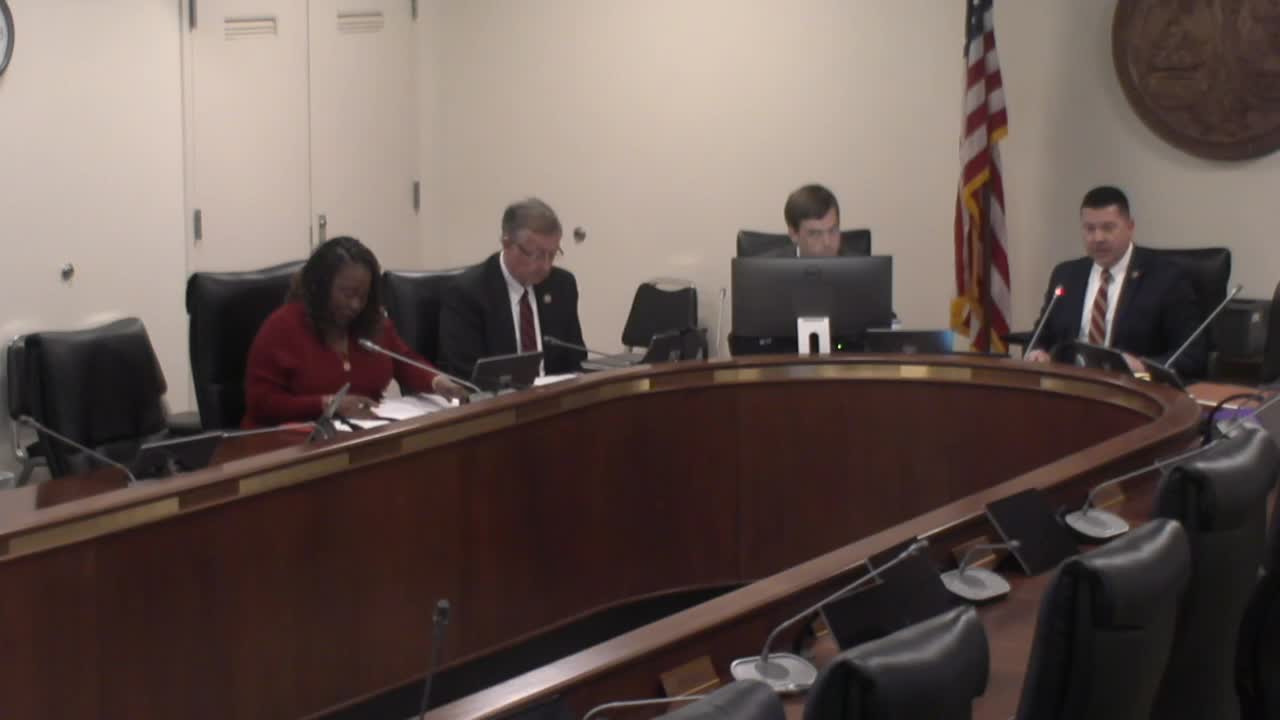
House Bill 3387, which creates a new expedited court process to remove unlawful occupants from residential dwellings and adds related criminal penalties, received a favorable report as amended from the Artificial Intelligence, Cybersecurity and Special Law Subcommittee by a 4-0 roll-call vote.
House Bill 3387, a measure to create a legal process for residential property owners to remove unlawful occupants commonly called squatters, received a favorable report as amended from the Artificial Intelligence, Cybersecurity and Special Law Subcommittee on a 4-0 roll-call vote.
The bill, introduced at the subcommittee meeting, allows a property owner or the owner’s agent to file a verified petition with a clerk of court or magistrate seeking an ex parte order for immediate removal of an unlawful occupant if the petition establishes specified facts. Those facts, as read into the record, include that the petitioner owns or is an agent for the property, the dwelling is residential, the occupant remains on the property without authorization, the property is not open to the public, the occupant has not been a tenant or former tenant within the prior three months, the occupant is not an immediate family member, the occupant has refused to leave, and there is no litigation pending. An ex parte removal order takes effect immediately and remains until a hearing, which the bill requires to occur within 24 hours unless delay is justified.
The measure authorizes county sheriffs to enforce removal orders and grants them authority to arrest individuals at the property for trespass, outstanding warrants, or other legal cause. The draft presented to the subcommittee also creates the criminal offense described in the bill as criminal mischief for unlawfully occupying, detaining, or trespassing on a residential property; violators may face felony penalties — the bill text read at the meeting cited penalties of up to three years’ imprisonment or a fine up to $3,000 — and magistrates may order civil remedies including permanent exclusion, removal of belongings, and damages and court costs when permanent relief is granted. The bill specifies that the new procedures are separate from existing tenant eviction laws and preserves tenant protections for lawful tenants.
Representative Tiffany Spann Wilder, a former Charleston County magistrate who raised multiple procedural concerns, pressed the subcommittee to ensure the measure would not displace the existing ‘‘notice to quit’’ process used for non-tenant occupants and urged the bill be clarified so a personal representative (PR) of an estate could bring the action without always needing an attorney. Spann Wilder said, “I would like to see us make sure that a PR could come in... and that they could stand in without having to necessarily get an attorney involved,” and recommended clarifying the bill’s agent language to explicitly name personal representatives where appropriate.
Subcommittee members also discussed law-enforcement roles. Spann Wilder and others noted that constables carry out many eviction and ejectment duties in larger municipalities and asked that the bill provide concurrent authority for constables as well as sheriffs. The chair acknowledged the point and agreed that constables’ roles should be considered in a broader amendment at full committee.
During debate the subcommittee also considered an amendment that revises the Landlord-Tenant Act’s procedures for staying execution of an ejectment or eviction judgment during an appeal. That amendment requires a tenant seeking a stay to file proof of an appeal and an affidavit promising to continue paying rent during the appeal; if the affidavit is accepted, the court grants the stay, which can be revoked for noncompliance. The amendment also provides for disputed rent amounts to be placed in escrow while the court resolves the dispute and clarifies that appellate courts will not grant a stay unless the affidavit is filed. Representative Ben Wilder noted that some counties require a civil bond hearing to establish the amount due and warned that prolonged appeals can leave landlords without rent while remaining responsible for property maintenance.
After discussion, the subcommittee adopted Amendment 1 (related to the appeal/stay process) and then ordered a roll-call favorable report of H 3387 as amended. The roll-call recorded: Representative Travis Moore — Aye; Representative Jerry Govan — Aye; Representative Tiffany Spann Wilder — Aye; Representative Paul Wickenheimer — Aye. The chair announced the bill received a favorable report as amended by a 4-0 vote.
The subcommittee noted staff will prepare a comprehensive amendment for consideration in full committee to address clarified agent language, constables’ role, elder/heir-property concerns, and form alignment for magistrate procedures. No public testimony was recorded on H 3387 in the subcommittee hearing.
Looking ahead, the chair said the full Judiciary Committee would meet later in the day, where members indicated they intended to present further amendments.