Get Full Government Meeting Transcripts, Videos, & Alerts Forever!
Get email alerts on the Child Protection Ai topic
No spam. Unsubscribe anytime.
Committee backs bill criminalizing AI-altered sexual images of identifiable minors
Summary
The committee reported H3046 favorably after Representative Moore said the bill closes a gap allowing prosecution when AI is used to create explicit images of real minors. Committee approved the measure by roll call (22–0–2).
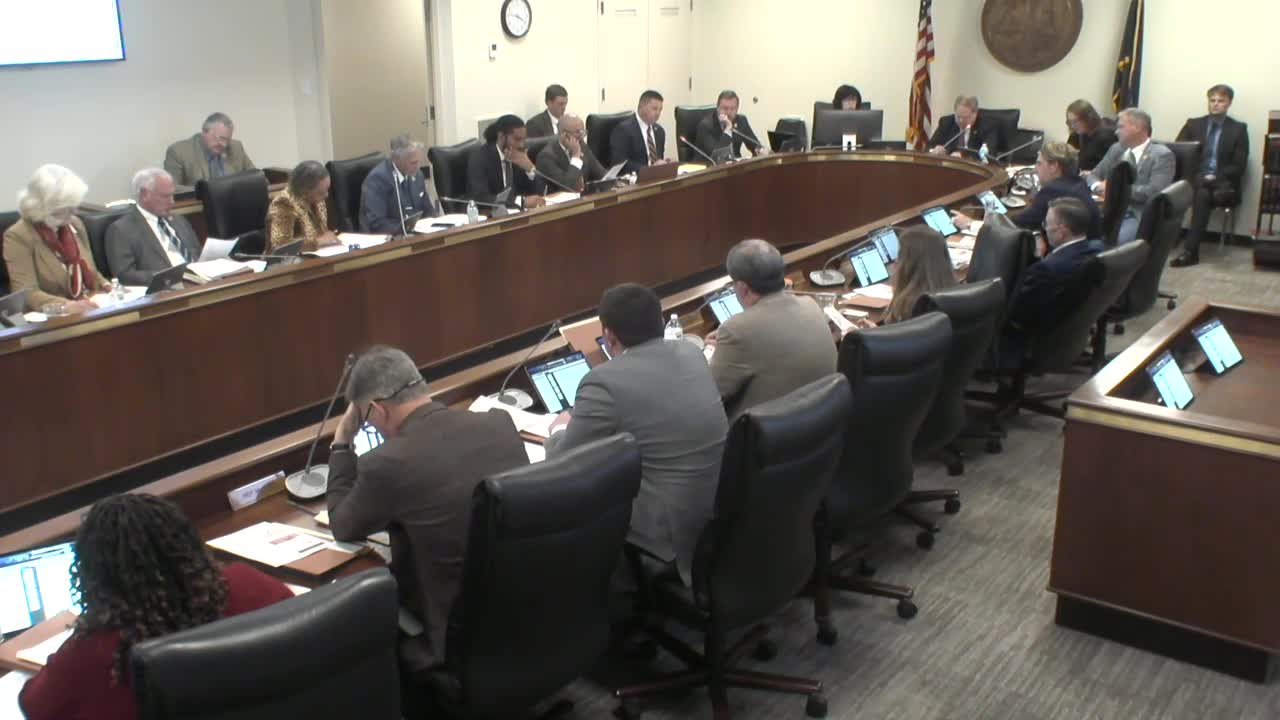
The House Judiciary Committee on Wednesday reported H3046 favorably, a bill that would criminalize the creation, distribution and possession of AI-morphed sexual images of identifiable minors.
Representative Moore, presenting the bill, told the panel that the measure targets images created or altered through artificial intelligence to make it appear that a real child is engaged in explicit conduct. “This is a serious form of child exploitation and becoming a widespread problem and it’s time for our laws to catch up with this new technology,” Moore said.
Moore explained the bill defines an “identifiable minor” as an image of someone who was a minor when an image was created, adapted or modified, or whose image as a minor was used in the creation. The bill would not require proof of the actual identity of the child—only that a real person’s likeness was used, Moore said. He described a tiered penalty structure that amends existing child exploitation statutes: enhancement for producing morphed images for pecuniary gain, coverage for production or distribution regardless of pecuniary gain, and possession as a separate offense. He said adult offenders would be classified into tiers on the sex-offender registry, while minors would be handled in family court and not subject to registry classification on a first offense.
Committee members asked clarifying questions. Representative Bamberg confirmed the bill applies only to images of real people and not wholly AI‑generated faces; Moore said a separate bill covers purely synthetic persons. Representative Wetmore sought confirmation that an ordinary clothed photograph altered to create an explicit image would fall within this bill’s scope; Moore said it would.
The committee ordered a roll-call vote. H3046 received a favorable report by the committee, with a reported tally of 22 in favor, 0 opposed and 2 not voting.
The bill’s text as discussed amends existing South Carolina child-exploitation statutes and includes provisions on registry tiering and timelines for removal from registry tiers as applicable. Committee discussion noted law-enforcement investigation exceptions so officers may lawfully possess images as part of an investigation.