Get Full Government Meeting Transcripts, Videos, & Alerts Forever!
Get email alerts on the Permitting Deadlines topic
No spam. Unsubscribe anytime.
Bill to force 45-day permitting decisions draws municipal concerns about notice and state review delays
Summary
House Bill 3215 would require local planning and permitting bodies to render decisions within 45 days or have applications deemed approved. Local officials warned the timeline conflicts with public-notice rules, does not define ‘render a decision,’ and does not account for state-level permitting delays.
House Bill 3215, introduced to set a statutory deadline for local permitting decisions, drew caution from municipal staff and planners who told the Medical, Military, Public and Municipal Affairs subcommittee the text could conflict with public-notice timelines and state-level reviews.
Sponsor Representative Burns described the bill as an attempt to set a firm limit on permitting delays. "I put on the bill at 45 days. I don't care where it's 90 days, 75 days, 45 days," Burns said, stressing he seeks a "drop-dead date" to prevent protracted permitting timelines that have stalled projects.
The bill would require local planning and permitting entities to render a decision on building permits, certificates of occupancy, zoning variances or appeals within 45 days after an application is filed, or the application would be deemed approved, according to the committee summary.
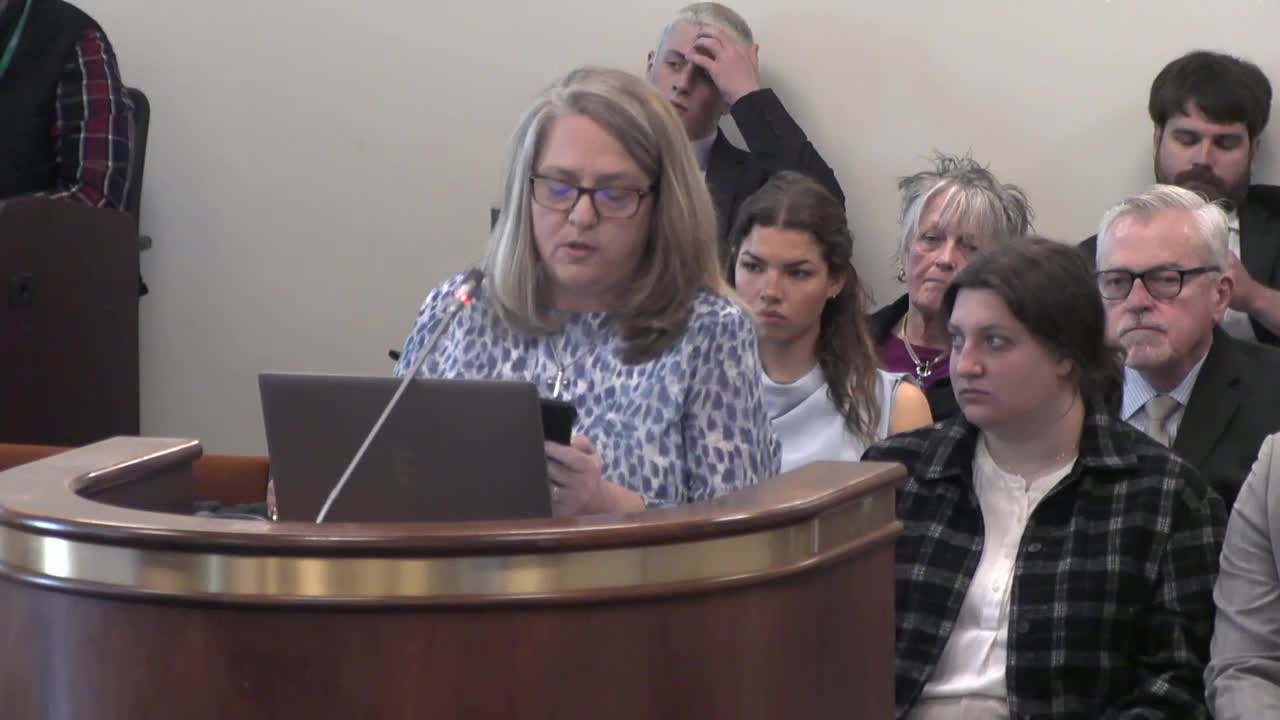
Municipal officials and planners said the proposed timeframe could clash with existing public-notice and procedural requirements. Christianne Farrell, assistant administrator for the Town of Mount Pleasant, said the bill's text references multiple boards and only expressly covers variances and appeals; she warned that appeals and variances currently require at least 15 days of public notice and that advertising lead times effectively require about 21 days, leaving little or no time within a 45-day window for deferrals or additional review. "The lack of definition of what it means to render a decision could cause confusion," Farrell told the committee.
Michael Frickson, principal planner for the City of Greenville, said the bill did not account for the variable complexity of projects or external reviews, and that imposing a short deadline could shift interactions from collaborative problem-solving to a paperwork-driven denial process. "This bill would turn that process on its head and shift the focus from mutual collaboration to a frustrating back and forth over denial comments," Frickson said, noting that Greenville alone processed about 4,000 permits last year and that average review times for single-family and commercial permits were well below 45 days.
Local officials also noted state-level permitting reviews can create unavoidable delays. Farrell pointed to the coastal-zone consistency review for developments over half an acre in coastal counties, saying the statutory 90-day review often takes seven months to a year in practice; that state-level schedule, she said, limits the local government's ability to meet any statutory deadline.
Members and witnesses agreed on the need to speed permitting where delays are excessive, but municipal representatives urged more precise drafting: define "render a decision," clarify treatment of incomplete applications, and account for required public-notice minimums and state review dependencies. Several municipalities and the Municipal Association urged the subcommittee to adjourn further action on the bill for additional stakeholder work.
Ending: The committee did not take final action on HB3215; members asked for more discussion and technical work to reconcile the proposed deadline with existing notice requirements and state review timelines.