Get Full Government Meeting Transcripts, Videos, & Alerts Forever!
Get email alerts on the Disability Placard Certification topic
No spam. Unsubscribe anytime.
Committee pauses debate on bill to let physical therapists certify handicap placards for temporary cases
Summary
House Bill 3,842 would allow a physical therapist to certify a person is handicapped and indicate whether the impairment is temporary or permanent for DMV placard or plate applications; medical associations and PT groups signaled willingness to negotiate limits for permanent certifications.
House Bill 3,842 would add physical therapists to the list of providers who may certify that an individual is handicapped and indicate whether the impairment is temporary or permanent for purposes of applying for a handicap placard or license plate, committee staff summarized.
Ann Margaret McCraw, CEO of Midlands Orthopedics and Neurosurgery, speaking for the South Carolina Orthopedic Association, said the association is willing to consider limited authority for physical therapists but has reservations about allowing PTs to certify permanent disability. “We do think the ability to certify permanent disability is a much different (question) and speaks to an underlying medical condition that we think those folks would already be served by a physician,” McCraw told the subcommittee, and suggested PTs might be acceptable certifiers for temporary, function‑based limitations while patients are in rehabilitation.
Amber Gato, a physical therapist who serves as co‑legislative chair for APTA South Carolina and represents roughly 4,500 therapists in the state, said PTs are doctoral‑trained and routinely assess movement and functional limitations over multiple visits. “We believe that physical therapists are able to recognize and rehabilitate movement disorders and are therefore highly qualified to determine the disability status for those patients,” Gato said, and noted 14 other states already allow PTs to provide this certification.
Why it matters: Supporters said allowing PTs to certify temporary functional disability could reduce administrative burden and spare patients an extra visit solely to obtain paperwork. Orthopedic physicians said they would not oppose a compromise limited to temporary certifications tied to the functional conditions PTs treat.
Committee members asked for specifics on the application form used by the Department of Motor Vehicles. Witnesses and the chair reviewed the current form’s definitions: the temporary designation on the DMV application was described in testimony as covering impairments of at least four months but not to exceed one year; permanent indicates no expected recovery. The Orthopedic Association suggested PTs could sign temporary boxes for the specific functional limitations they treat, but physicians or physician‑led care teams should retain authority to certify permanent impairments.
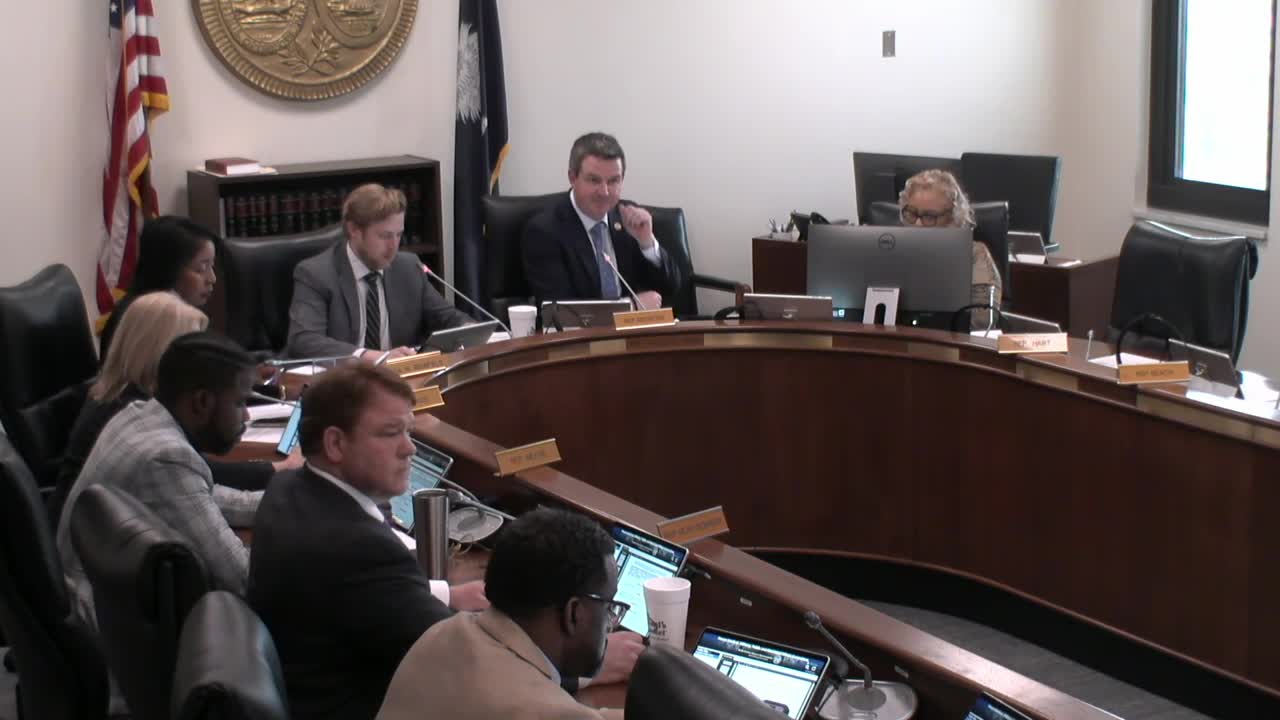
The subcommittee did not advance the bill. Representative Montgomery moved to adjourn debate so sponsors, PT representatives and medical associations could negotiate language; the motion carried on a roll call. Ms. Spears recorded aye votes from Mr. Beach, Miss Davis, Mr. Montgomery, Mr. Moore and Mr. Sessions.
Ending: The bill remains under committee consideration pending drafting of compromise language to limit PT certification to temporary, function‑based conditions or otherwise clarify scope.