Get Full Government Meeting Transcripts, Videos, & Alerts Forever!
Get email alerts on the Health Insurance Claims topic
No spam. Unsubscribe anytime.
Panel pauses debate on bill that would require providers to file patient insurance claims within 30 days
Summary
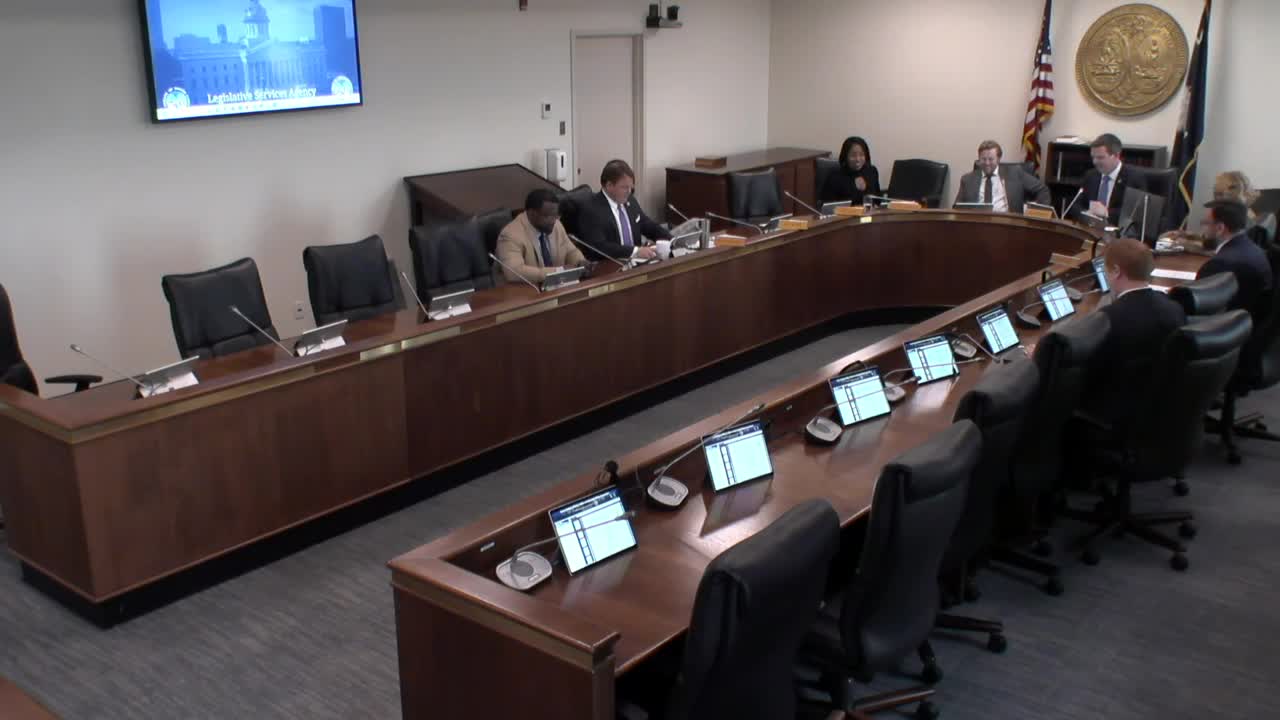
A House subcommittee heard testimony on House Bill 3,089, which would require medical providers to file claims with a patient’s health insurer within 30 days of treatment; members and witnesses raised concerns about practical barriers and asked to continue drafting.
House Bill 3,089 would require hospitals, health-care facilities and other medical providers who treated an insured patient to file a claim with the patient’s health insurer within 30 days of treatment; providers would not be reimbursed if a claim is not filed within that period, committee staff summarized.
The bill’s sponsor, Representative Pope, told the House Medical, Military, Public and Municipal Affairs subcommittee that the measure is intended to prevent situations in which providers advise injured patients not to use their insurance or delay filing, leaving patients responsible for large bills. “You shouldn’t punish people because it’s an accident,” Representative Pope said, adding he hoped the committee could “find a way” to allow for an initial filing while preserving rights of secondary payers such as Medicare or Medicaid.
Why it matters: Sponsors said the proposal would ensure insured patients get the benefit of negotiated insurance rates and reduce the chance that households face collections while claims are pending. Witnesses and several members said the bill’s 30‑day requirement, as written, may be too rigid given real‑world billing practices and the multiple insurers often involved in a single episode of care.
Committee members pressed sponsors on practical problems that can delay a timely filing. Representative Beach, who previously worked as an enrollment analyst, said small errors — a missing period or a wrong middle initial — can trigger denials that take weeks to clear. Michael Hall, operations director for First Priority Medical Transport and a representative of the South Carolina EMS Association, told the panel the EMS billing industry typically submits claims about seven days after an event and that insurance companies often take about 21 days to respond. “Those are just two simple, honest mistakes that really make this 31 days, nearly impossible to meet with regularity,” Hall said.
Witnesses and members urged the committee to consider a more flexible approach. Representative Pope said he was not “hell‑bent on the 30 days” and that hospitals and others have raised timing concerns; he suggested the panel could adopt an initial‑filing requirement that preserves subrogation and later coordination with Medicare or Medicaid.
The subcommittee did not vote on the bill itself. In light of testimony and questions, a member moved to adjourn debate so sponsors, providers and other stakeholders could continue drafting and negotiating language; the motion to adjourn debate passed on a roll call. Ms. Spears recorded aye votes from Mr. Beach, Miss Davis, Mr. Montgomery, Mr. Moore and Mr. Sessions.
The subcommittee chair thanked witnesses and adjourned the item pending further work.
Ending: The committee left the bill open for revisions and additional stakeholder talks rather than advancing it this session.