Get Full Government Meeting Transcripts, Videos, & Alerts Forever!
Get email alerts on the Funeral Services Continuing Education topic
No spam. Unsubscribe anytime.
Committee withdraws funeral-board regulation to clarify what counts as ‘physical attendance’ for continuing education
Summary
Lawmakers and board counsel sought clarification on whether the statute’s requirement for "physical attendance" can be satisfied by live, synchronous online courses; the committee voted to withdraw the proposed regulation so staff can revise the language.
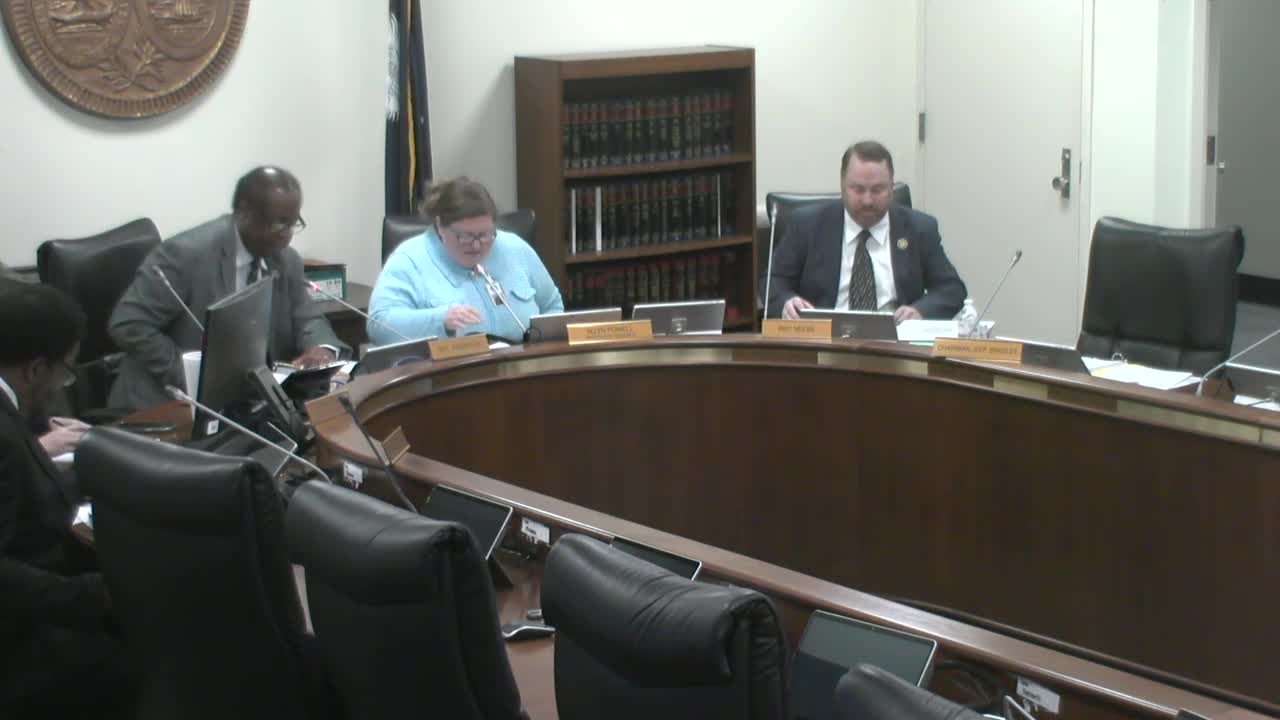
The committee voted to withdraw proposed amendments to the South Carolina State Board of Funeral Service regulations so staff can revise language clarifying whether the statute’s requirement for "physical attendance" for continuing education can include live, synchronous online courses.
The change under consideration would implement provisions of a 2024 legislative act that added additional continuing-education and crematory-operator rules to the board’s regulations, Holly Beeson of the South Carolina Department of Labor, Licensing and Regulation said. Beeson told the committee the draft largely mirrors the statute but that the board had questions about the meaning of the phrase "physical presence."
Landis DeBridal, a licensed funeral director and member of the South Carolina Board of Funeral Service, told the committee that requiring licensees to travel in person would be an "undue burden on small funeral homes, that often are kind of a one-person owner-operator type show." He described rural travel time and the day-to-day demands on small funeral directors and urged the committee to allow an online synchronous option. "I frankly do not understand why ... you can take college classes online," DeBridal said.
Brandy Duncan, advice counsel for the Funeral Board at LLR, said the statutory phrase requiring "physical attendance" appears in section 40-19-250 and that the board has interpreted the phrase to permit synchronous, interactive online courses in which instructors and students can interact in real time. "That language, physical attendance, is in the statute," Duncan said. "The board ... interpreted that they would accept as physical attendance attending a synchronous course where the instructor and the students could interact with each other." She noted the board tried to interpret the statute "as liberally as they can while still complying with the sense of what the statute itself says."
Representative Veil moved to withdraw the document for resubmission so the proposed regulation can be edited to define or clarify that synchronous interactive online learning counts as the required in-person component. The motion was seconded and carried by voice vote. "Aye. Those who oppose vote nay. The ayes have it and so is ordered," the chair said.
The committee’s withdrawal does not change the statutory requirement; it directs staff and the board to return with revised regulatory language that explains whether and how real‑time online instruction satisfies the law’s "physical attendance" requirement. Beeson said the staff can add language explicitly defining synchronous interactive online courses as acceptable as part of physical attendance, then resubmit the proposal for the committee’s consideration.
The change arises from a 2024 statute (referenced in the draft as the 2024 enactment that amended funeral-service practice) that added new provisions for crematory operators and adjusted continuing-education hours. The committee did not adopt a permanent regulatory change at the meeting and instead ordered the document withdrawn pending resubmission with clarifying language.