Get Full Government Meeting Transcripts, Videos, & Alerts Forever!
Get email alerts on the K 12 Special Education topic
No spam. Unsubscribe anytime.
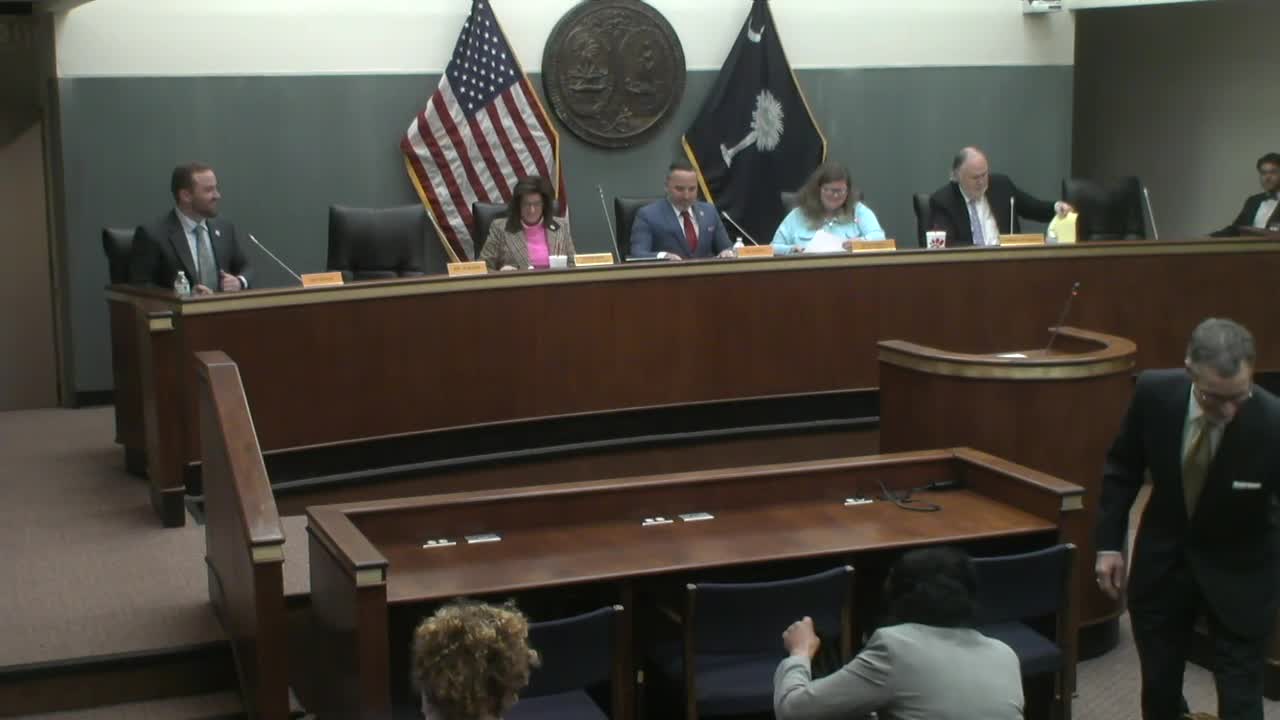
Committee withdraws sign-language interpreter regulation after lengthy testimony on standards and workforce
Summary
After extensive testimony from department staff, interpreters and advocates, the subcommittee voted to withdraw and resubmit proposed regulations setting minimum certification and continuing-education standards for K–12 educational interpreters so stakeholders and legislators can negotiate changes.
The Education Administrative Subcommittee withdrew and will resubmit proposed regulations that set minimum competency, education and continuing-education requirements for sign-language interpreters in K–12 schools after extended testimony highlighted a shortage of highly rated interpreters and concerns about interim impacts on students.
The regulation (document 53-19) responds to Act 188 of 2022, which directs the Department of Education to establish minimum competency requirements for interpreters used by government agencies and health-care facilities. Department staff and advocates told the subcommittee they sought a balance between raising interpreter standards and retaining enough practitioners to staff classrooms.
Lisa McClimick of the Department of Education's Office of Special Education (presenting for the department) told members the state has roughly 98 educational interpreters (excluding the South Carolina School for the Deaf and Blind) and that only 14 of those currently score at the highest performance band on the Educational Interpreter Performance Assessment (EIPA). She said the department proposed a stepped increase in EIPA cut scores — starting at 3.2 and moving toward 3.7 and then 4.0 over multiple years — and a rising education level requirement (from high-school diploma to associate's degree and eventually a bachelor's). McClimick said stakeholder feedback showed that a 3.5 starting cut — favored by some advocates — would immediately eliminate roughly 46% of current interpreters, while a 3.2 baseline would eliminate about 20%.
Advocates and interpreters urged higher initial standards and more continuing education. Anita McDaniel, executive director of the South Carolina Association for the Deaf, urged a minimum EIPA of 3.5 and said a high-school diploma is not an adequate baseline for interpreters: "Once they take the EIPA test, we would really like it upgraded to a minimum of 3.5 instead of 3.2." McDaniel added that a progressive timetable toward 4.0 would be acceptable if the state provided supports.
Multiple committee members raised the tension between quality and workforce availability. Representative David Martin pressed the department on how many students would be affected and how long it would take to raise workforce skill levels; department staff estimated an 8-year timeline to reach higher target cut scores and noted limited test participation when the state offered EIPA testing four times in the past year.
Public commenters with interpreting experience told the committee that mandatory standards and continuing-education requirements could improve outcomes but emphasized transition plans and buffer periods. One longtime educational interpreter described obtaining a 3.6 EIPA in 2007 and urged the subcommittee to require higher performance standards to protect students' access to curriculum.
After discussion, Representative Jeff Bradley moved to withdraw the regulation and resubmit it for further stakeholder negotiation; the motion passed. The chair said the subcommittee would schedule stakeholder meetings in the coming weeks to seek a compromise that "works for everybody, but most importantly works for our kids."