Get Full Government Meeting Transcripts, Videos, & Alerts Forever!
Get email alerts on the Insurance topic
No spam. Unsubscribe anytime.
Insurance director requests new actuary FTE and $350,000 to restore staff buying power as liquor-liability, coastal markets strain coverage
Summary
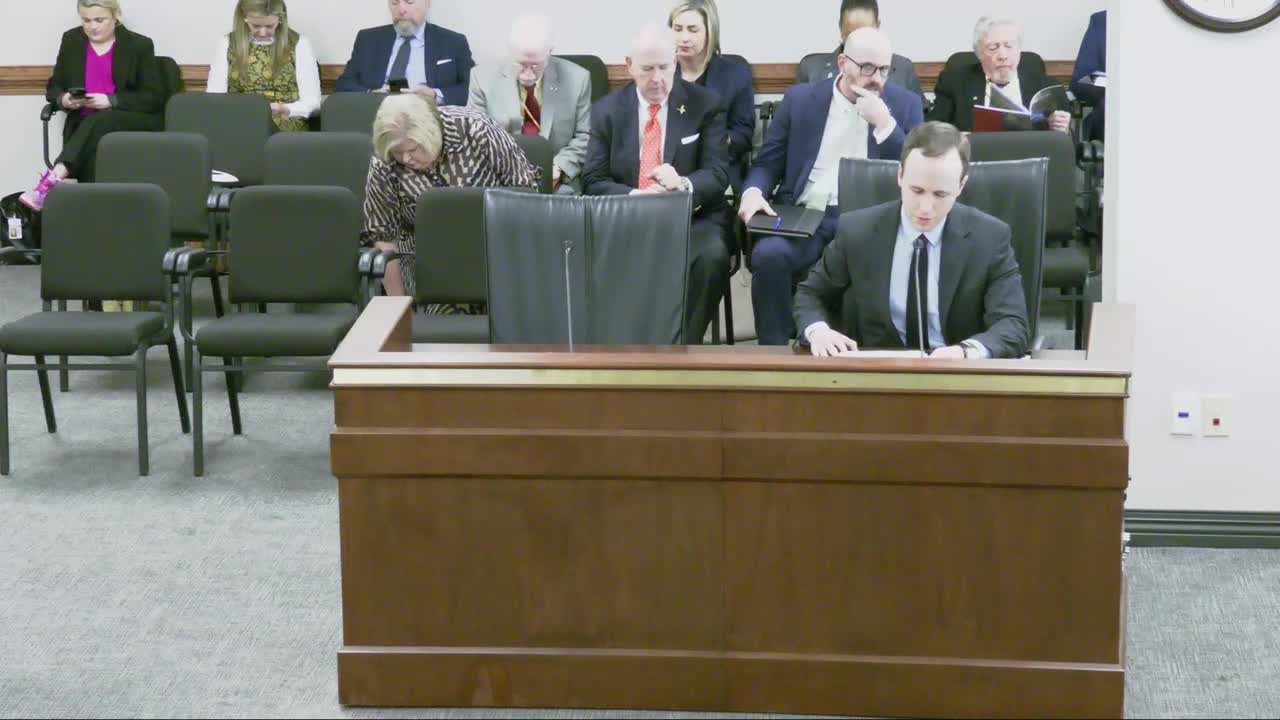
Michael Wise, director of the South Carolina Department of Insurance, told the Senate Finance Committee he is seeking one new actuarial full‑time equivalent and additional recurring funds to help the agency respond to rising data, research and market‑review demands.
Michael Wise, director of the South Carolina Department of Insurance, told the Senate Finance Committee he is seeking one new actuarial full‑time equivalent and additional recurring funds to help the agency respond to rising data, research and market‑review demands.
Wise said the department is asking for a recurring FTE for a property, casualty and life/health actuary at a recurring cost of $214,500 and a recurring appropriation of about $350,000 to address diminished staff buying power, for a combined request of $564,500.
The request, Wise said, follows work the department began after 2023 legislation to regulate pharmacy benefit managers (PBMs). "We are trucking along. We've hired people," Wise told members, noting the PBM examination process began in January 2025. He said the new actuarial position would let the agency respond to frequent research and data requests without pulling staff away from other responsibilities.
Why it matters: Committee members pressed Wise on lines of business that are now unusually hard for insurers to write — particularly liquor‑liability coverage and certain coastal property exposures — and on the limits of the department's authority to influence commercial rates.
Most important facts
- Actuarial and COLA request: Wise said the actuarial FTE would cost an estimated $214,500 recurring; the additional recurring request to restore staff buying power was about $350,000. He described the combined ask as $564,500.
- PBM regulation: The department implemented examinations tied to 2023 law and began examination work in January 2025.
- Market stress: Wise described the liquor‑liability market as the weakest line in the state. Using the department's 2023 data, he said about 35 insurance groups still underwrite establishments with 30% or less alcohol receipts, and about 26 groups underwrite establishments with more than 30% alcohol receipts. He said average premiums rose roughly 24% for the lower‑alcohol subset and about 180% for the higher‑alcohol subset between 2021 and 2023. He added some insurers are reducing or stopping new business in that line because claims and expenses have far outpaced premiums in recent years.
- Coastal programs and mitigation: Wise described the South Carolina Safe Home Program, funded in part by premium‑tax allocations from the state residual market (the Wind and Hail Underwriting Association). He said the Safe Home Program provides grants to make homes more wind‑resistant and that funding available to the program ebbs and flows with residual market size; he told the committee he will ask the department's board to study program updates and lessons from other states.
- Rate regulation limits: Wise explained personal lines (auto, homeowners) are subject to prior approval filings, while most commercial lines — with the exceptions of medical malpractice and workers' compensation — are not filed for prior approval in South Carolina. He warned that if the state moved to regulate (file) commercial rates, the department would gain data and enforcement authority but could also force upward pressure on rates to meet statutory tests that require rates not be inadequate, excessive or unfairly discriminatory.
Other discussion and context
Committee members asked whether non‑insurance regulations (for example, environmental rules under the Beachfront Management Act) affect coastal underwriting; Wise said those are not insurance regulations and that he had not received direct industry complaints tying those regulations to underwriting decisions. He identified reinsurance cost rises, higher property values, and inflationary lags as additional forces increasing coastal property premiums.
On tort reform and litigation: Wise said his office monitors reforms in other states but noted the department does not regulate litigation. He described Florida's changes as aimed at issues particular to that state's property market and contractors/adjuster activity and said those reforms appeared to have encouraged more carriers to enter Florida's market.
Provisos and reports
Wise also asked the committee to remove two completed provisos from the department's budget: a coastal insurance study that was a one‑time item, and a provision tied to the Insurance Review and Study Committee whose report was issued in January.
Sources and attributions
Direct quotes in this article come from Michael Wise, director of the South Carolina Department of Insurance; a list of witnesses Wise presented with (Julian Barton, legislative liaison; Tommy Watson, deputy director) was provided by Wise during his appearance.
Ending
Wise asked the committee to consider the recurring $564,500 package so the department can retain and recruit technical staff and continue PBM examinations and market monitoring. Committee members requested further data on Safe Home Program funding flows and the department agreed to provide historical funding and expenditure information.