Get Full Government Meeting Transcripts, Videos, & Alerts Forever!
Get email alerts on the Ethics Enforcement topic
No spam. Unsubscribe anytime.
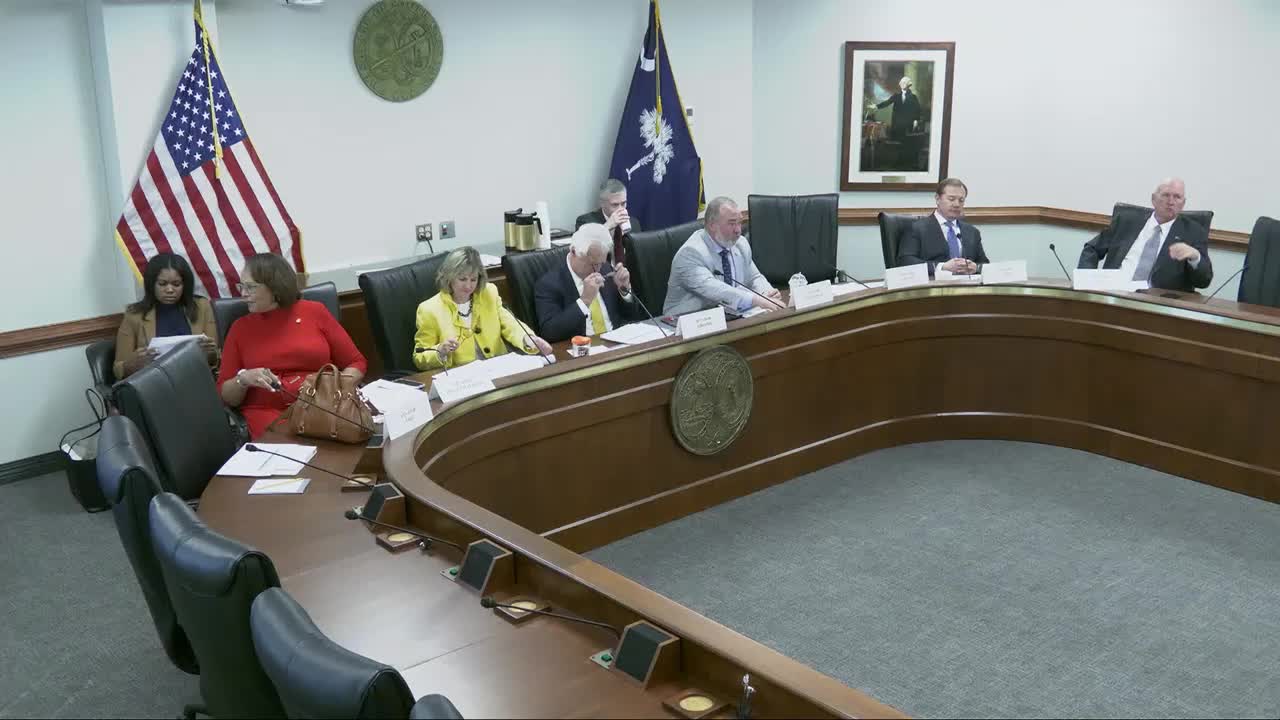
State Ethics Commission asks to keep current funding, highlights candidate training video and staffing gains
Summary
The State Ethics Commission told the South Carolina Senate Finance Committee subcommittee it is not seeking additional recurring funds, citing new staff, investigators and a candidate training video intended to improve compliance and reduce enforcement workload.
State Ethics Commission Director Dyson told the Senate Finance Committee constitutional subcommittee that the commission is not asking for any additional recurring funds for fiscal year 2026 and asked to be maintained at its current funding level.
The commission has recently hired and trained additional staff and investigators, Director Dyson said, adding the office now has six investigators and two attorneys to handle enforcement of the Ethics Act and noncompliance with filing requirements.
Those staffing increases, the director said, have enabled the agency to speed investigations and to focus resources on individual enforcement matters rather than routine filing oversight. “We don’t have a request for any additional funds this year,” Director Dyson said.
Why it matters: The commission’s staffing and outreach approach affect how the agency enforces campaign disclosure, financial filings and lobbyist reporting. Faster processing of routine noncompliance could reduce backlog on investigations into alleged misconduct and change how the agency prioritizes cases.
Key details: Director Dyson described two main operational developments. First, the agency expanded its noncompliance unit and investigative staff after prior funding increases over the last two years; that expansion resulted in more complaints being filed because more staff are reviewing filings. Second, the commission worked with the Municipal Association of South Carolina and the State Election Commission to produce and distribute a candidate training video on campaign filing and disclosure requirements.
The training video is posted on the commission’s YouTube channel and the commission said it can push the video directly to registrants when the State Election Commission provides candidate rosters. The director reported that prior in-person trainings reached roughly 60 candidates per year; the video, by contrast, is reaching thousands. The commission said it intends to track whether the video reduces noncompliance and enforcement workload.
On enforcement, Director Dyson said the commission’s noncompliance complaints are mostly for missed filing deadlines, late campaign disclosure reports, or reporting errors; separate conduct complaints (nepotism, self-dealing) remain distinct. When asked about open but inactive campaign accounts, the director said the commission can report back with the precise count from its database, and that the agency’s noncompliance unit sends letters and follows up when account balances are zero or filings are closed.
No formal vote or change in appropriation occurred during the presentation. The committee asked technical questions about outreach to counties, the Association of Counties, and whether filings by legislative candidates are covered by the commission (the director said legislative candidates should consult their respective house or senate ethics committees for those rules). The director said one vacancy remains on staff but did not request additional recurring funds; she noted she may return to request more staff if caseloads increase.
Ending: Committee members thanked the director for the update and did not take action during the hearing.