Get Full Government Meeting Transcripts, Videos, & Alerts Forever!
Get email alerts on the Judicial It Modernization topic
No spam. Unsubscribe anytime.
Chief Justice asks Senate Finance for $45 million now, says statewide court IT overhaul could top $100 million
Summary
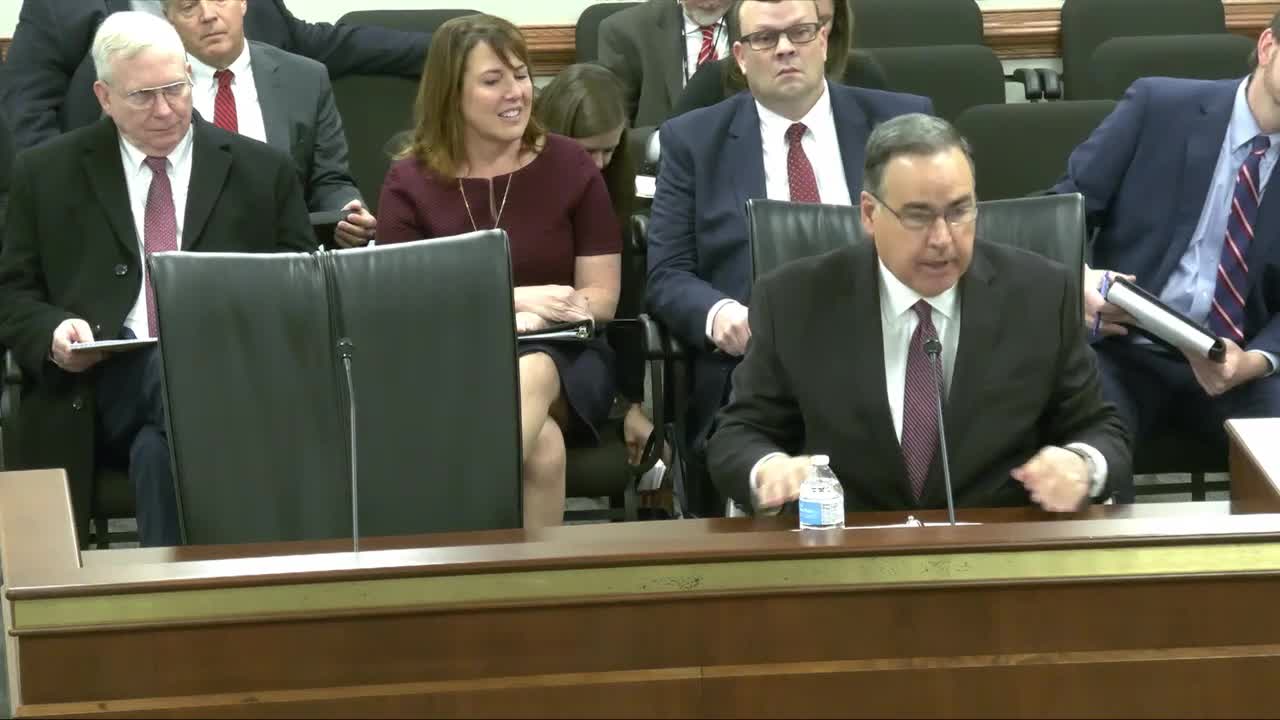
Chief Justice John Kittredge told the South Carolina Senate Finance Committee that the judicial branch is requesting $45,000,000 in nonrecurring funds to begin modernizing the statewide trial court case management system and asked legislators to consider a larger program that could top $100,000,000.
Chief Justice John Kittredge told the South Carolina Senate Finance Committee that the judicial branch is requesting $45,000,000 in nonrecurring funds to begin modernizing the statewide trial court case management system and asked legislators to consider a larger program that could top $100,000,000.
Kittredge told senators that the branch already has roughly $25,000,000 remaining from a prior $28,000,000 appropriation, and that his team identified nearly $35,000,000 in discretionary carryforward funds they could reallocate, but that the branch would still need additional nonrecurring money to reach a workable minimum. “I respectfully request from this committee that you allow me the opportunity to begin in earnest with a request for $45,000,000 in nonrecurring funds,” Kittredge said.
The $45 million request is intended to restart a statewide trial-court case management modernization project that Kittredge described as necessary to provide complete, accurate information about hearings, workloads and court schedules across municipal, probate, magistrate, family and circuit courts. He told the committee the branch lacks comprehensive data on matters such as probation revocations, juvenile hearings and Department of Social Services (DSS) hearings and said that incomplete records make it difficult to allocate judges, staff and courtroom time wisely.
Kittredge said a statewide modernization would take years and cited cost comparisons from other states: the National Center for State Courts data showed North Carolina began in 2018 with roughly $84,000,000 committed and Georgia has budgeted about $100,000,000. Kittredge said modern technology, including artificial intelligence tools, should be integrated from the start rather than building a system that would be outdated within a few years.
The chief justice also asked the committee to approve recurring requests the branch submitted: three new family-court judgeships targeted to Berkeley, Lexington and Beaufort counties; a $1,000-per-month administrative allowance for chief administrative judges in family and circuit courts to match allowances other administrative judges receive; and additional funding to hire and retain attorneys, paralegals and investigators for the Office of Disciplinary Counsel (ODC), which the branch says faces a backlog that has grown about 40 percent in recent years.
Kittredge said his office had deliberately identified internal savings to show “skin in the game,” explaining that about $35,000,000 of discretionary funds could be redirected toward the modernization effort, and that roughly $25,000,000 of prior trial-court funding remains available. He said the branch hoped that those amounts combined with new legislative funding would reach the minimum threshold the branch believes necessary.
Committee members asked about integration with solicitors, public defenders and other criminal-justice partners. Kittredge said solicitors have reached out and that he wants an integrated system if it is technologically feasible, but he did not commit to a specific integration plan. He also said the branch recently hired an IT director who will participate in further study and planning.
Other judicial leaders who spoke during the hearing described related agency needs. Paul McGargle, head of fiscal services, and interim state court administrator Dan Scharouse answered technical questions about carryforward balances, server and e-filing upgrades, and categories of funds the branch plans to reassign. Administrative Law Court Chief Judge Anderson described absorbing higher-than-anticipated renovation and technology costs in his court, and requested modest additional recurring funds to hire and retain staff attorneys and law clerks.
Kittredge emphasized transparency and fiscal accountability if funds are awarded and told the committee the branch welcomes further study and vetting of the request. He cautioned that the branch is currently negotiating a contract dispute tied to earlier procurement for a trial-court case management system; he said that because negotiations are ongoing he could not offer details but that the branch has retained counsel and expects to resolve the matter.
Senators broadly expressed support for updating court technology and for addressing family-court backlog and staffing needs. Several senators pressed for more detail about how the branch would use the carryforward funds and asked whether the reallocated money would impair other functions; Kittredge said the reallocated funds are discretionary and would not harm other core functions. Committee members asked the branch to provide more detailed implementation timelines and to meet with the new IT director so the committee can better understand how long deployment would take; Kittredge said early estimates put implementation in the five- to ten-year range.
The judicial branch also flagged several provisos and other requests in its full budget package, including converting five temporary FTEs in an interpreter program to permanent positions; the branch said that information is in the materials provided to staff.
The committee did not take formal votes on the requests during the hearing.
The judicial branch presentation and subsequent questioning make the modernization and budget reallocation the central unresolved fiscal questions for the committee as it considers the branch’s FY requests this session.