Get Full Government Meeting Transcripts, Videos, & Alerts Forever!
Get email alerts on the Infrastructure topic
No spam. Unsubscribe anytime.
Rural Infrastructure Authority reports ARPA grant rollout and requests $24 million in recurring grant funding
Summary
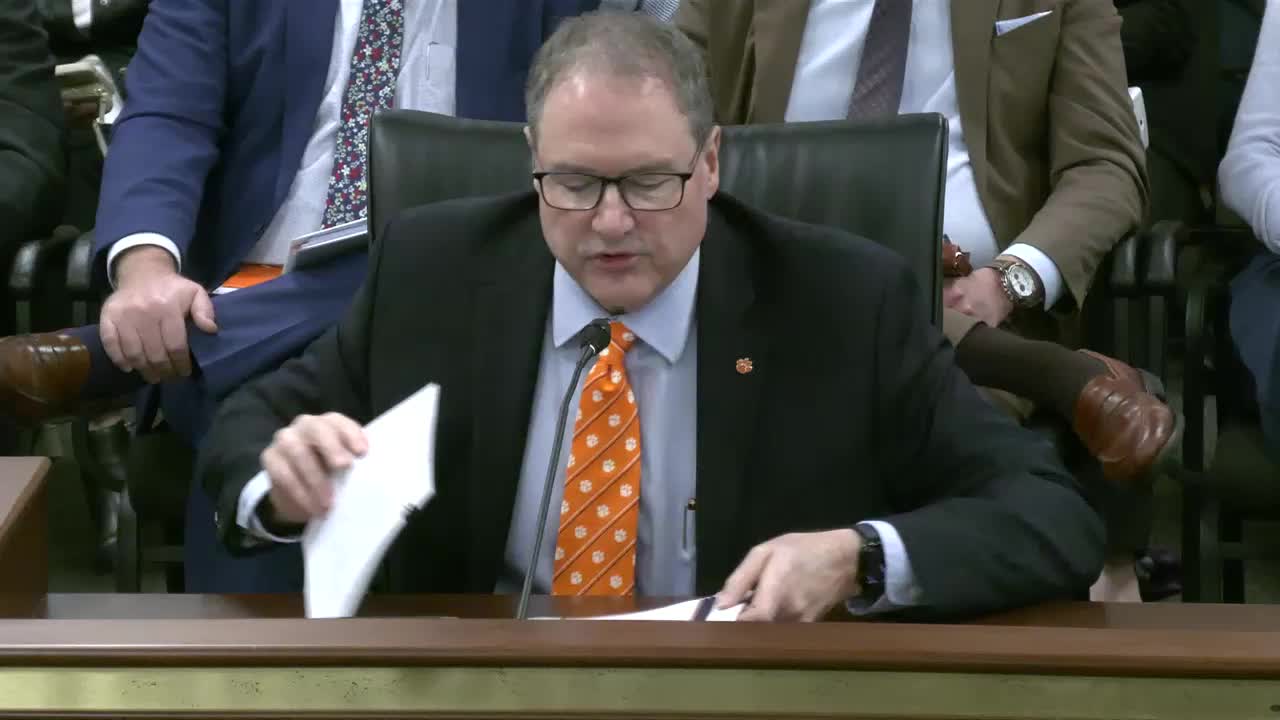
Bonnie Ammons, director of the Rural Infrastructure Authority, told the Finance Subcommittee the authority distributed American Rescue Plan Act funds through a statewide competitive program that awarded 219 grants, and asked for $24 million in recurring state grant funds plus three staff positions to sustain and manage ongoing needs.
Bonnie Ammons, director of the Rural Infrastructure Authority, briefed the Senate Finance Subcommittee on the authority's management of state and federal infrastructure funding and requested recurring grant dollars to address continuing needs for drinking water, wastewater and stormwater projects.
Ammons said the General Assembly allocated $1.4 billion in ARPA funds to the authority. Her office developed a competitive program — the South Carolina Infrastructure Investment Program (SCIP) — that attracted more than $2 billion in requests and resulted in awards to 219 projects. She said roughly $900 million in local matching funds leveraged the ARPA awards and that about $174 million has been spent to date as projects move into construction.
Ammons told the committee that the authority also runs a state-funded grant program and awarded $44 million last year across 66 projects to help bridge funding gaps for infrastructure work. She described widespread aging infrastructure needs and rising costs for projects to meet regulatory requirements, including emerging contaminants.
The authority asked for $24 million in recurring appropriations for two competitive grant programs (the Rural Infrastructure Fund and the Statewide Water and Sewer Fund) and requested three additional FTEs to manage the workload. Ammons said the recurring funding would allow local utilities and small communities to plan proactively and pair state grants with local funds.
On loans, Ammons said the authority made a record $230 million in loans last year at attractive interest rates (2.1 percent) and that the loan portfolio has had no defaults since 2016. She said the authority has reviewed about 250 construction contracts for ARPA-funded projects and expects project spending to grow as construction progresses.
Ending — Ammons concluded by answering committee questions and offering additional detail in the authority's annual report; the subcommittee adjourned and planned to reschedule a director whose presentation was delayed.