Get Full Government Meeting Transcripts, Videos, & Alerts Forever!
Get email alerts on the Juvenile Justice Budget And Capital topic
No spam. Unsubscribe anytime.
Juvenile Justice director asks for pay parity, capital funds and quick approval to reopen Greenville detention through private‑provider model
Summary
Director Eden Hendrick urged the Senate Finance Committee to fund community services, equalize juvenile correctional officer pay, invest in capital repairs and approve an MOU and curriculum so private providers can staff a Greenville detention facility pilot under a new security‑officer workaround.
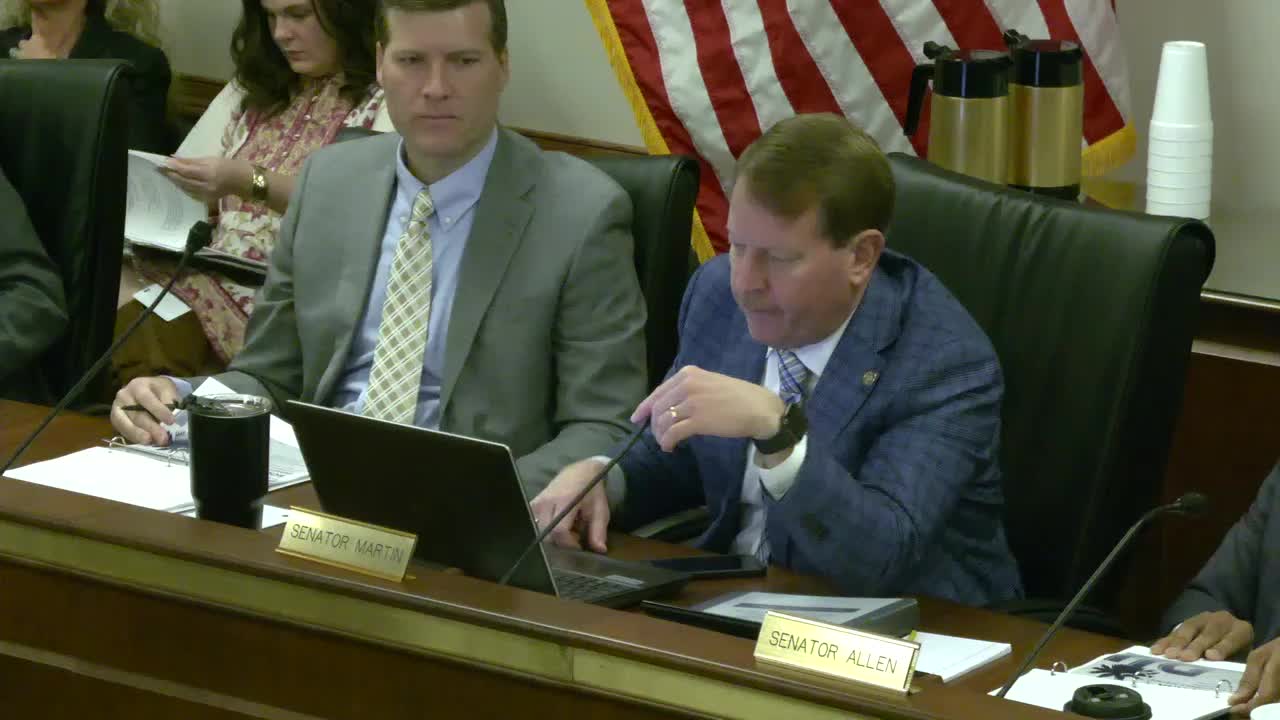
Eden Hendrick, director of the Department of Juvenile Justice (DJJ), told the Senate Finance Committee DJJ’s top priorities are recurring funds for community services, pay parity for juvenile correctional officers (JCOs), capital repairs tied to a detention‑center master plan, and a procedural workaround to allow private providers to staff a Greenville County detention site.
Hendrick said the agency is seeking recurring salary increases to make front‑end intake, probation and parole staff competitive with other state agencies. She asked the committee to end a special assignment pay differential that currently gives JCOs at certain facilities an extra $3,000 compared with JCOs at neighboring facilities, describing it as a morale problem and requesting equal pay across facilities.
Hendrick outlined several operating pressures: rapidly rising workers’ compensation costs, higher nursing staffing needs and contract rate increases for alternative placement providers (the agency’s AMI camps and multi‑agency group‑home contracts). She said vehicle rotation and fleet replacement remain a recurring need and that DJJ is addressing deferred maintenance across many facilities—replacement of HVAC, roofs, repaving and lighting—as part of a master plan to consolidate and modernize facilities.
On a separate implementation issue, Hendrick described a negotiated approach with SLED and the Court Administration (CJA) to permit private vendors to staff a Greenville detention facility without being state class‑2 certified officers. She said an MOU is complete and that DJJ is awaiting final, vendor‑tailored curriculum revisions (the agency asked for about an 80‑hour curriculum tailored to South Carolina standards) before signing. Hendrick said she expected the curriculum and final signoff in days to weeks and identified lease negotiations with Greenville County and vendor contract negotiations as other outstanding steps.
Hendrick also described pilot programs: a day‑reporting center operating for Lexington and Richland Counties with early graduates (she said the request would serve about 30 youth for roughly 240 days per year), an expansion of after‑school site grants (from $10,000 historically to $15,000 and a requested $20,000 per site), and funding to support juvenile arbitration programs whose contracts have not been raised since 2007.
Hendrick cited a statutory daily rate cap for counties using DJJ detention beds—“we can only charge $50 per day” under statute since 2007—and asked the committee to consider changing that legislative language to the prior model in which the state covered one third and counties covered two thirds.
Committee members pressed Hendrick for specifics about timelines to open Greenville County’s detention site; Hendrick said progress is ongoing, that the MOU with SLED and CJA is in final review and that curriculum revisions remain to be incorporated before signature. She emphasized DJJ has been spending capital funds to address deferred maintenance and that the agency needs additional appropriations to implement the master plan rather than continuing ad‑hoc repairs.
The hearing recorded extended discussion and follow‑up questions; no formal committee vote or appropriation decision was recorded in the transcript.