Lifetime Citizen Portal Access — AI Briefings, Alerts & Unlimited Follows
South Carolina Department of Commerce outlines 2025 budget requests, seeks $150 million for site development and funding to repay port loan
Loading...
Summary
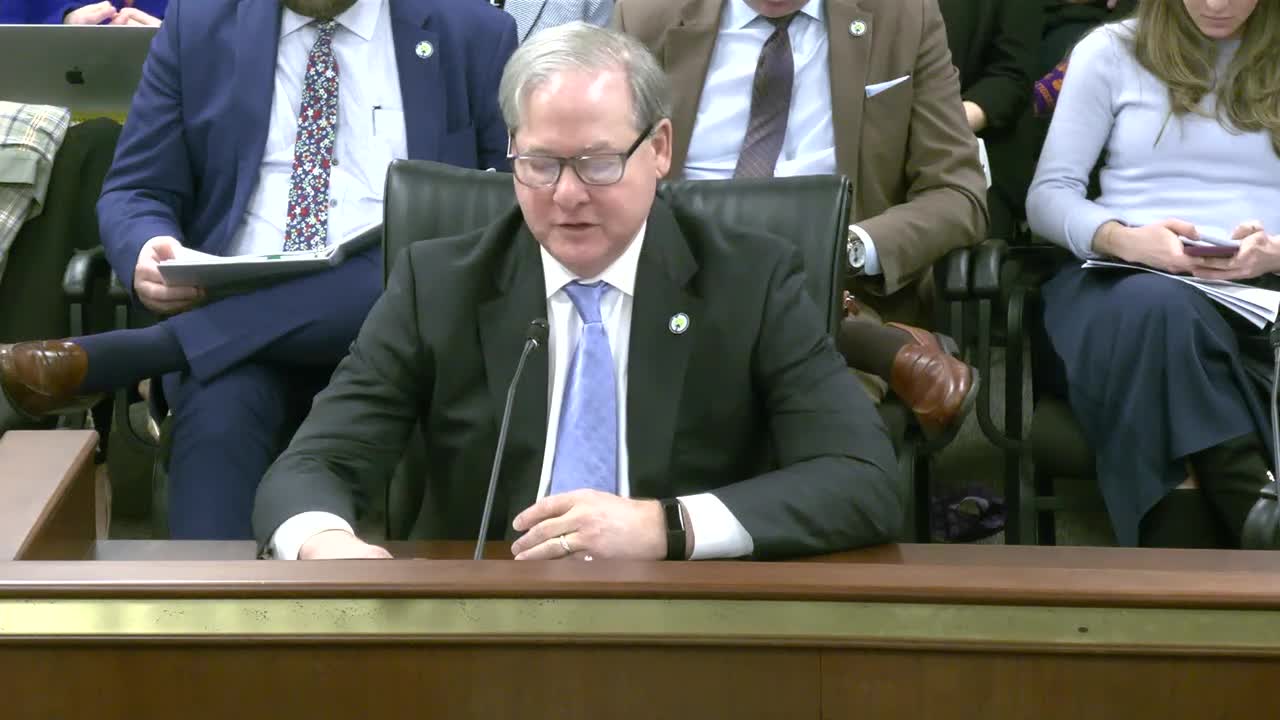
Secretary Harry M. Lightsey, the South Carolina secretary of commerce, told the Senate Finance Subcommittee that the Department of Commerce is seeking recurring and nonrecurring appropriations in its 2025 budget to repay an interagency loan, expand site-development capacity and fund programs used to recruit and support business.
Secretary Harry M. Lightsey, the South Carolina secretary of commerce, told the Senate Finance Subcommittee that the Department of Commerce is seeking recurring and nonrecurring appropriations in its 2025 budget to repay an interagency loan, expand site-development capacity and fund several programs used to recruit and support business.
Lightsey said the agency attracted about $8.1 billion in announced investment to the state in 2024 and that those projects are expected to create roughly 5,500 new jobs. “About 60% of that $8 billion was from existing businesses in South Carolina,” Lightsey said. He also noted international projects made up about a third of announced investment and pointed to a major announcement by Birla Carbon in Orangeburg County.
The budget request centers on several large items. Lightsey asked the panel for recurring and one-time funding to repay an interagency loan tied to an intermodal facility developed for the Port of Charleston. The Commerce Department said it has expended roughly $51 million on engineering and permitting for the facility and now has an outstanding balance of about $43.5 million. The department is asking for $5 million in recurring funds and $20 million in nonrecurring funds to move toward full repayment over roughly four years.
LocateSC, the department’s site-development program, is another central request. Lightsey said LocateSC currently receives $10.5 million in recurring appropriations; Commerce asked the subcommittee for an additional $4.5 million in recurring funds (bringing recurring support to $15 million) and a $150 million nonrecurring appropriation to help communities develop industrial-ready sites.
Other requests Lightsey outlined include:
- $3.7 million in recurring funds to build the closing fund used for incentives on large projects. - $400,000 in recurring funds to preserve the Recycling Marketing Development Program and maintain three existing Commerce staff after the Department of Environmental Services declined to renew a contract that previously funded the program. Lightsey said the prior contract had been $325,000 per year and that the Solid Waste Trust Fund administered by DES currently shows a balance of more than $6 billion. “They informed us that they have no funds for us and for this recycling program,” Lightsey said. - $175,000 in recurring funds for the SCOPE export program. - $500,000 in recurring funds for continued business-development marketing. - $350,000 in recurring funds for IT infrastructure improvements. - $105,000 in recurring funds and two full-time equivalents for trade and international relations staffing. - $1 million in recurring funds to increase support for applied research through the South Carolina Fraunhofer USA Alliance.
Patrick Jarvis, Commerce chief financial officer, described several “maintenance” requests and requested additional fund-authority items: $200,000 in federal authority for the Southeast Crescent Regional Commission (first-year funds) and $500,000 in other-fund authorization for the Ireland Trade Commission to allow the department to spend incoming donations.
Lightsey and members highlighted a recent corporate announcement as an example of the state’s recruiting work. Lightsey said Eaton will establish a facility in Union County that will invest about $340 million and bring roughly 700 jobs to the county. Senator Williams praised the development as notable for a tier 3 county, saying it will have an outsized local effect.
Committee members asked questions about the recycling program’s funding and about the department’s rural recruitment strategy. Lightsey said Commerce has a rural and community development group that works with small communities on site readiness and other local improvements, and he noted the department coordinates with the Rural Infrastructure Authority on infrastructure needs. On housing’s role in recruitment, Lightsey said housing is largely outside Commerce’s direct purview but the agency supports communities’ strategic planning and works with a partner the transcript named “Jetta” on bond financing for community projects.
No formal votes were taken during the Commerce presentation; the department concluded by offering to answer additional questions and providing its slide deck and fact sheets to the subcommittee.
Ending — The subcommittee heard Commerce’s full budget presentation and follow-up questions but did not act on the requests during the hearing. Lightsey’s requests will be incorporated into the committee’s budget deliberations later in the session.