Get Full Government Meeting Transcripts, Videos, & Alerts Forever!
Get email alerts on the Probation Parole Budget It topic
No spam. Unsubscribe anytime.
Acting probation and parole director seeks two developers, fleet changes and more staff for body cameras and hearings
Summary
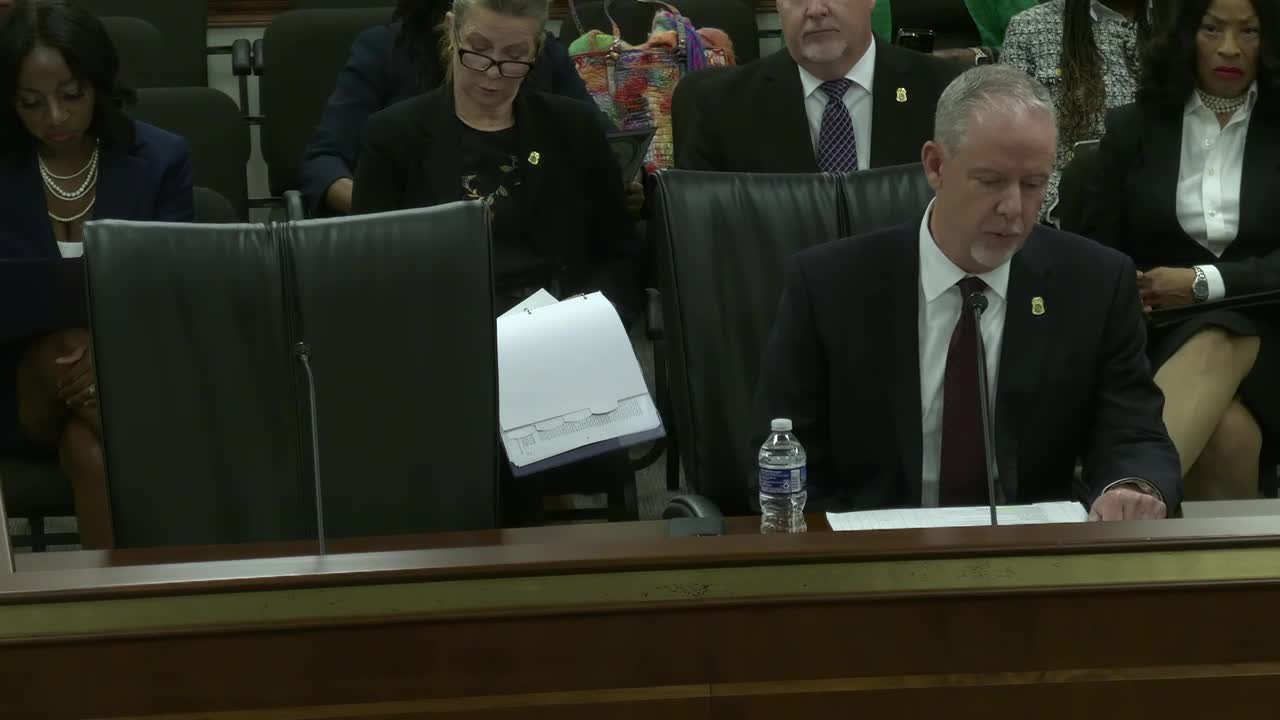
Acting director Chadwick Gambrell told the Senate Finance Committee the agency expects growing IT contracting costs and seeks two in‑house developers, changes to vehicle leasing strategy to reduce costs, more funding for body cameras and two hearing officers to handle rising administrative hearings.
Chadwick Gambrell, acting director of probation and parole, told the Senate Finance Committee his agency expects to spend more than $3 million on outside IT contracts next year and is requesting funding to hire two full‑time software developers (cost cited at $243,000). Gambrell said bringing development in‑house could reduce first‑year contractor spending to about 40% of current levels.
Gambrell said the agency works closely with the Department of Administration on shared services for server capacity and other needs, but that custom development and data‑sharing between criminal‑justice partners will still require dedicated staff. “First year will be 40% of what we have been spending in the past,” Gambrell said when asked about projected savings.
On vehicle costs, Gambrell said fleet lease expenses rose significantly after the agency turned in more than 288 vehicles, producing a roughly $759,000 increase in lease payments this year. He told senators many agency vehicles are leased through State Fleet and that some previously leased pursuit‑package vehicles cost more than $800 per month; the agency proposes moving certain recurring funds to nonrecurring to test procuring lower‑package vehicles and to make a year‑end lump‑sum purchase to gain buying power.
Gambrell also asked for an increase in recurring funding for body‑worn cameras (current recurring funding cited as about $82,000; agency requests about $270,000) and described heavy data flows from field operations—“we're uploading between 6 and 7,000 videos a month,” he said.
The agency cited a large increase in administrative hearings—from a prior baseline up by about 3,800—to more than 5,100 hearings in 2023–24, and requested two additional hearing officers to handle the caseload. Gambrell explained the office has pushed for faster hearings under evidence‑based practices (referred to as “swift and certain”) to address violations more promptly; he added revocation hearings have not increased, but administrative hearings have, reflecting a policy shift to bring offenders to hearings quickly.
Gambrell also outlined requests to expand specialized caseloads: six additional mental‑health agents to extend coverage to about 67% of the state and six more domestic‑violence‑specialist agents to cover roughly 92% of DV offenders. He described coordination with the Department of Administration on shared services and with other criminal‑justice partners on data‑sharing but said custom development needs remain.
Committee members asked whether developers could be provided by the Department of Administration; Gambrell and others said DOA’s shared services do not include bespoke net development and that the requested staff would focus on custom development or configuration to reduce contracting costs.
The hearing recorded discussion and questions; no formal votes on the Gambrell requests were recorded in the transcript.