Get Full Government Meeting Transcripts, Videos, & Alerts Forever!
Get email alerts on the Corrections Budget topic
No spam. Unsubscribe anytime.
Department of Corrections requests pay-plan funding, operating dollars and continued cell‑phone interdiction support
Summary
Director Sterling told the Senate Finance Committee the Department of Corrections (DOC) needs recurring and nonrecurring funds for step pay plans, staffing, medical and maintenance inflation, cell‑phone interdiction, prison industries and capital repairs including roofing and kitchen upgrades.
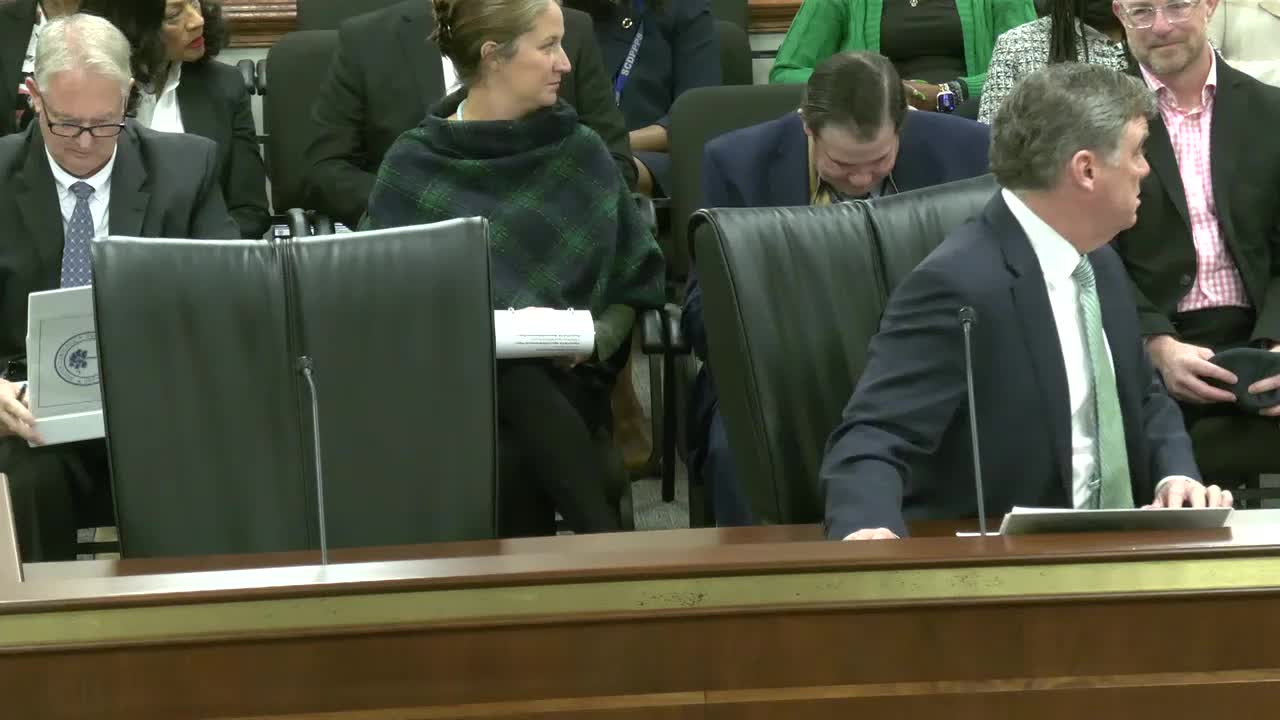
Director Sterling, director of the Department of Corrections, asked the Senate Finance Committee for a package of recurring and nonrecurring funds to cover pay adjustments, staffing and rising operating costs. He said the department is pursuing step‑pay funding, medical and nursing pay increases, and money to continue the state’s cell‑phone interdiction program.
The request addresses several categories of inflationary and programmatic costs. Sterling told senators workers’ compensation increased by about $6 million, an IRF premium rose by roughly $7 million, and various medical and care delivery items totalled about $8.4 million; medical costs overall were cited at about $13.7 million. He said maintenance and supplies for 21 institutions are about $3 million and that prison‑industry support requires about $9 million.
Sterling described the department’s personnel needs: funding to cover vacancies and hire additional security staff (he cited a $25 million request to fund 197 additional security officers) and money for additional medical staff and inspector‑general positions. He said the department is seeking a combination of recurring and nonrecurring dollars for agency modernization and equipment replacement, including requests described as roughly $3.9 million and $3.8 million in recurring funds and about $6.5 million nonrecurring for IT and equipment modernization.
On the cell‑phone interdiction program, Sterling told the committee DOC was an early adopter and that last year’s funding is largely spent or committed. He asked for roughly $9 million recurring and $10 million nonrecurring to sustain the program. “That will make the state a lot safer,” Sterling said, describing the danger posed by in‑custody cell phones and citing an upcoming federal trial in Michigan tied to a sextortion case.
Sterling also outlined capital priorities: statewide roofing projects, a roof at Tyger River lockup, perimeter‑security fencing at Lee, an engineering room upgrade, the Lieber Correctional Institution kitchen upgrade and routine replacement of security vehicles and food‑service equipment. He described the nonrecurring requests as part of a plan to establish a predictable equipment‑replacement schedule.
Committee members asked about reentry and in‑prison programs; Sterling described workforce and training programs such as a welding class and a technical high‑school trade program at Turbeville for youthful offenders and said staffing vacancies limit program expansion.
The presentation was discussion only—no formal committee vote on DOC funding was recorded in the transcript. Sterling acknowledged the department’s requests and fielded questions from several senators about program continuity, staffing and capital priorities.