Get Full Government Meeting Transcripts, Videos, & Alerts Forever!
Get email alerts on the Wildfire Risk topic
No spam. Unsubscribe anytime.
Southern Marin fire officials outline countywide wildfire risk reduction plan; urge community action
Summary
Southern Marin Fire and county partners briefed the Mill Valley City Council on fuel-break projects, water-infrastructure upgrades, evacuation tools and community programs; officials said state rule changes on “zone 0” and home hardening are expected and will require local action and funding.
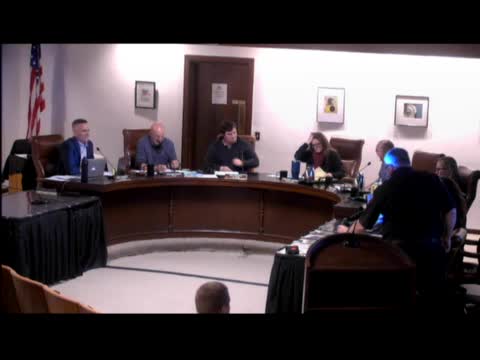
Southern Marin Fire Chief Chris Tubbs and county partners presented a countywide update on wildfire risk reduction to the Mill Valley City Council, describing coordinated projects on fuel breaks, water infrastructure, evacuation alerting and community preparedness programs.
The presentation summarized ongoing work by the Marin Wildfire Prevention Authority (MWPA), the Southern Marin Fire District and Marin Municipal Water District (MMWD), and stressed that officials expect new state regulations tied to AB 3074 and forthcoming Board of Forestry rules to increase the emphasis on “zone 0” and home hardening. “This is a whole community approach,” Chief Tubbs told the council, urging coordinated action among residents, local government and regional agencies.
Officials said countywide programs funded by MWPA and local measures are already supporting vegetation treatments, fuel-break projects and grants to homeowners, while MMWD continues water-infrastructure upgrades to improve fire flow. Matt Sampson, president of Marin Municipal Water District, told the council his agency is treating vegetation on about 20,000 acres of watershed and that pipe replacement costs can be high — “2 and a half million dollars for a mile of pipe replacement right now in Marin County,” he said — which constrains the pace of water-system upgrades.
Why this matters
Fire managers said recent, high-profile wind-driven fires in other parts of California underscore the limits of any single measure and the need to combine vegetation treatments, water-delivery upgrades, emergency alerting and home hardening. Council members and staff pressed for clarity about enforcement, funding and testing of alert systems.
Key details and programs
- Fuel breaks and forest-health projects: Southern Marin Fire described multiple projects that together form perimeter and community fuel breaks around Mill Valley. Staff gave examples including the Summit–Ralston fuel break and the Mill Valley sheltered fuel-break project, and said dozens of acres have been treated with additional acreage proposed for the next work cycle. Officials said projects require coordination with Marin County Open Space and the Golden Gate National Recreation Area (GGNRA), and that federal approvals can slow some work.
- Emergency notification (LRAD) and testing: The district operates a network of long-range acoustic devices (LRAD). Officials said there are six LRAD sites already in place and two additional sites are proposed (West Blythedale Ridge near Blythedale Park and a site along Miller Avenue). The district described its “Did You Hear It?” testing program and estimated an approximate cost of $180,000 per LRAD site; staff emphasized phased deployment and community testing to map coverage and sound shaping.
- Neighborhood Response and outreach: Leah Curtis, coordinator for neighborhood response groups (NRGs), reported about 140 active block captains inside Mill Valley city limits, mapped into nine areas. Curtis said the program includes training events, a CERT curriculum and a “chipper on demand” pickup program and noted that some neighborhoods need additional volunteers and outreach.
- Inspections, grants and direct assistance: The MWPA grant program and the district’s inspection program were described as the pipeline for homeowner assistance. Officials said residents who complete inspections can apply for grants; the district also offers direct-assistance funding for financially vulnerable households after an inspection.
- Water-delivery upgrades: MMWD briefed the council on the district’s long-running fire-flow program, funded via a parcel tax, to upgrade pipes and hydrants in areas with substandard fire flow. MMWD staff described both the technical challenges of hilly topography and the limits on how much the water system can be expected to support in a large conflagration.
- Codes and enforcement: Fire staff said 2025 is a code-adoption year for fire standards. They expect state-level wildland-urban-interface (WUI) and “zone 0” guidance to be released on a new cycle and said local adoption, enforcement and potential phased approaches (for new construction first, then existing structures) will be necessary. Fire Marshal Fred Hilliard and Chief Tubbs noted that inspections and voluntary compliance have been effective for vegetation work, while home hardening (siding, vents, windows) remains the most difficult and costly hurdle for many homeowners.
Council reaction and next steps
Council members and staff asked for additional mapping, more community drills and clearer timelines for local ordinances. Several council members requested a follow-up presentation with maps and specifics. City staff said they would bring materials on water resilience and planned a September update before the fall fire season. Fire officials repeatedly urged residents to complete inspections and noted the need for funding and incentives to support home-hardening retrofits.
Ending
Officials emphasized that wildfire risk reduction requires layered, persistent effort — fuels work, water infrastructure, alerting and home-level measures — and that local councils will need to adopt ordinances or programs to implement new state rules when they arrive. The council heard the report, asked questions and asked staff and fire partners to return with more detailed maps and ordinance-ready recommendations.