Get Full Government Meeting Transcripts, Videos, & Alerts Forever!
Get email alerts on the Public Safety topic
No spam. Unsubscribe anytime.
Red‑flag bill advances to hearing as sponsor frames it as life‑saving; debate centers on due process and firearm return
Summary
Representative Tom France presented HB 622, a proposal to allow courts to issue extreme risk protection orders (ERPOs); proponents argued ERPOs reduce firearm suicides and domestic‑violence deaths, opponents raised due‑process and list‑placement concerns and asked for clarifying amendments on permit return and penalties for misuse.
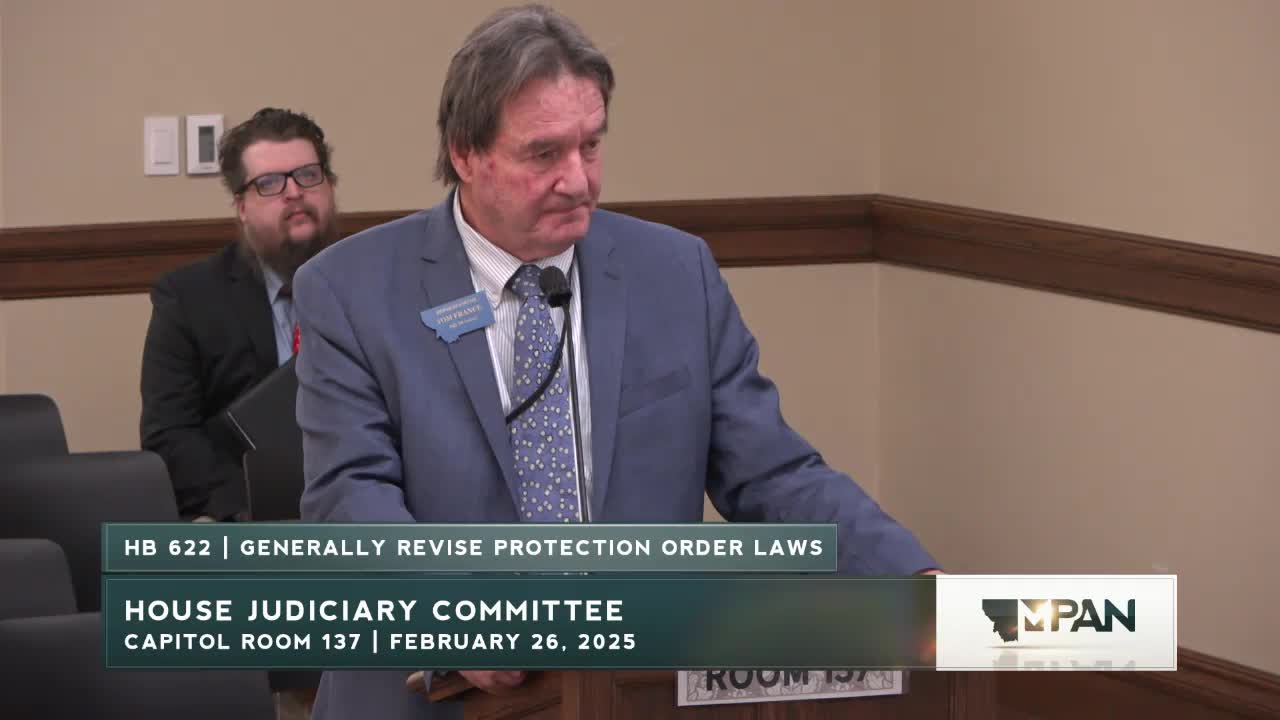
Representative Tom France opened the Judiciary Committee hearing on House Bill 622, describing the bill as an "extreme risk" law that would allow family members and law enforcement to seek temporary court orders to remove firearms from people judged to pose imminent danger to themselves or others.
Sponsor’s description: France said Montana has one of the nation's highest suicide rates, with firearms involved in a large share of deaths, and argued that temporary removal of access during a crisis protects individuals and families. The bill includes an emergency ex parte order mechanism with subsequent notice and an opportunity for the respondent to be heard; the sponsor said the measures are designed to balance safety with due process and to allow restoration of rights once a court finds the person restored.
Proponents: Gun‑owner safety groups, veterans and suicide‑prevention advocates, mental‑health organizations, law‑enforcement leaders and victims’ advocates testified in support. Witnesses cited reductions in firearm suicides in other states (Connecticut, Indiana) after ERPO implementation and emphasized the law's potential to keep people alive during acute crises. A representative from Gun Owners for Safety testified, citing research indicating ERPOs were associated with declines in suicides in other states.
Opponents and questions: Committee members and some witnesses raised concerns about ex parte orders, duration, record‑keeping, and what happens to concealed‑carry permits and national background check lists when an ERPO is entered. Representative Zephyr and others asked why the bill would return firearms but not automatically restore a concealed‑carry permit, and whether removal would place the respondent on national databases that could affect future firearm purchases. The sponsor acknowledged concerns and indicated willingness to clarify language about permit restoration and potential safeguards for respondents; Representative Sharp asked about penalties for misuse of the ERPO process and the sponsor said he would consider amendments to increase deterrents against abusive filings.
Constitutional and legal context: Sponsor and witnesses referenced Caniglia and other red‑flag jurisprudence considerations; proponents argued properly crafted ERPOs are constitutional and consistent with statutory precedents; opponents asked for stronger due‑process protections and clarity about the judicial findings required for ex parte orders.
Committee disposition: The hearing featured extensive testimony for and against the bill, with requests from members for clarifying amendments (permit restoration language, penalties for false or harassing petitions, and procedures for entry into national systems). No vote was recorded in the transcript; the sponsor said he was open to amendments and to working with the committee on language changes.