Get Full Government Meeting Transcripts, Videos, & Alerts Forever!
Get email alerts on the End Of Life Care topic
No spam. Unsubscribe anytime.
Montana committee hears bill to codify medical aid-in-dying with safeguards
Summary
Lawmakers heard hours of testimony for and against House Bill 637, which would create a statutory framework for medical aid in dying for terminally ill, capacitated adults; proponents stressed patient choice and provider protections, opponents warned of suicide policy conflicts and potential risks to vulnerable people.
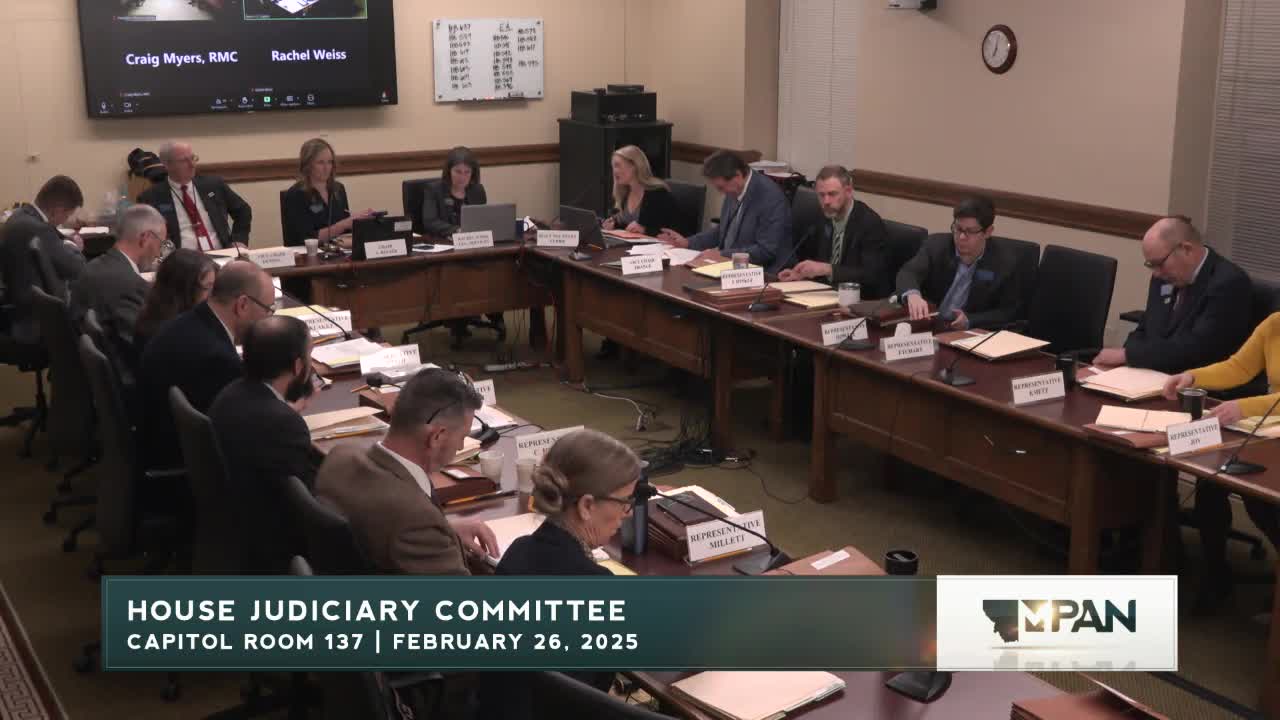
Representative Julie Darling, sponsor of House Bill 637, opened the Judiciary Committee hearing by describing the bill as the "Montana Patient and Physician Protections and Care Act," a statute to provide a clear framework allowing medical aid in dying for patients with terminal illness who meet specified criteria.
The bill’s core eligibility requirements, as presented by Representative Julie Darling, include a terminal diagnosis with a prognosis of six months or less to live, decisional capacity, two verbal requests separated by a waiting period (48 hours under the draft), the ability to self-administer, adult age (18+), documented discussion of alternatives including hospice and palliative care, and reporting and witness rules for the request. Darling emphasized that participation is voluntary for both providers and facilities.
Why it matters: Montana has had medical aid-in-dying practice recognized by the courts since Baxter v. State (2009), but proponents said statutory language would provide consistent safeguards for patients, clarity for clinicians, and legal protections for providers who follow specified procedures.
Supporters described lived experience and clinical practice. Henry Seaton of ACLU of Montana urged a "do pass," saying the bill offers "eligibility criteria, waiting periods, mental capacity evaluations, and protection for both patients and healthcare providers." Physicians, hospice staff and family members recounted cases where terminal illness produced suffering they said could have been mitigated by legal clarity. Hospice physicians described rare but real cases of refractory suffering despite comprehensive palliative care; one witness said, "We cannot palliate all people at the end of life. We cannot soothe every symptom that they have." Representative Darling and several clinicians said the bill is modeled on existing statutes in other states and aims to preserve clinical judgment while adding procedural safeguards.
Opponents, including Lieutenant Governor Kristen Juras and representatives of medical and disability advocacy groups, urged the committee to reject the bill or consider substantial changes. The lieutenant governor warned that the bill conflicted with Montana's longstanding public policy opposing suicide and argued that Baxter did not legalize assisted suicide free of statutory limits; she urged the Legislature to "clarify" the law rather than expand options. Disability-rights witnesses and some health professionals expressed concern that permissive statutes elsewhere have, in their view, led to pressure on vulnerable people and potential discriminatory outcomes.
Committee discussion focused on legal sources and on specific safeguards. Representative questions covered: (1) whether the statutory language matches more restrictive or more permissive models in other states, (2) the 48-hour waiting period (some members noted Oregon’s longer intervals), (3) whether nurse practitioners and physician assistants should be authorized to participate (the sponsor said the draft includes PAs and NPs and that membership of providers was a policy choice), and (4) how the bill would interact with the Baxter decision. Representative Darling described the bill as a "marriage" of provisions used elsewhere and said it was intended to be a workable framework for Montana clinicians and families.
No final action or vote occurred during the hearing. The committee heard extensive public testimony both for and against House Bill 637 and several members asked for technical clarifications and potential amendments, including on timing, which professions may prescribe, reporting obligations, and how the statute would treat conscience objections by providers and facilities.