Get Full Government Meeting Transcripts, Videos, & Alerts Forever!
Get email alerts on the State Trust Lands topic
No spam. Unsubscribe anytime.
Bill to bar nonprofits from leasing state trust land splits agricultural and conservation advocates
Summary
HB 647 would prohibit nonprofit organizations and corporations from leasing state trust land; proponents said nonprofit competition disadvantages taxable ranchers, opponents including conservation groups and nonprofits said the bill would impede conservation projects, community recreation and food-security programs.
Representative Brandon Lear opened House Bill 647 proposing to bar nonprofit organizations and corporations from leasing state trust lands. The sponsor said the change would protect working agricultural families by preventing nonprofit entities — which typically do not pay income tax — from competing for leases on state sections used for grazing and farming.
County commissioners and agricultural representatives testified in favor. Phillips County Commissioner Richard Dunbar and Blaine County Commissioner Miles Hutton said nonprofits can hold large portfolios of state sections and that prohibition would protect local producers who rely on leased state lands for livestock grazing.
Opponents included The Nature Conservancy, tribal representatives, the Trust for Public Lands, Montana Association of Land Trusts, Montana Nonprofit Association, Montana Wildlife Federation and others. Mark Aagenes (The Nature Conservancy) said his group operates a community grass bank and prioritizes working ranchers; he said HB 647 would hinder such community-oriented conservation tools. Tribal and food‑sovereignty groups said the bill could prevent organizations that collaborate with tribes to restore habitat or provide food security from using state-lease tools.
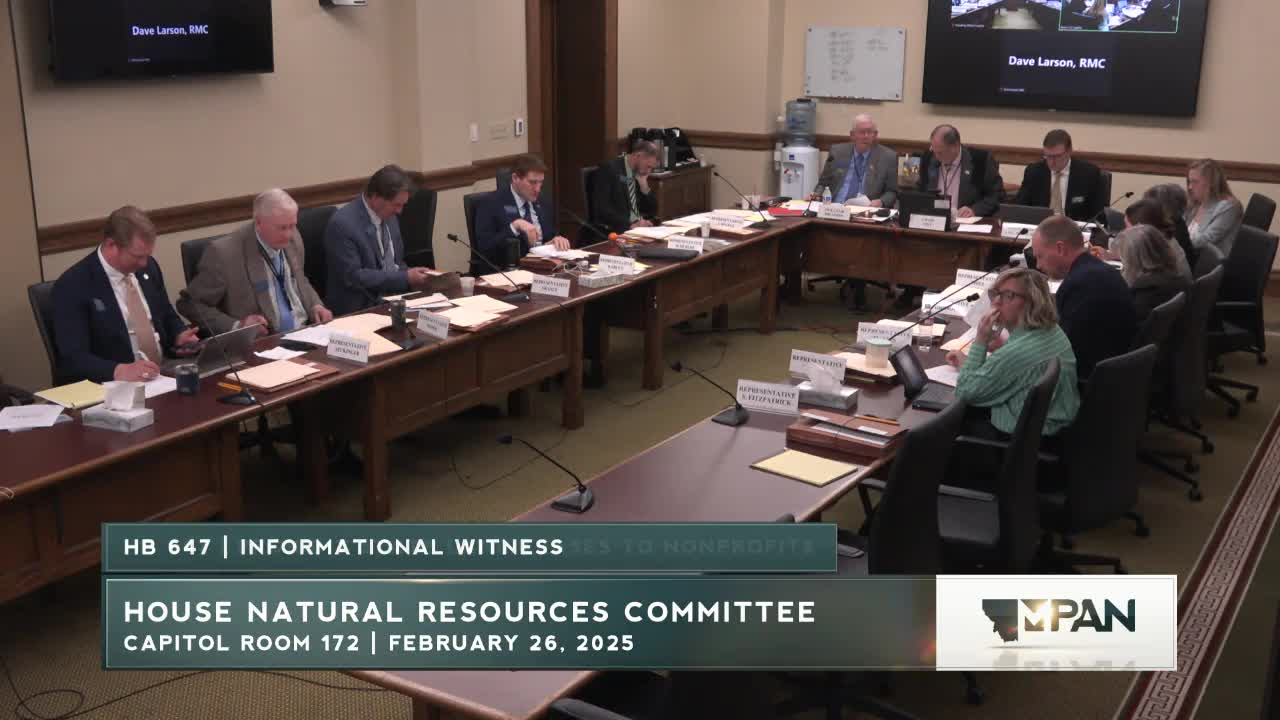
Ryan Weiss (Deputy Administrator for Trust Lands, DNRC) testified as an informational witness and described the agency’s trust mandate to generate revenue for trust beneficiaries, the classification system for state trust land, and how competitive processes typically determine leases. DNRC staff noted many nonprofit leases support recreation, veteran services, or stewardship and that nonprofit bids can be time‑limited to support conservation transitions.
Opponents stressed the bill could conflict with the state's trust duty to generate revenue and could block conservation easements, community food projects and recreation programs that rely on temporary leasing mechanisms. The Montana Nonprofit Association presented economic context for the nonprofit sector’s statewide role and warned the bill would discriminate against nonprofits.
Ending: Sponsor said he would work on amendments and emphasized protecting agricultural producers; committee members asked DNRC about classification, lease length, and the fiscal/constitutional implications of restricting lessee eligibility.