Get Full Government Meeting Transcripts, Videos, & Alerts Forever!
Get email alerts on the Child Safety topic
No spam. Unsubscribe anytime.
Committee hears broad support for tougher child passenger‑safety rules
Summary
House Bill 586 would update Montana's child passenger safety law to require rear‑facing seats for younger children and extend harness/booster guidance; safety advocates and the NTSB supported the changes, while no opposition was recorded during the hearing.
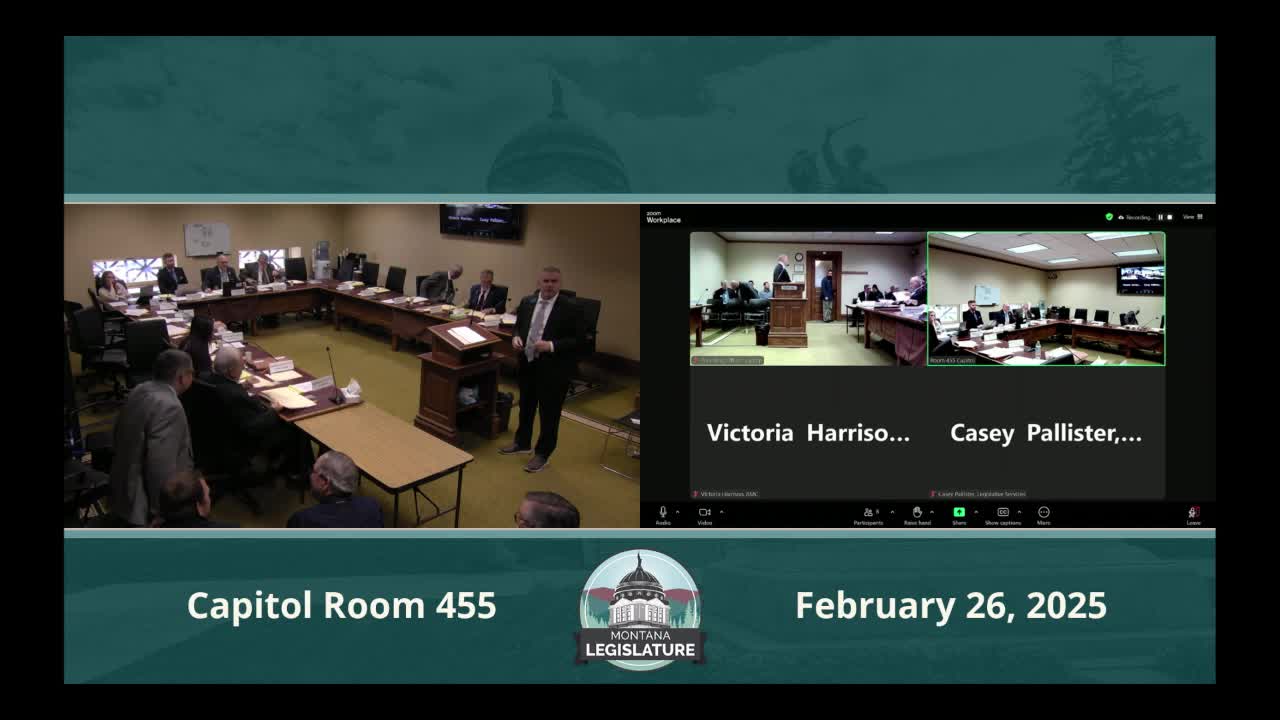
The House Transportation Committee heard expert testimony and broad support for House Bill 586, a proposal to update Montana’s child passenger‑safety statute and align state law with contemporary best practices for child restraints.
Sponsor Rep. Mark Lee of Butte told the committee the bill aims to "put children in the best pre‑crash position as possible," and he described a tiered restriction for children by age: rear‑facing restraints under 2 years, rear‑ or forward‑facing harnessed seats for ages 2–4, harnessed child seats for ages 4–8, and use of a motor vehicle safety belt after age 9 or once a child has outgrown the booster seat per manufacturer limits. "The goal is to eliminate fatalities and reduce injuries, and this bill is how we are gonna get there," Lee said.
Supporting testimony came from multiple nationally‑recognized and local sources. Shauna Helfert of the Town Pump Foundation said the group funds car‑seat programs and urged a due‑pass recommendation. David Inman, for the National Transportation Safety Board (NTSB), told committee members that child restraints are the most effective tool to reduce severe injuries and supported extending restraint requirements through at least age 8. Corinne Blum and Wendy Olsen Hansen, experienced child passenger safety technicians and trainers, described misuse rates and evidence that longer restraint usage reduces deaths and serious injuries; Blum said proper restraints are "47 percent more effective in preventing fatalities for children between the ages of 1 and 3" and highlighted community fitting‑station programs.
Department of Transportation and safety staff provided informational context on outreach and current technician networks; the committee heard that Montana has certified technicians and permanent fitting stations statewide. Witnesses said age‑based rules ease roadside enforcement and noted that manufacturers’ weight/height limits remain relevant when selecting a particular seat.
No opponents were recorded during the hearing. The sponsor said he will work with stakeholders and requested a due‑pass recommendation; the bill remained in committee for further action.
Why it matters: Testimony cited national evidence and standards showing that restraint type and orientation (rear‑facing vs. forward‑facing vs. booster) materially affect injury risk in crashes. Supporters said the bill would reduce preventable injuries and deaths among children traveling in Montana.
What’s next: The committee closed the hearing on HB 586; committee action (vote) had not been recorded in the transcript excerpt provided.