Get Full Government Meeting Transcripts, Videos, & Alerts Forever!
Get email alerts on the Aviation Adsb topic
No spam. Unsubscribe anytime.
Montana committee weighs bill to limit use of ADS‑B data for billing pilots
Summary
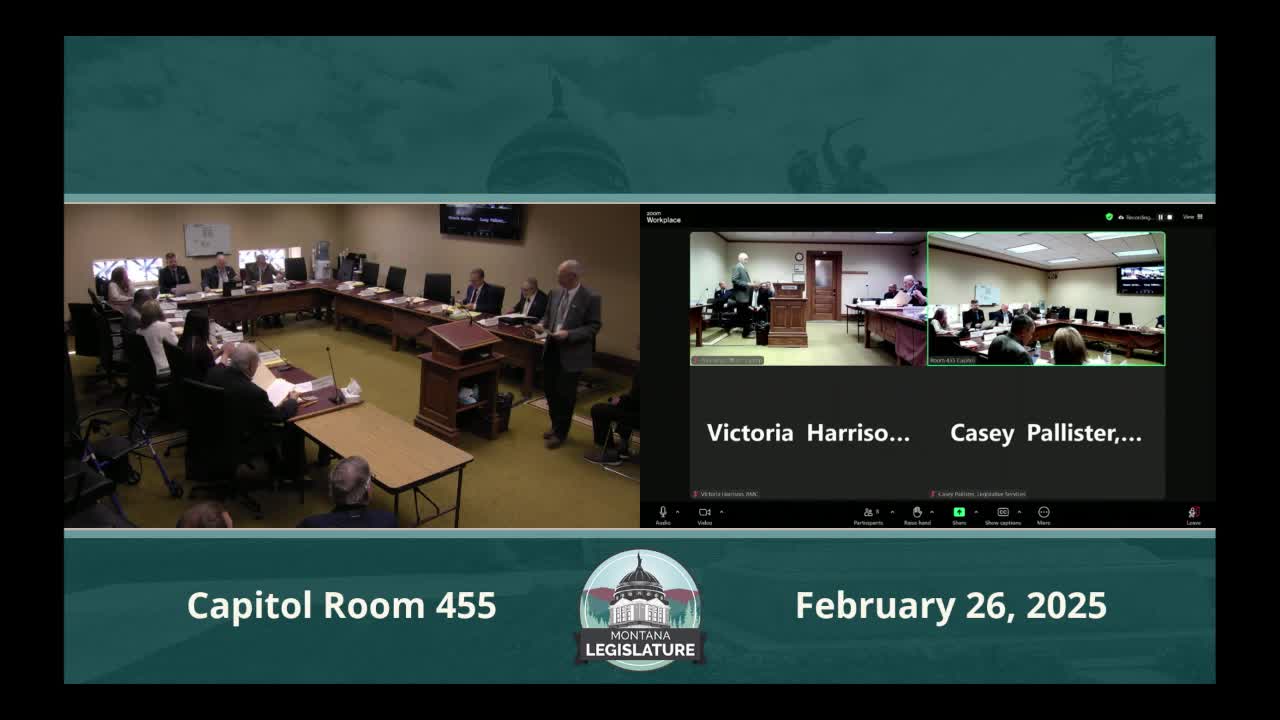
House Transportation Committee members heard more than two hours of testimony on House Bill 571, legislation that would bar the use of automatic dependent surveillance–broadcast (ADS‑B) transmissions to calculate or collect landing or other operating fees from most general‑aviation aircraft in Montana.
House Transportation Committee members heard more than two hours of testimony on House Bill 571, legislation that would bar the use of automatic dependent surveillance–broadcast (ADS‑B) transmissions to calculate or collect landing or other operating fees from most general‑aviation aircraft in Montana.
Proponents said ADS‑B, a GPS‑based system installed on many aircraft to improve safety and traffic awareness, is being monetized by private companies and used to send landing invoices to pilots who did not expect them. Tim Robertson, president of the Montana Pilots Association, told the committee, "ADSB . . . was sold to the world purely as a safety technology, [and] is being used to essentially collect tolls in the form of landing fees from pilots and aircraft owners." Jack Galt, a Montana pilot, warned that if fees were not blocked some pilots might disable ADS‑B equipment: "To disable an ADS B system in an aircraft is as simple as pulling a single circuit breaker on the pilot's electrical panel. . . . Decades spent improving aviation safety will have been lost." Brad Schuster of the Aircraft Owners and Pilots Association (AOPA) asked the committee to advance the bill and offered technical language to tighten the proposal.
Opponents, including Ross Marty of the Montana Airport Managers Association and Ian McKay of the Glacier Park International Airport authority, said the bill is unnecessary in Montana and could harm airports’ ability to plan and win federal funding. McKay, who runs Glacier Park International Airport, told members the ADS‑B data is used for facility planning, flight‑procedure design and to justify FAA grant requests: "The use of ADS‑B data is becoming critical to justify funding for improved runways, taxiways, aprons, and other types of airport infrastructure." Airport managers also said automated billing systems can reduce airport operating costs and that barring a data stream would force more manual work and higher fees.
Representatives on the committee questioned witnesses about practical impacts and existing airport practices. Witnesses and the bill sponsor, Representative Shane Klakken, explained the bill as narrowly written to exempt charter and commercial operations and to apply only to aircraft operating under 14 CFR part 91 with a maximum gross weight of 9,000 pounds or less. Tim Conway, administrator of aeronautics for the Montana Department of Transportation, appeared as an informational witness to answer technical questions.
After the hearing, during executive action the committee voted on House Bill 571. A motion that the bill "do pass" was moved and the committee recorded a roll‑call vote of 9 in favor and 5 opposed; the bill passed out of committee.
Why it matters: ADS‑B was mandated for many aircraft to improve safety; pilots and aviation groups say using ADS‑B-derived position data to bill individual aircraft is an unanticipated use. Airport managers say ADS‑B data also supports planning and federal grant applications that fund infrastructure used by communities statewide.
What’s next: The bill will move to the House for consideration; sponsors and aviation stakeholders said they expect to work on technical edits before floor consideration.