Get Full Government Meeting Transcripts, Videos, & Alerts Forever!
Get email alerts on the Distracted Driving Hands Free topic
No spam. Unsubscribe anytime.
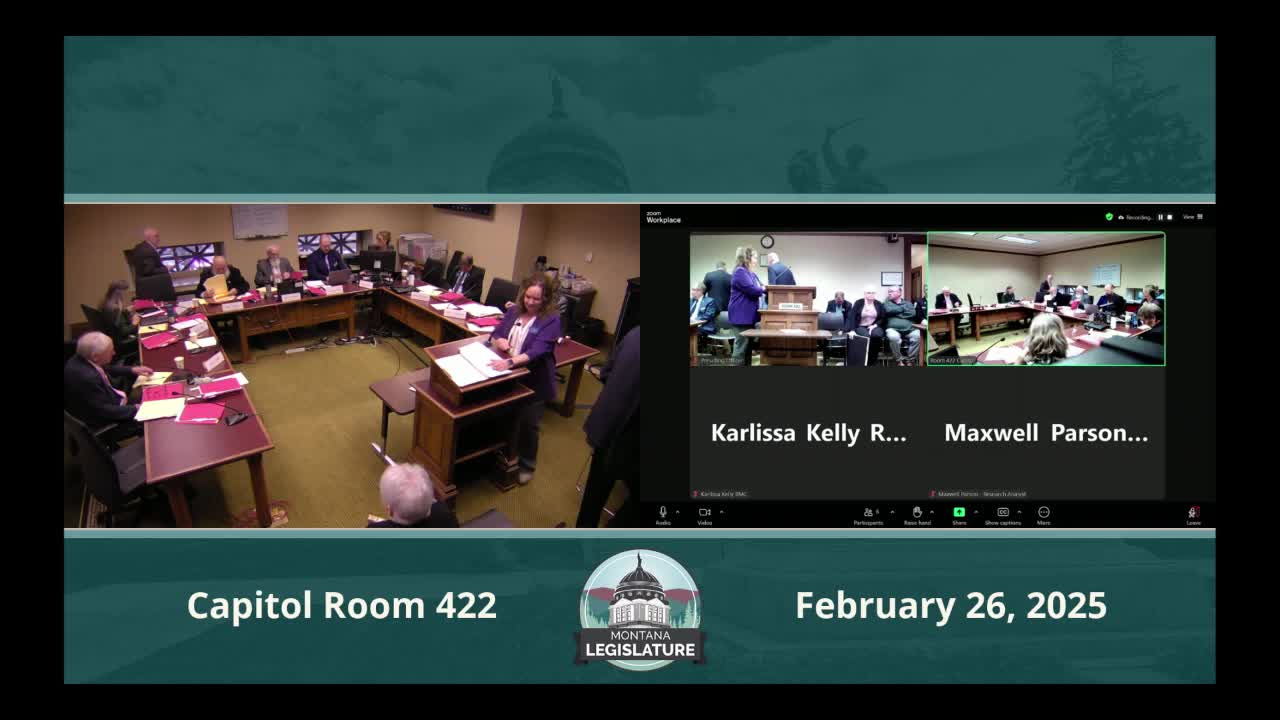
Family and safety groups push 'Chloe’s Law' hands‑free driving bill; committee adopts minor amendment and moves bill forward
Summary
Senate Bill 359, dubbed Chloe’s Law and sponsored by Senator Sarah Novak, would prohibit drivers from holding or manipulating mobile devices while operating a vehicle; the committee adopted an amendment narrowing a parked‑vehicle exception and moved the bill forward by voice vote.
Senators heard testimony on Senate Bill 359, a hands‑free driving measure sponsored by Senator Sarah Novak aimed at reducing distracted driving. Novak said she brought the bill after the 2021 fatal crash that killed a former student, and described the proposal as a targeted hands‑free law rather than a broad ban on all device uses.
Proponents described the bill as a public‑safety measure that gives law enforcement a clearer tool to address phone‑related distractions. Connie Worrall, the mother of Chloe Worrall, recounted her daughter’s death and said Montana was the only state without a hands‑free statute; Keith Worrall and local community leaders also testified in support. The Montana Department of Transportation director and the Association of Montana Troopers presented statistics showing distracted driving contributed to a significant share of Montana fatalities; director Chris Dorrington cited a Department of Transportation review: between 2013 and 2022 distracted drivers were identified in 157 crashes that led to 171 fatalities, and 26% of distracted drivers in fatal crashes were mobile‑phone distracted.
Law enforcement associations — including the Association of Montana Troopers, the Montana Sheriffs and Peace Officers Association, and the Montana Association of Chiefs of Police — and firefighters urged passage, citing the bill’s potential to reduce preventable crashes and to give officers a statutory basis to educate drivers during stops.
Driver‑education groups and road‑safety advocates also supported the bill. Charlie Brown, legislative liaison for the Montana Traffic Education Association, and other teachers urged legislative action; Brown told senators driver education professionals view the statute as a necessary tool to reduce crashes among novice drivers. National and industry safety groups — including the Alliance for Automotive Innovation and the National Safety Council (submitted comment) — supported the bill and highlighted technology options that enable hands‑free operation.
Sponsor Novak and witnesses worked with counsel and stakeholders during the hearing and proposed a single, limited amendment: remove the phrase “stopped, standing, or” from the definition so the prohibition applies unless a motor vehicle is parked. Committee staff said the change would improve alignment with federal highway program eligibility and remove a statutory barrier the department said had previously limited federal grant accessibility. The committee adopted the amendment by voice vote and later voted to move the bill forward; senators indicated bipartisan support and asked staff to coordinate enforcement guidance and education if the bill advances.
Clarifying details: witnesses cited an estimated annual reduction in distracted‑driving fatalities in other states after hands‑free laws and provided national and state statistics on distraction‑related fatalities and economic costs. Stopdistractions.org provided national comparative evidence and state experience showing reduced crashes where such laws were actively enforced. The fiscal and enforcement impacts were described as manageable; MDT and local agencies said the law would primarily alter enforcement discretion and education rather than require major new appropriations.
Ending note: After the amendment was adopted, the committee moved SB 359 forward with a do‑pass recommendation. Committee members requested coordinated education and an enforcement plan to accompany statutory language if the bill advances to the floor.