Get Full Government Meeting Transcripts, Videos, & Alerts Forever!
Get email alerts on the Medicaid Expansion topic
No spam. Unsubscribe anytime.
Sponsor pitches alternative Medicaid expansion with community engagement; health groups and tribes oppose
Summary
Senate Bill 334 would create a Medicaid expansion alternative requiring community engagement and a federal waiver to change eligibility; health providers, tribes and advocacy groups testified in opposition, warning the measure would reduce coverage and disproportionately harm tribal members and low‑income families.
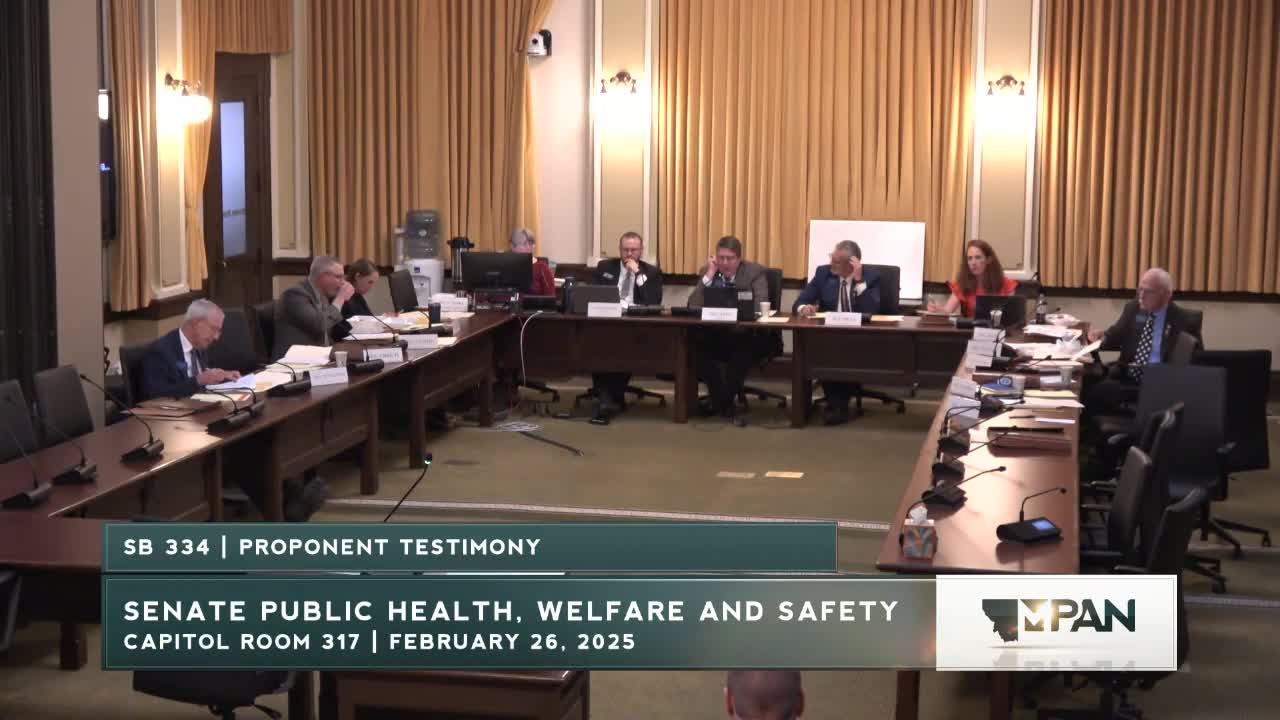
Senate Public Health Committee heard Senate Bill 334, a proposal to pursue Medicaid expansion through a federal waiver that would change eligibility and add community‑engagement requirements for able‑bodied adults.
Senator Matt Regier, sponsor, said the bill seeks to promote “self‑sufficiency” by combining Medicaid coverage with community engagement obligations under a federal waiver. The bill requires the Department of Public Health and Human Services to seek federal approval for a program that could change eligibility to persons at or below 100 percent of the federal poverty level and add participation conditions for able‑bodied adults, while preserving existing expansion if the waiver is not approved.
Health providers, tribally run health centers and advocacy organizations testified strongly against the bill. Stacey Anderson, representing the Montana Primary Care Association and multiple medical groups, and tribal representatives warned that work or engagement requirements and tighter eligibility would cause large numbers of people to lose coverage. Alyssa Snow spoke for three tribes and said the policy would “disproportionately impact the native population” and asked the committee for a do‑not‑pass recommendation.
The Confederated Salish and Kootenai Tribes’ health officer, Joe Durglow, said redetermination burdens already forced many tribal members to lose coverage during recent federal redetermination processes and that the proposed changes would further destabilize care and tribal health‑system capacity.
Sponsor Regier criticized the fiscal note for inconsistent assumptions and said the proposal includes a sunset and a backstop: if CMS does not approve the waiver the state would default to current expansion rules. The committee heard DPHHS administrators and Medicaid financial staff as informational witnesses to answer technical questions about enrollment, costs and federal waivers.
No committee vote was taken at the hearing.