Get Full Government Meeting Transcripts, Videos, & Alerts Forever!
Get email alerts on the Building Safety topic
No spam. Unsubscribe anytime.
Sponsor argues state buildings should meet modern fire‑suppression standards; fiscal note raises big costs
Summary
Senate Bill 331 would require automatic fire‑sprinkler or suppression systems in state‑owned buildings. Sponsor highlighted life‑safety benefits; the departmental fiscal note described hundreds of millions in retrofit costs and urged careful targeting or exemptions.
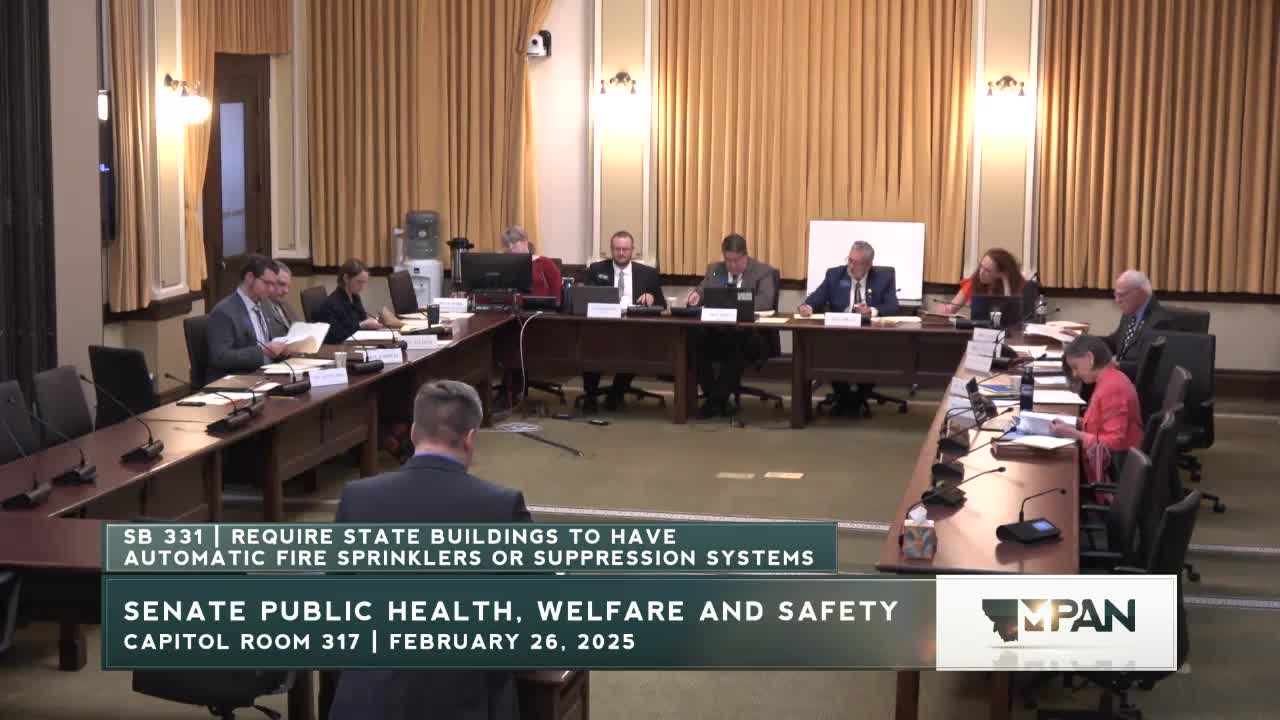
Senate Public Health Committee heard Senate Bill 331, which would require the Department of Labor and Industry to include in the State Building Code a requirement that any building owned or operated by the state have an automatic fire sprinkler or fire suppression system installed.
Senator Jeremy Trebas, sponsor, said the measure is about life safety and protecting sleeping occupancies, assembly spaces and high‑occupancy state buildings. He noted retrofits have been completed on large public complexes in the past and said sprinklers can reduce property loss and improve life‑safety outcomes.
Technical witnesses from the Department of Labor and Industry, the Department of Administration and the Department of Transportation provided informational testimony and answered technical questions about code adoption and building inventory. Bureau Chief Eric Copeland and other agency staff noted the state owns thousands of buildings — the fiscal note estimates about 23.7 million square feet of state‑owned facilities — and that an estimated 90 percent of that inventory could require sprinklers under the bill.
A department fiscal analysis estimated retrofit costs in the $20–$25 per square‑foot range, which scales to an estimated mid‑hundreds of millions of dollars for the full inventory. The fiscal note highlighted secondary costs such as upgrades to domestic water systems on some campuses and flagged particular operational impacts, for example on small residential projects and historic properties.
Sponsor Trebas suggested targeted amendments or exceptions — for example for small structures, historic properties or certain residential units — and said the safety benefits may merit a phased approach. The committee took no final action.