Get Full Government Meeting Transcripts, Videos, & Alerts Forever!
Get email alerts on the Public Safety And Mental Health topic
No spam. Unsubscribe anytime.
First‑responder groups push for workers’ comp coverage of PTSD; supporters cite suicide prevention and treatment access
Summary
Proponents told the House Business and Labor Committee that House Bill 5 52 would treat post‑traumatic stress disorder resulting from work‑related traumatic events as a compensable injury for first responders, expanding access to treatment; self‑insurer groups warned of long‑term costs and broader fiscal impacts.
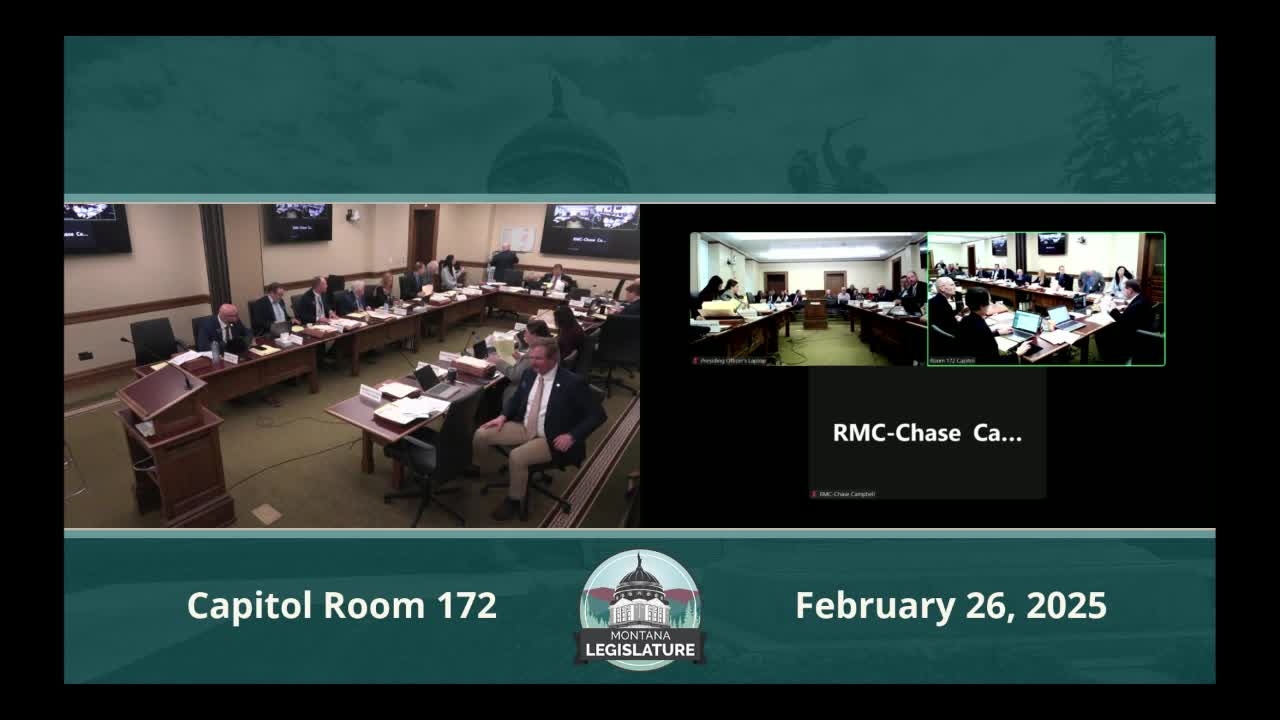
Representative James Reavis introduced House Bill 5 52, which would provide workers’ compensation coverage for post‑traumatic stress disorder (PTSD) arising in the course and scope of certain first‑responder employment. The sponsor described the bill as a narrowly tailored measure to secure treatment access for firefighters, law enforcement officers, dispatchers and emergency medical personnel after traumatic events.
Proponents — including the Montana State Firefighters Association, the Montana Police Foundation, Montana Professional Firefighters, the Montana Sheriffs and Peace Officers Association, chiefs and chaplains, treatment providers and a state retirement representative — described a range of clinical and operational arguments for the bill. They said first responders face repeated traumatic exposure and that early, coordinated treatment reduces the risk of suicide, preserves careers and lowers long‑term costs associated with untreated mental health conditions. Derek Mitchell, a behavioral health coordinator, noted existing peer support structures but said clinicians and inpatient care are required for many cases. Matthew Quackenbush, a psychotherapist who treats first responders, described successful modern PTSD treatments and urged legislative action.
Proponents cited other jurisdictions that have enacted similar laws (Idaho and multiple other states) and referenced National Council on Compensation Insurance (NCCI) and state examples showing no increase or reductions in comp rates after enactment. Chiefs and sheriffs told the committee that without a workers’ compensation pathway, some first responders lack a coordinated medical record and timely access to specialists.
Opponents from the Montana Self Insurers Association raised fiscal concerns. Peter Strauss said workers’ compensation provides guaranteed benefits with no balance billing and that expanding coverage would impose long‑term costs on municipalities, counties, schools and other self‑insured employers. He warned that temporary benefits in workers’ compensation can persist for extended periods and that programs guaranteeing care could shift significant costs to employers and rate pools.
Committee members asked about fiscal estimates, how the bill interacts with retirement and disability systems, and whether coverage would be limited to temporary disability rather than permanent disability. Sponsor Reavis said the bill targeted temporary benefits to manage costs and noted the state retirement administration and other proponents worked on definitions and diagnostic standards to limit over‑broad application.
Ending: The hearing ended with committee members asking for fiscal data and technical clarifications; proponents urged passage, citing suicide prevention and workforce retention, while self‑insurer representatives requested more detailed cost analysis.