Get Full Government Meeting Transcripts, Videos, & Alerts Forever!
Get email alerts on the Health Privacy topic
No spam. Unsubscribe anytime.
House approves measure expanding parental access to children’s medical information with amendments
Summary
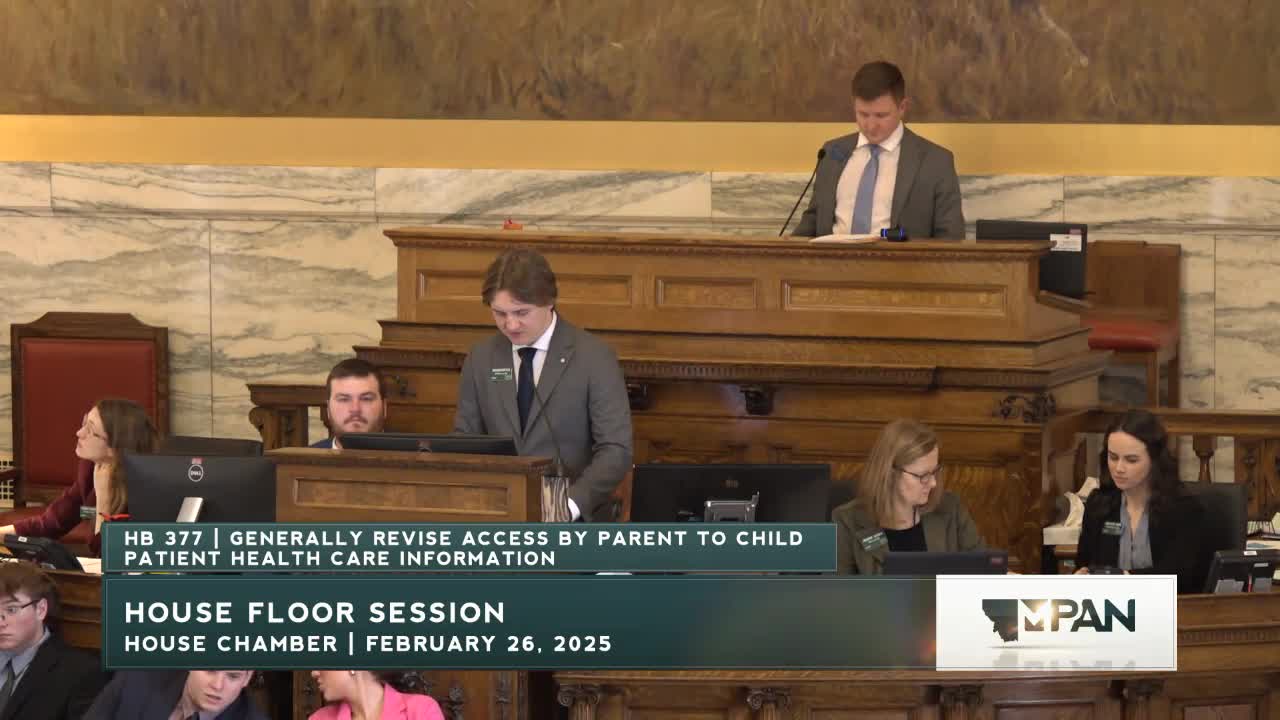
House Bill 377, which would expand most parents' access to a child’s health-care information, passed second reading 59–41 after floor debate over exceptions, HIPAA compliance and safeguards for at-risk children.
The House recommended House Bill 377 do pass after debate over parental access, exceptions for child safety and compliance with federal privacy law.
Representative Nicole Nickel, sponsor of HB 377, said the bill "gives parents and guardians that are the primary caregivers the ability to see their children's medical records," and that it does not change mandatory child abuse or neglect reporting requirements.
Why it matters: supporters argued the measure restores routine parental access to records and corrects problems parents have faced with online patient portals and third-party medical apps. Opponents, including Representative Howell and Representative Reavis, warned the bill could create safety risks for minors in abusive situations and may conflict with federal HIPAA privacy rules. Representative Reavis cited 45 C.F.R. §164.502(g)(5), saying federal rules permit covered entities to withhold information when disclosure could endanger the individual.
Amendments and safeguards: sponsors and committee members said amendments were added to address some safety concerns, including provisions allowing a provider to limit disclosure when professional judgment indicates substantial harm could result. Representative Howell said he remained unconvinced the amendments were sufficiently protective of at-risk youth.
Outcome: the recorded second-reading vote was 59 in favor and 41 opposed; HB 377 passed second reading. Supporters said medical providers had reviewed proposed language and that the bill’s intent was to clarify access where a parent is the child's primary caregiver, while retaining reporting duties and certain confidentiality protections.