Get Full Government Meeting Transcripts, Videos, & Alerts Forever!
Get email alerts on the State Legislation topic
No spam. Unsubscribe anytime.
Senate committee advances bills on RV dealer protections, abandoned-vehicle liens, auto-repair standards and dental insurer transparency
Summary
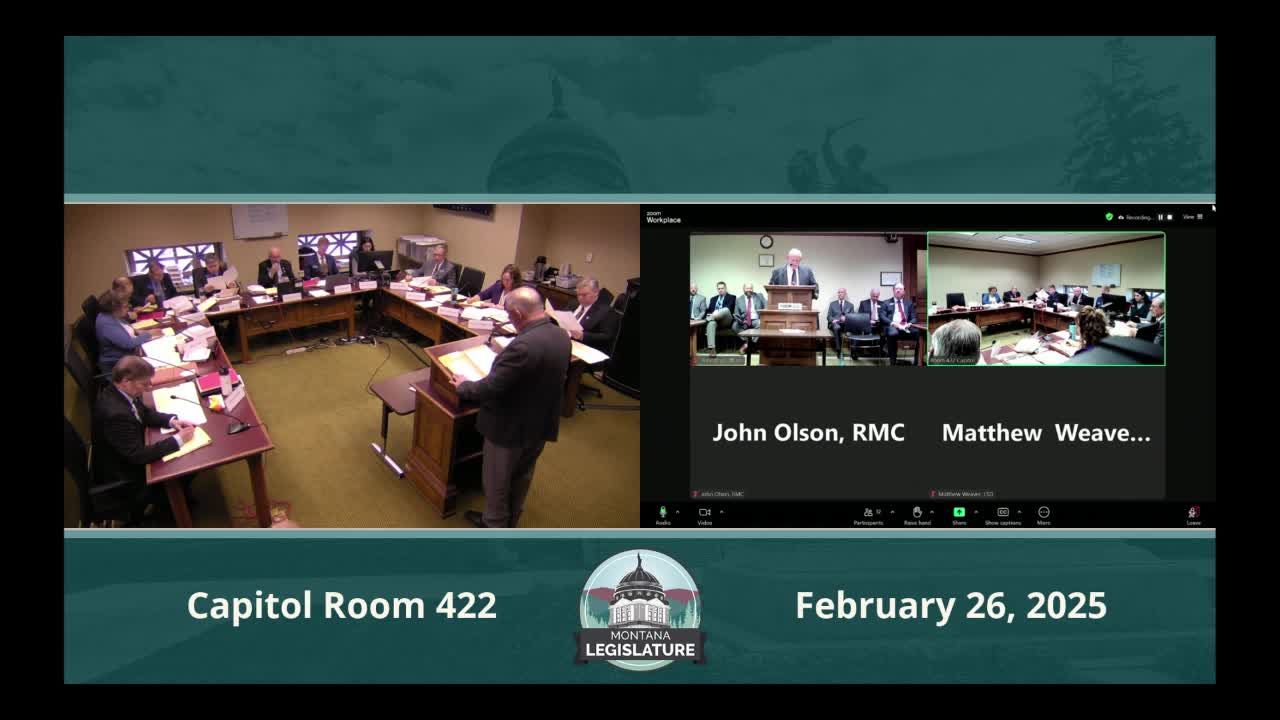
The Senate Business and Labor Committee met in Helena to hear testimony and advance a package of bills on recreational‑vehicle dealer protections, abandoned‑vehicle liens, standards for collision repairs and reporting by dental insurers, along with several licensing and administrative cleanup measures.
The Senate Business and Labor Committee met in Helena and took up several bills that would change how Montana treats vehicle dealers, abandoned vehicles on repair lots, collision repairs and dental insurance transparency.
Senate Bill 341: RV dealers and franchise protections
Sen. Barry Usher, sponsor of Senate Bill 341, told the committee the bill would “add recreational vehicles within the definition of motor vehicle” and clarify off‑premises sales rules so RV dealers can participate in shows out of county without inadvertently violating statute. Brandon Bretz, who identified himself as a family member in the 300‑employee Brett’s RV chain, said the measure “is simply about consistency and fairness for RV dealers.” Other industry witnesses described problems they see with manufacturer dealer agreements, specifically warranty reimbursement rates and manufacturer‑imposed facility or inventory requirements.
Committee members questioned whether the issue belongs in statute or should be negotiated privately between dealers and manufacturers. Senator Trebes asked how conflicts at off‑site shows are resolved; industry witnesses said disputes are typically handled between dealers and manufacturers and, in extreme cases, by suit against the manufacturer. Senator Usher pointed to an existing notice process through the Department of Justice that precedes litigation.
Senate Bill 373: Easier process for liens on abandoned vehicles
Dealers, repair-shop owners and lawyers told the committee that current law makes it costly and time‑consuming for a dealer or a repair facility to remove or clear title on vehicles customers abandon. Craig Charlton of the Smith Law Firm described SB 373 as a cleanup of the adjuster’s lien statute and said it would allow these claims to be filed in the appropriate “court of competent jurisdiction,” including small‑claims and justice courts, and would clarify clerks’ and sheriffs’ procedures for show‑cause notices and service.
Franchise dealers and trade groups said the change would let small businesses and rural dealers get quicker relief; repairers who testified described vehicles sitting for years on lots and said costs to dispose of or store them can exceed the vehicle’s residual value. During executive action the committee recorded that SB 373 passed the committee and was sent to the floor for further action.
Senate Bill 356: Manufacturer repair procedures and insurance disputes
Senate Bill 356 would require insurers, for purposes of determining covered repairs, to consider original‑equipment manufacturer (OEM) repair instructions and safety inspection checklists as the industry standard for collision repairs. Dozens of collision‑repair shop owners and industry representatives testified in favor, saying modern vehicles’ advanced driver‑assistance systems and manufacturer repair procedures are the state‑of‑the‑art instructions for safe repairs. John Macdonald of the Alliance for Automotive Innovation said OEM repair procedures are available to repair shops and that manufacturers provide centralized portals with technical guidance.
Insurance industry witnesses and parts and recycling trade groups opposed the measure, saying the draft language is vague and could force more costly procedures or parts, pushing premiums higher and shrinking consumer choice. Amy Grimales, representing a national casualty insurance association, argued the bill’s repair‑instruction and inspection language needed greater specificity. Opponents also said the bill as written risked favoring manufacturer guidance over reasonable, market‑based repair decisions and would raise administrative and claims costs.
Senate Bill 335: Dental loss ratio proposal draws sharp testimony
Senate Bill 335, introduced by Sen. Greg Hertz, would require dental insurers to report a dental loss ratio and return rebates if claims paid fall below a statutory threshold (the bill’s proponents described an 80% target). Dental providers and representatives urged enactment as a consumer‑protection measure; Michael Bowman, president of the Montana Dental Association, described consumer frustration and asked the legislature to require greater transparency. "Dental insurance ****. Why? There's no accountability to give her the benefits she pays for," Bowman testified, recounting a patient’s reaction.
Insurers warned of unintended consequences. Amy Grimales and other insurers pointed to actuarial work in other states showing that minimum loss‑ratio mandates can sharply increase premiums, reduce plan choice and in some cases cause carriers to exit markets. Testimony cited California and Massachusetts studies as evidence the policy can reduce access if not structured carefully. Several speakers urged a narrower reporting requirement rather than a mandate tied to rebate obligations.
Other items: licensing, workers’‑comp and unclaimed property
The committee also heard and largely supported several other, shorter items: House Bill 276 (modernizing service of process for occupational licensing and permitting electronic notice on an opt‑in basis), House Bill 241 (the psychology interstate compact to allow licensed Montana psychologists to practice across participating states by telehealth), Senate Bill 338 (allowing the workers’‑comp court to appoint a benefits custodian for minors or incapacitated claimants), and House Bill 164 (modernizing Montana’s unclaimed property law to reflect electronic banking and reduce inadvertent escheatment). Proponents said HB 241 and HB 164 would expand access to care and reduce administrative burdens; state agencies said HB 338 and HB 276 would improve procedural clarity.
What’s next
Committee members debated the scope and drafting of several measures—particularly SB 356’s repair‑instruction language and SB 335’s loss‑ratio mandate. Several committee members asked opponents and sponsors to consider narrower or clarifying amendments. The committee advanced multiple bills to the Senate floor for further consideration. Some measures passed the committee by voice vote; others passed with committee amendments. The committee scheduled additional executive action sessions to finish its remaining docket.
Ending
Committee deliberations showed recurring themes: lawmakers weighing when the state should intervene in private business relationships (dealer‑manufacturer contracts), balancing consumer safety and cost (auto repairs and dental coverage), and updating statutes to reflect electronic communication and telehealth. Sponsors, industry groups, insurers and consumer advocates signaled a continuing negotiation over exact statutory language as bills move to the full Senate.