Get Full Government Meeting Transcripts, Videos, & Alerts Forever!
Get email alerts on the Interstate Licensing Compact Psypact topic
No spam. Unsubscribe anytime.
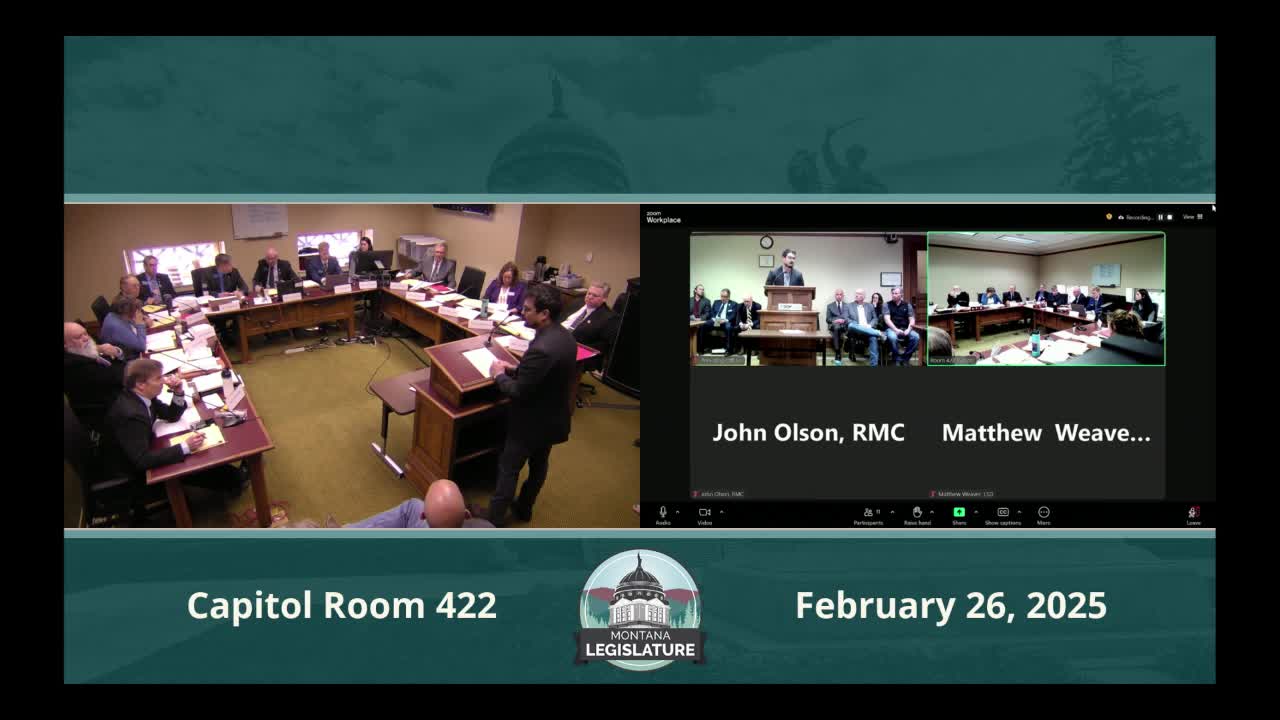
Committee hears compact to let Montana psychologists continue treating patients across state lines
Summary
Supporters told lawmakers HB 241 would let licensed Montana psychologists treat patients who move or travel to other compact states without requiring separate full licensure in each state; proponents said telehealth continuity benefits rural and caregiver populations, while DOL staff outlined oversight and rule steps.
House Bill 241 would adopt the psychology interjurisdictional compact (often called PSYPACT) to allow licensed psychologists to practice with patients temporarily or in other compact states under a streamlined authorization process. The Senate Business and Labor Committee heard proponents who said the measure would improve continuity of care, particularly by telehealth, for rural residents and caregivers.
Representatives of AARP Montana, the Montana Psychological Association and practicing psychologists described cases where long-term therapeutic relationships broke when a patient moved out of state or when a psychologist could not continue care for a relocated client. “I’ve had to tell a long-term patient who was moving that I would be unable to continue to work with him due to restrictions in practice laws,” Dr. Michelle McKinney said; she described concern for a veteran patient who was in crisis and later relocated.
Proponents emphasized that the compact provides a state-to-state authorization and requires participating states to enact enabling legislation; it does not eliminate licensing standards in each state but provides an expedited mechanism for practice across borders. Jane Amdahl of AARP said the compact is particularly valuable for caregivers who need access to mental-health services but live in geographically remote areas.
Kevin Bragg from the Department of Labor and Industry (Professional Licensing) provided procedural context and said the agency administers the board and would be available to answer implementation questions. Committee members asked whether the compact already exists elsewhere and how it differs from intrastate practice; proponents confirmed many states have enacted the compact and said it enables practice between participating states, not within a single state’s boundaries.
The sponsor asked the committee for a do-pass and suggested a House sponsor would carry the measure if it advanced through the Senate. Committee members asked clarifying questions about interstate eligibility and the sponsor said he hoped to arrange legislative carriers for further consideration.