Get Full Government Meeting Transcripts, Videos, & Alerts Forever!
Get email alerts on the Collision Repair Oem Procedures topic
No spam. Unsubscribe anytime.
Collision-repair bill clears committee amid insurer concerns about wording and costs
Summary
Senate Bill 356 would require insurers to accept OEM repair procedures and safety inspections for repaired vehicles. Collision-repair shops and automakers backed the bill as a safety standard; insurers and parts recyclers warned the language is vague and could raise repair costs and premiums.
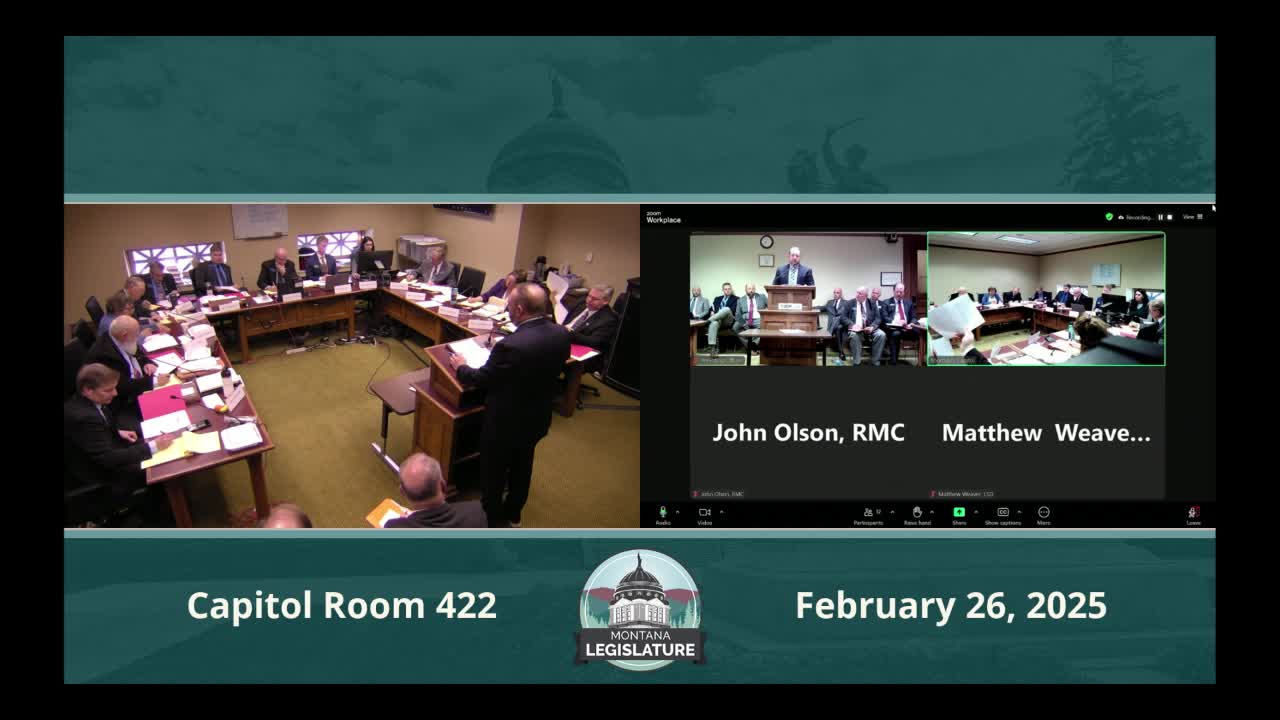
Senate Bill 356, a measure to require insurers to accept original-equipment manufacturer (OEM) repair instructions and safety inspections for collision repairs, moved forward after a lengthy hearing that divided repair shops, manufacturers and insurers.
Collision-repair professionals and industry groups told the committee today that OEM repair procedures are the “gold standard” for safe, complete repairs on modern vehicles. “When we repair your vehicle, the manufacturer's directive and instructions are the industry standard,” Zach Yates of Montana Collision Repair Association said. John Macdonald of the Alliance for Automotive Innovation said advanced driver-assistance systems and modern vehicle safety systems make adherence to OEM procedures important for public safety: “Features including automatic lane-centering, adaptive cruise control, pedestrian detection and avoidance are now standard... In order to fix these, you have to have proper procedures in place.”
Proponents repeatedly said the bill does not mandate parts choices and is limited to repair procedures and safety inspections. Paul Flores, who operates a body shop and calibration business, told the committee the bill “has nothing to do with parts” and is about “identifying what standards we must follow in order to provide a safe and proper repair.” Several independent body shops and the Montana Auto Dealers Association also testified in support.
Opponents — including American Property Casualty Insurance Association representatives and major insurers — raised alarms about the bill’s wording, arguing that manufacturer materials contain guidance of differing specificity and that the bill as written could be read to require adherence to general checklists or position statements that are not repair procedures. Amy Grimales, representing the American Property Casualty Insurance Association, said the “repair instructions language we believe is vague” and cautioned the committee that the bill could increase costs for consumers.
State Farm’s representative said repair instructions that are general or vague should not be treated as if they were precise repair procedures because that could cause an “astronomical increase in your insurance premiums.” LKQ Corporation (aftermarket/recycled parts provider) and other parts firms sought time by phone to register opposition and said they could not participate remotely earlier in the morning; those opponents submitted written comments.
The sponsor, Senator Barry Usher, emphasized the bill’s public-safety focus and said it is not intended to alter individual insurance contracts about parts or to force buyers to purchase higher-cost policies. The committee advanced the bill by voice vote as recorded in committee minutes.