Get Full Government Meeting Transcripts, Videos, & Alerts Forever!
Get email alerts on the Income Tax topic
No spam. Unsubscribe anytime.
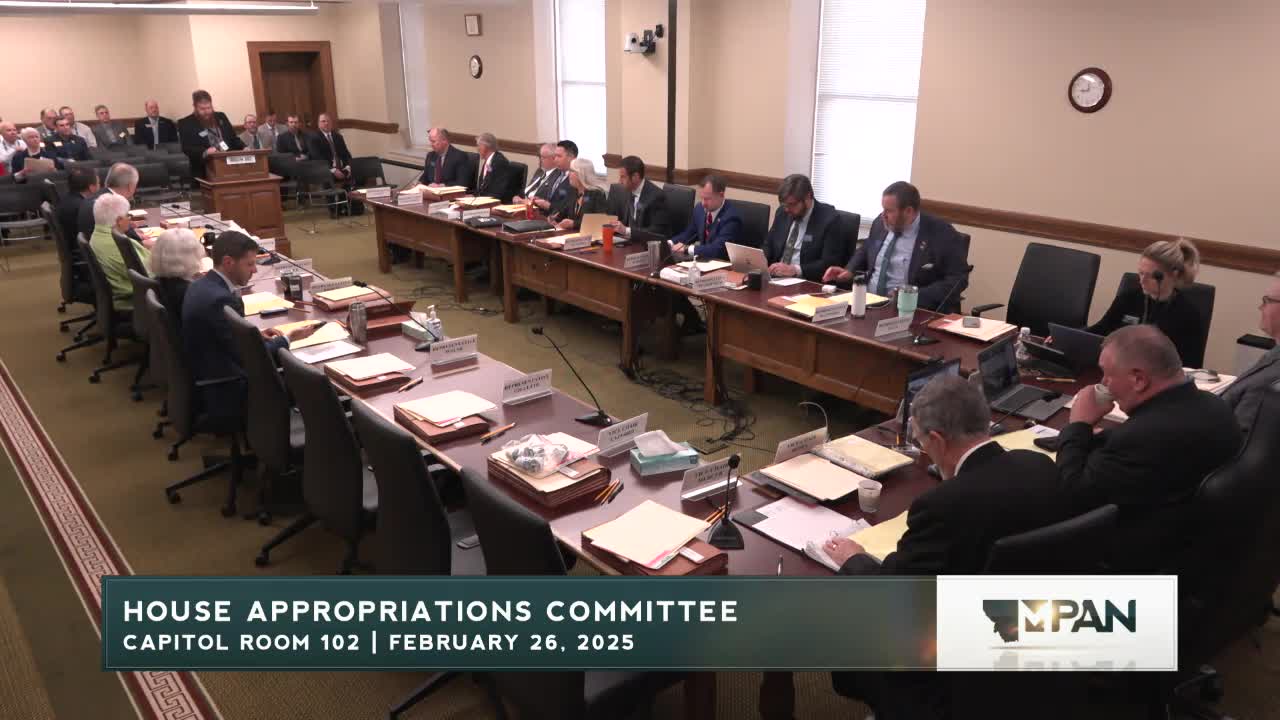
Committee hears House Bill 337 proposing broad income tax rate changes
Summary
A bill that would lower Montana's top individual income tax rate while raising lower brackets drew support from taxpayer groups and sharp opposition from budget, nonprofit and senior advocates who warned of large, sustained revenue losses concentrated at the top.
Representative Brandon Lerer, the bill sponsor, introduced House Bill 337 as an income tax reduction plan, saying, “This bill is an income tax reduction bill.” The measure would lower the top marginal rate and raise the bottom rate while expanding the top-of-bracket deduction over a two-year period, the sponsor told the committee.
The bill drew immediate organized support from the Taxpayers Association. Bob Storymon of the Taxpayers Association said the proposal is a different approach from prior cuts and “we support the bill,” while noting the fiscal note could be adjusted to match any funding level the Legislature prefers.
Opponents concentrated on the bill's fiscal impacts and distribution of benefits. Rose Bender of the Montana Budget and Policy Center urged the committee to reject the fiscal note, testifying the plan would send a disproportionate share of benefits to high-income Montanans. Citing an Institute on Taxation and Economic Policy analysis, Bender said that "66 percent of the tax cuts ... will go to the richest 20 percent" and that "the wealthiest 1 percent will get over $6,000 on average in annual" tax cuts while households near the median would receive roughly "$235" a year. Margie McDonald of Big Sky 55+ and Adam Jespersen of the Montana Nonprofit Association also testified in opposition to the fiscal note, warning the revenue loss could reduce future funding for services older adults and community nonprofits rely on.
Dylan Saarb of Catalyst Montana said the bill '2does not benefit low-income Montanans by and large'2 and recommended investing in services such as affordable housing and mental health rather than that scale of tax reductions.
Department of Revenue staff Finn McMichael and Jake Ford appeared as informational witnesses and answered technical questions from legislators about the fiscal note, inflation indexing and capital gains language. Committee members pressed technical and distribution questions: Representative Crow asked whether changes to the bill affected the statute for net long-term capital gains (15-32-103), and revenue staff explained a drafting change removed language describing an inflation factor and that it would need to be added back to avoid ambiguity.
Several members asked about the fiscal-note assumptions and distribution by income. Witnesses and proponents pointed the committee to handouts and analyses that break the state's taxpayers into quintiles and deciles and show both who pays and who would benefit. Committee members also asked for additional detail about how many households in the lowest quintile currently have no state income tax liability, and several witnesses said they would provide follow-up data.
The hearing closed without a committee vote. Committee members discussed the fiscal risk of a large, sustained revenue reduction and asked for an amended fiscal note to reflect bill changes already made on the floor and in committee.