Get Full Government Meeting Transcripts, Videos, & Alerts Forever!
Get email alerts on the Motor Vehicles Franchise Law topic
No spam. Unsubscribe anytime.
Montana panel advances bill to add RVs to motor-vehicle franchise protections
Summary
The Senate Business and Labor Committee advanced Senate Bill 341 to include recreational vehicles in the state's motor-vehicle laws and to clarify off-premises sales rules for RV dealers, proponents said the change would level the playing field with auto dealers and protect small, family-owned businesses from manufacturer practices.
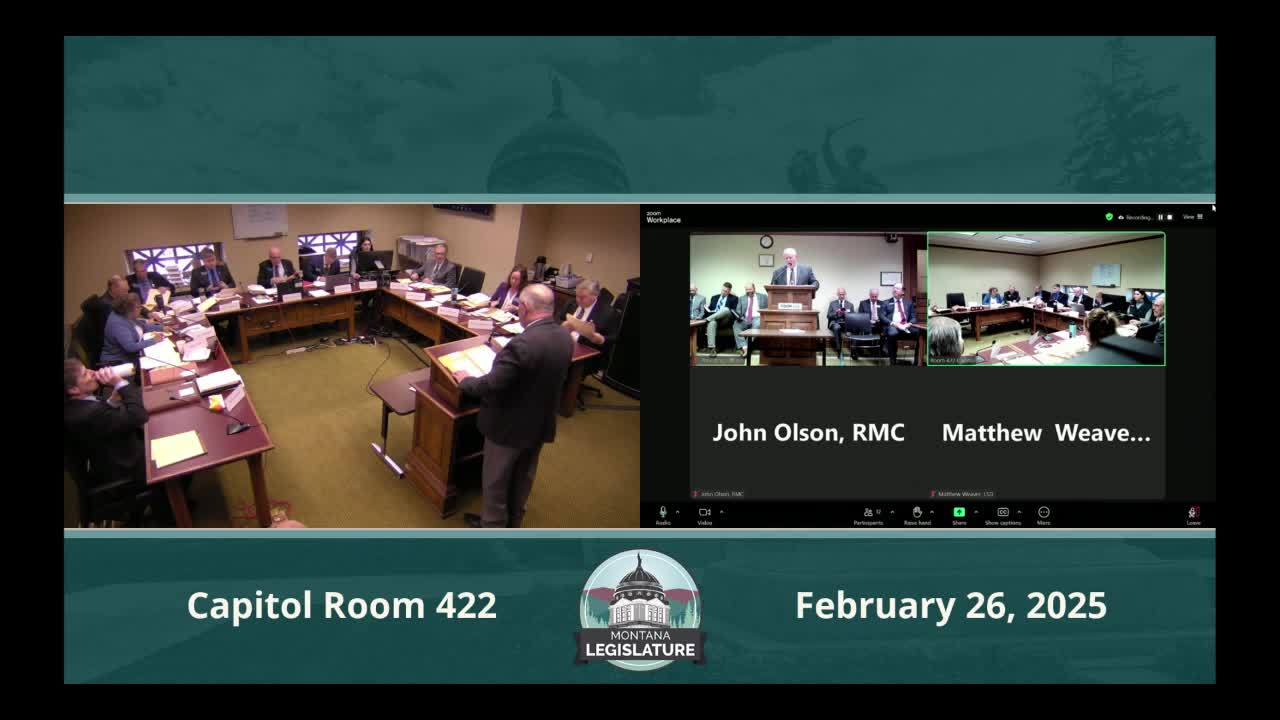
Senate Business and Labor Committee advanced Senate Bill 341 on a voice vote after proponents said the measure folds recreational vehicles into Montana’s existing motor-vehicle franchise protections and clarifies off-site sales rules for RV dealers.
The bill’s sponsor, Senator Barry Usher, said the change is “a pretty simple” clarification to include recreational vehicles within the definition of motor vehicle so RV dealers receive the same statutory protections other motor-vehicle dealers have already won. “Basically, it’s to include recreational vehicles within the definition of motor vehicle,” Usher said during his opening remarks.
Supporters — including RV dealers and dealer associations — told the committee the change is mostly about warranty reimbursement, territory protections and written, enforceable dealer-manufacturer agreements. Brandon Bretz, who identified himself as an operator of multiple RV stores in Montana, said, “Senate Bill 341 is simply about consistency and fairness for RV dealers.” He and other proponents said manufacturers sometimes reimburse dealers for warranty work at rates that leave the dealer subsidizing repairs; putting RVs under the motor-vehicle statute would change dealers’ legal leverage in those negotiations.
“We have to prioritize service work for customers who bought from us,” Bretz said in describing how warranty reimbursement practices affect shop scheduling. Eric Hinkle, who identified himself as general counsel and testified in support, described the bill’s amendments as “simple, common sense pieces of legislation that ultimately benefit RV dealers and consumers alike.”
Committee members asked whether manufacturers already resolve overlapping territories by contract and how the Department of Justice would be involved. Proponent Stewart Doggett said disputes generally are handled between dealers and manufacturers and in rare instances may become litigation. Senator Trebas pressed what would happen if two dealers of the same brand sought the same off-site show; Senator Usher noted the Department of Justice maintains a pre-event filing that can be used to deny or otherwise resolve off-site shows before they escalate.
The bill also extends to small, family-run dealerships that proponents said cannot afford the imbalance in negotiating leverage with large manufacturers. Doggett said some small dealerships cannot send a representative to Helena for hearings and must rely on laws that create “sideboards” around manufacturer-dealer relationships.
The committee adopted an amendment that clarifies franchise/territory language and later voted to advance the bill to the floor as amended.