Get Full Government Meeting Transcripts, Videos, & Alerts Forever!
Get email alerts on the Labor topic
No spam. Unsubscribe anytime.
Long public hearing on SB 426 pits worker advocates and trade groups over joint liability for unpaid construction wages
Summary
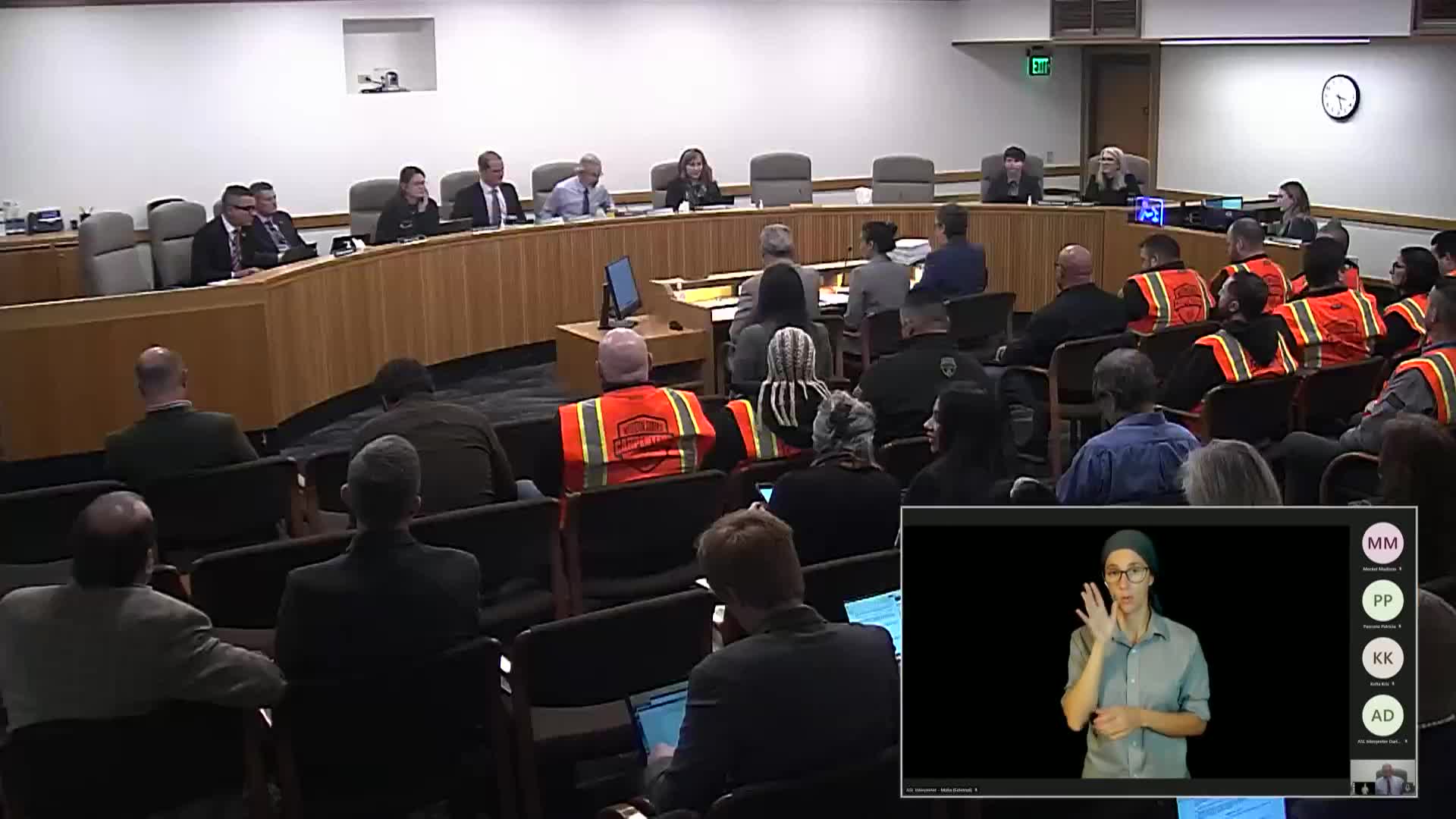
Senate Bill 426, which would make owners and general contractors jointly and severally liable for unpaid wages owed by construction subcontractors, prompted lengthy Feb. 26 testimony in the Senate Judiciary Committee from worker advocates, legislators and industry groups.
Senate Bill 426, a measure to hold property owners and direct contractors jointly and severally liable for unpaid wages owed by construction subcontractors, drew extensive testimony on Feb. 26 before the Senate Committee on Judiciary.
The bill’s staff overview said SB 426 would: render owners and direct (general) contractors jointly and severally liable for designated construction workers’ unpaid wages; authorize unrepresented employees, their representatives or the attorney general to file civil actions to recover unpaid wages and resulting damages; set a notice requirement and a six‑year statute of limitations; invalidate agreements that waive or indemnify an owner or direct contractor; and require certain disclosures and protections for workers’ personal information.
Supporters included legislators and worker advocates. Representative Andrea Valderrama, Representative Lisa Bridal, and Senator Mark Meek urged passage, saying wage theft is widespread and disproportionately harms immigrant, Latino and low‑wage construction workers. Testimony from worker advocates and legal aid organizations — including Javier Santizo and Boris Grusley of the Western States Regional Council of Carpenters, Martha Sonato of the Oregon Law Center, Kate Sussman of Northwest Workers’ Justice Project, and Haley Watson of the Oregon State Building and Construction Trades Council — described cases in which workers were not paid, the difficulty of using existing remedies, and the harms to families.
Several witnesses related specific figures or cases: Representative Bridal said workers filed claims with the Bureau of Labor and Industries alleging about $50 million in stolen wages between February 2022 and the reporting period, and that a printout of names from 2015–2022 spans more than 900 pages. Witnesses described cases where workers went unpaid for months and faced retaliation or human‑trafficking‑style coercion; one speaker characterized some labor‑broker abuses as human trafficking and urged stronger accountability for developers and owners.
Opponents — including builder and developer associations, multifamily housing representatives, bankers, the National Federation of Independent Business, and the Oregon Liability Reform Coalition — said the bill would create long‑term liability for parties far removed from wage payments and could raise insurance and construction costs, depress investment and harm small contractors and homeowners. Groups proposing alternatives urged fully funding the Bureau of Labor and Industries (BOLI), expanding or using the Wage Security Fund, and adding oversight, licensing, bonding and CCB (Construction Contractors Board) regulation for construction labor brokers.
Committee members and several witnesses discussed possible amendments: narrowing definitions, clarifying that primary‑residence homestead exemptions are not swept in, setting a shorter statute of limitations (Senator McLean suggested the federal Davis‑Bacon two‑year statute as a comparison), and exempting represented (union) workers where collective bargaining agreements provide binding remedies. Several participants agreed to form or join a small work group to draft clarifying amendments.
The committee did not vote on SB 426 during the hearing and the chair announced plans to convene a stakeholder work group to refine the bill language.