Get Full Government Meeting Transcripts, Videos, & Alerts Forever!
Get email alerts on the Criminal Procedure topic
No spam. Unsubscribe anytime.
Committee hears competing views on HB 2469 omnibus changes to indictments, preventive detention and misdemeanor reductions
Summary
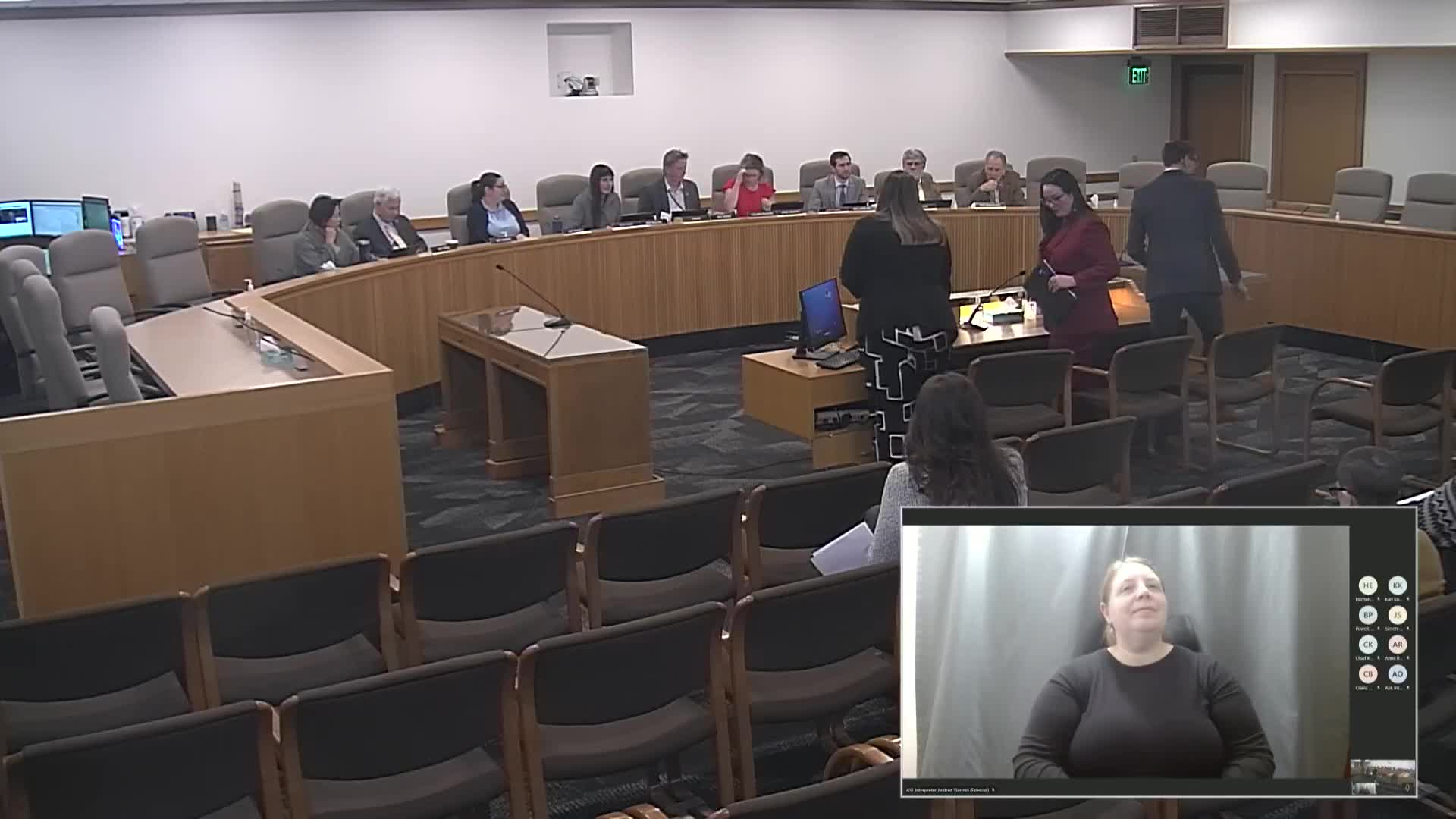
The House Judiciary Committee on Feb. 26 heard testimony on House Bill 2469, an omnibus criminal procedure bill that would change grand-jury timing, corrective authority over release decisions and let judges reduce some misdemeanors to violations.
The House Judiciary Committee heard public testimony Feb. 26 on House Bill 2469, an omnibus measure with provisions affecting grand-jury timing, preventive detention, the ability of judges to reduce misdemeanors to violations and authority to enter judgments for class A violations.
A staff presenter described the bill as requiring a district attorney to submit an indictment to the grand jury at least 10 days before trial and directing the prosecutor to file motions for admission of evidence seized without a warrant. The measure would also change when a court may amend release decisions after ordering preventive detention and permit judges to reduce certain misdemeanors to violations, proponents said.
Willie Chotzen (spoke as House member and bill sponsor) asked members to focus on evidence-code changes and said an amendment likely would delete the bill’s sentencing-related second section; he framed the principal aim as aligning Oregon with federal rule practice on impeachment by prior convictions. He told the committee that the bill’s misdemeanor-reduction tool is meant to restore judicial discretion that prosecutors have gained over recent decades, and to create post-adjudication paths for reduction and docket-based early resolution options in the face of rising misdemeanor filings.
Defense and public-defender witnesses supported parts of the bill. Grant Hartley, Multnomah County director for Metropolitan Public Defenders, said allowing judges discretion to reduce misdemeanors to violations could help courts manage a 17 percent increase in misdemeanor filings in 2024 and a projected 38 percent rise during the biennium. Hartley also urged caution on preventive-detention language and said constitutional safeguards requiring an adversarial hearing and proof by clear and convincing evidence must remain intact.
Prosecutors and local district attorney representatives opposed some provisions. A Multnomah County prosecutor, Amanda Bridal, testified in opposition to the misdemeanor-to-violation sections, saying that if a court reduces a misdemeanor to a violation at sentencing the court loses the ability to impose probation and related conditions — including no-contact orders and restitution-monitoring — and that victims could lose protections the court otherwise could impose. Bridal also argued that the bill as drafted could leave open the possibility that class C felonies previously reduced to misdemeanors might be reduced further to violations.
Other prosecutors warned that allowing repeated reopening of preventive-detention decisions based on changing circumstances would create duplicative hearings, delay cases and require victims to retestify in ways they said would be retraumatizing. Defense witnesses countered that the ability to seek reconsideration is important where new discovery or release plans emerge that could alter a court’s earlier determination.
Committee members were told some sections were still under negotiation; witnesses noted both agreement on specific targeted changes and ongoing disagreement on preventive-detention procedure and the scope of misdemeanor-reduction authority. The committee did not take action on the bill at the hearing.