Get Full Government Meeting Transcripts, Videos, & Alerts Forever!
Get email alerts on the Criminal Procedure topic
No spam. Unsubscribe anytime.
House Judiciary holds public hearing on DA-backed omnibus HB 2473 to streamline evidence and pretrial rules
Summary
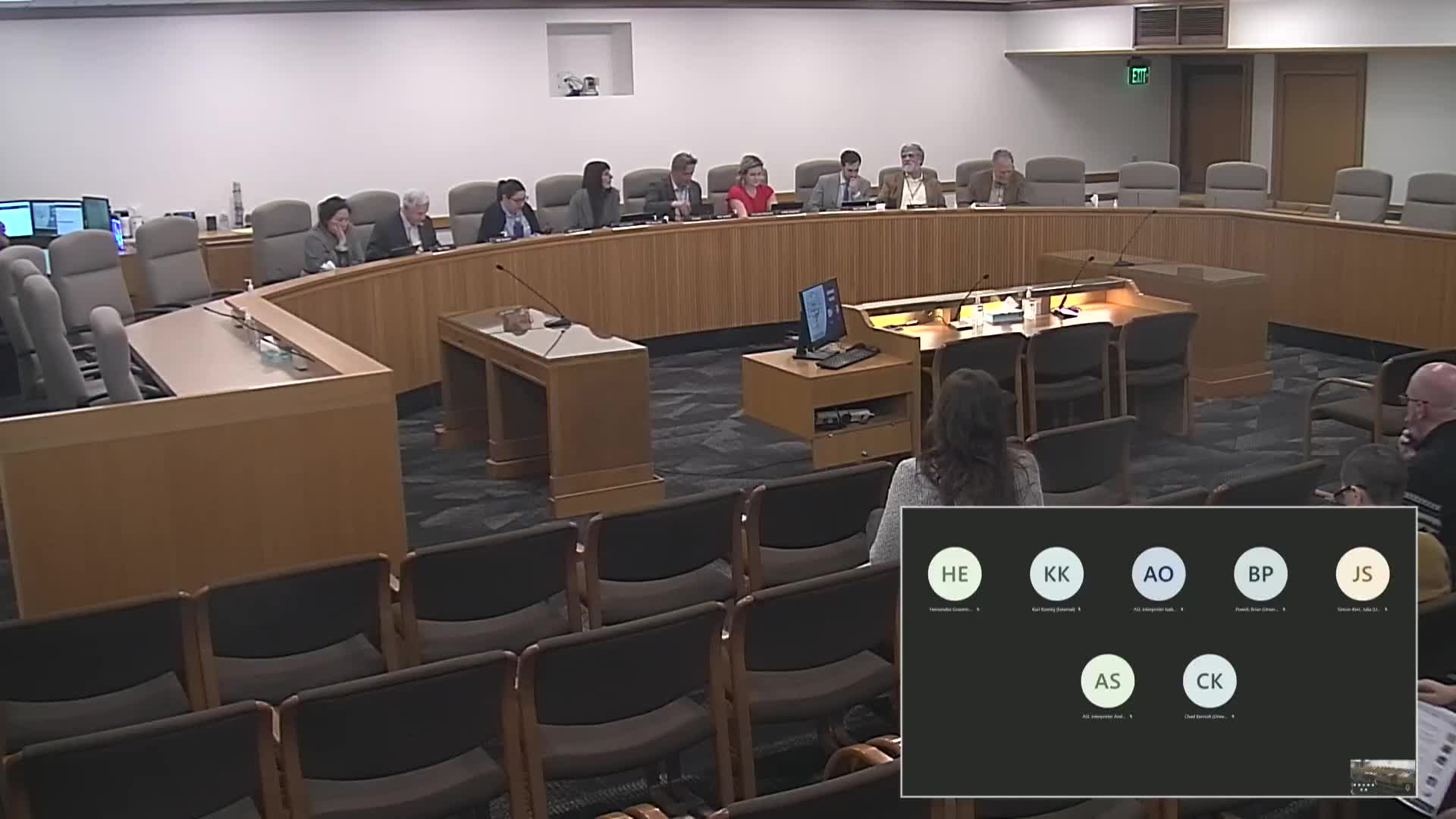
The House Judiciary Committee on Feb. 26 heard public testimony on House Bill 2473, an omnibus criminal-law package offered by the Oregon District Attorneys Association that sponsors described as a “process efficiencies” bill addressing record authentication, forensic imaging of digital devices belonging to deceased persons, grand jury recordation, preventive detention wording and allowing certified phlebotomists to perform investigatory blood draws.
The House Judiciary Committee on Feb. 26 heard public testimony on House Bill 2473, an omnibus criminal-law package offered by the Oregon District Attorneys Association that sponsors described as a “process efficiencies” bill addressing record authentication, forensic imaging of digital devices belonging to deceased persons, grand jury recordation, preventive detention wording and allowing certified phlebotomists to perform investigatory blood draws.
Mariel Moda, speaking on behalf of the Oregon District Attorneys Association and identifying herself as staff with the Multnomah County District Attorney’s Office, said the bill contains seven sections and described the major changes. Moda said Section 2 “relates to the process currently required to access digital information stored within the phone of a deceased person” and that the proposed change would let investigators preserve device data more quickly. “I wanna point out that this does not allow us to search the data. It only allows us to extract it to preserve it,” Moda said.
The bill would also amend a technical authentication statute that Moda said the group wants aligned with the federal counterpart to reduce inefficiencies; allow earlier release of grand jury recordings when both parties agree; and adjust statutory wording around preventive detention so that a prosecutor would not be required to have sought preventive detention at arraignment before seeking detention later if the defendant violates release conditions.
Defense representatives raised narrower, procedural concerns. Maylee Browning, legislative director for the Oregon Criminal Defense Lawyers Association, asked that language requiring the prosecutor to provide a custodian-of-record contact be retained in the authentication section, saying it “will save a lot of defense attorney and defense investigator time” when contacting companies such as Apple or Google. Browning also said the defense appreciated a DA-proposed clarification that a warrant would still be required to access the substance of data after an extraction.
Grant Hartley, Multnomah County director for Metropolitan Public Defenders, supported the proposal to allow earlier access to grand jury recordings but warned that the preventive-detention changes raise constitutional issues. Hartley cited United States v. Salerno (1987) and argued that preventive detention is an “incredibly powerful tool” that requires judicial procedures and proof; he said a later request for detention after a release-condition violation would still require the state to prove dangerousness by clear and convincing evidence.
Moda said the preventative-detention wording change is technical and intended to resolve a drafting ambiguity created after earlier bail-schedule reforms. She said the DA group is working with OCDLA and other stakeholders on several sections; one section was withdrawn for more negotiation. Moda also said Section 7, added at the request of chiefs of police and sheriffs, would allow certified phlebotomists to draw blood in criminal investigations to ease burdens on emergency medical services.
Committee chair called the public hearing closed after multiple parties expressed a mix of support for particular sections and requests for further drafting and negotiation. No committee action or vote was taken during the Feb. 26 hearing.
The bill remained under discussion among proponents and defense groups after the Feb. 26 committee hearing.