Get Full Government Meeting Transcripts, Videos, & Alerts Forever!
Get email alerts on the Rural Additional Dwellings topic
No spam. Unsubscribe anytime.
Committee hears competing testimony on bills to allow additional rural dwellings outside urban growth boundaries
Summary
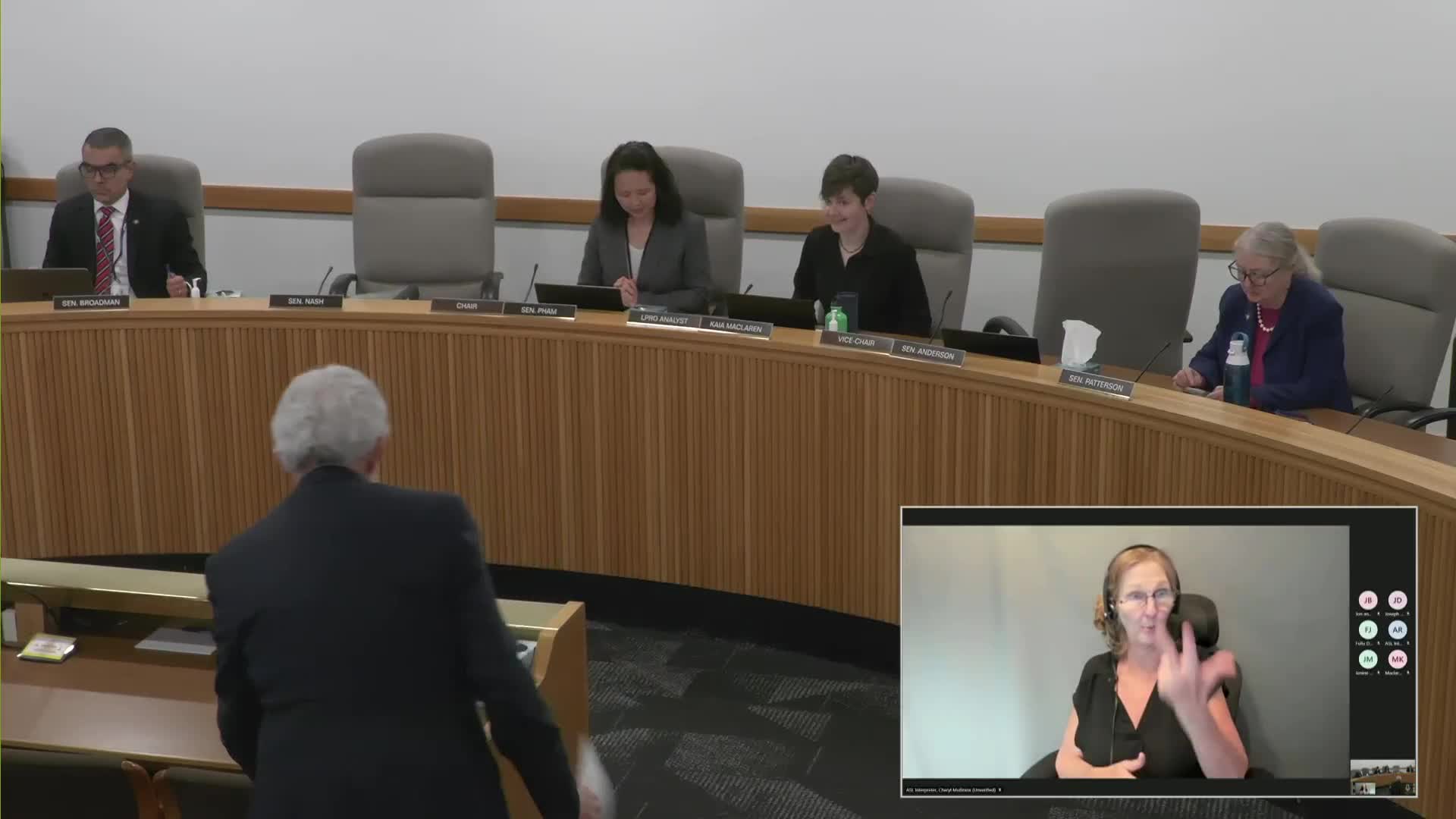
The Senate Committee on Housing and Development heard testimony Feb. 26 on SB 438 and SB 878, measures that would let homeowners outside urban growth boundaries add a second dwelling subject to statutory restrictions.
The Senate Committee on Housing and Development held a public hearing on Feb. 26, 2025 on Senate Bill 438 and Senate Bill 878, companion measures that would permit a homeowner outside an urban growth boundary to build an additional dwelling on the property under specified restrictions.
Under both bills, an additional dwelling would be allowed on land outside an urban growth boundary and would be subject to limits described in the bills. The bills differ in how they treat the owner and occupancy: SB 878 requires the owner of the tract to occupy a dwelling on the property; SB 438 requires the owner be an individual but would not require the owner to occupy the original dwelling. Proponents and opponents appeared in person and remotely and offered contrasting views about farmland protection, local planning processes and practical barriers to current approval pathways.
Proponents: Senators and local residents. Multiple senators and several rural residents and trade associations advocated for the bills. Vice Chair Anderson (Sen. Anderson) described a statewide housing shortfall and argued the bills would allow homeowners outside urban growth boundaries to add homes that could house relatives, farm successors and workers. Senators Todd Nash and David Brock Smith emphasized rural workforce and succession concerns. Senator Anderson told the committee, “we are in a housing crisis,” and cited past executive guidance on housing production and numbers proponents said the state still needs.
Several residents and industry witnesses supplied personal examples. Janine Manning, who owns an 89‑acre property in Curry County and operates a nursery, said she cannot find affordable housing nearby and that the bills would let her move onto family land and continue the business. Jody Hack, representing the Oregon Home Builders Association and Oregon Realtors, described conditional‑use hardship permits currently used to house relatives and said the permits are expensive, time‑limited and administratively burdensome; she called for a simpler, permanent option. Other supporters included Tammy Beatty (Clackamas County landowner), Derek Fultz (Turner resident), Joe Dawson (multigenerational farm owner and real‑estate broker) and Rich Angstrom (Oregon Property Owners Association).
Opponents: land‑use, conservation and farmland concerns. Carol Macbeth, staff attorney for Central Oregon Land Watch, testified in strong opposition and called the bills unnecessary because, she said, existing law already allows several pathways to place new dwellings on rural lands. She argued the bills would bypass county planning rules, threaten farm and forest industries and drive up land prices, making land unaffordable for new and expanding farmers. Macbeth also raised wildlife and habitat concerns, saying existing allowed dwellings are already stressing big‑game populations in parts of Central Oregon. Another opponent, Aileen Kaye, said county data on remaining land inside urban growth boundaries should be reviewed before changing law.
Key technical points raised: proponents proposed a 2,500‑square‑foot maximum for new dwellings and said the homes would not be allowed as vacation rentals; some speakers noted local rules already set ADU size and placement limits, and at least one witness described a 300‑foot separation requirement in her county that would make an ADU impractical for her property layout. Testimony also noted that current statutory pathways (conditional‑use permits, hardship permits and other exceptions) exist but can be costly, slow and subject to appeals in Land Use Board of Appeals (LUBA), limiting practical use by many families.
Next steps: The committee closed the hearing and did not vote on either SB 438 or SB 878 at this meeting. Committee members indicated they may request additional information from the Department of Land Conservation and Development (DLCD) and other agencies about existing approval pathways and county impacts before taking further action.
Why it matters: Supporters say the bills would add modest, localized housing supply in rural areas, help retain family farms and provide housing for workers; opponents say the bills risk eroding land‑use protections, driving up farmland prices and harming wildlife and rural economies. The committee hearing assembled firsthand accounts and policy arguments that will inform any future committee work.
The public hearing record remains open on the legislative information system for written testimony submitted to the committee.