Get Full Government Meeting Transcripts, Videos, & Alerts Forever!
Get email alerts on the Housing And Homelessness topic
No spam. Unsubscribe anytime.
Committee hears broad support for statewide shelter framework in HB 3644
Summary
A public hearing on House Bill 3,644 drew testimony from shelter providers, cities and advocates who said the bill would create consistent standards, expand eligibility for innovative shelter models and stabilize funding and operations for frontline shelter workers.
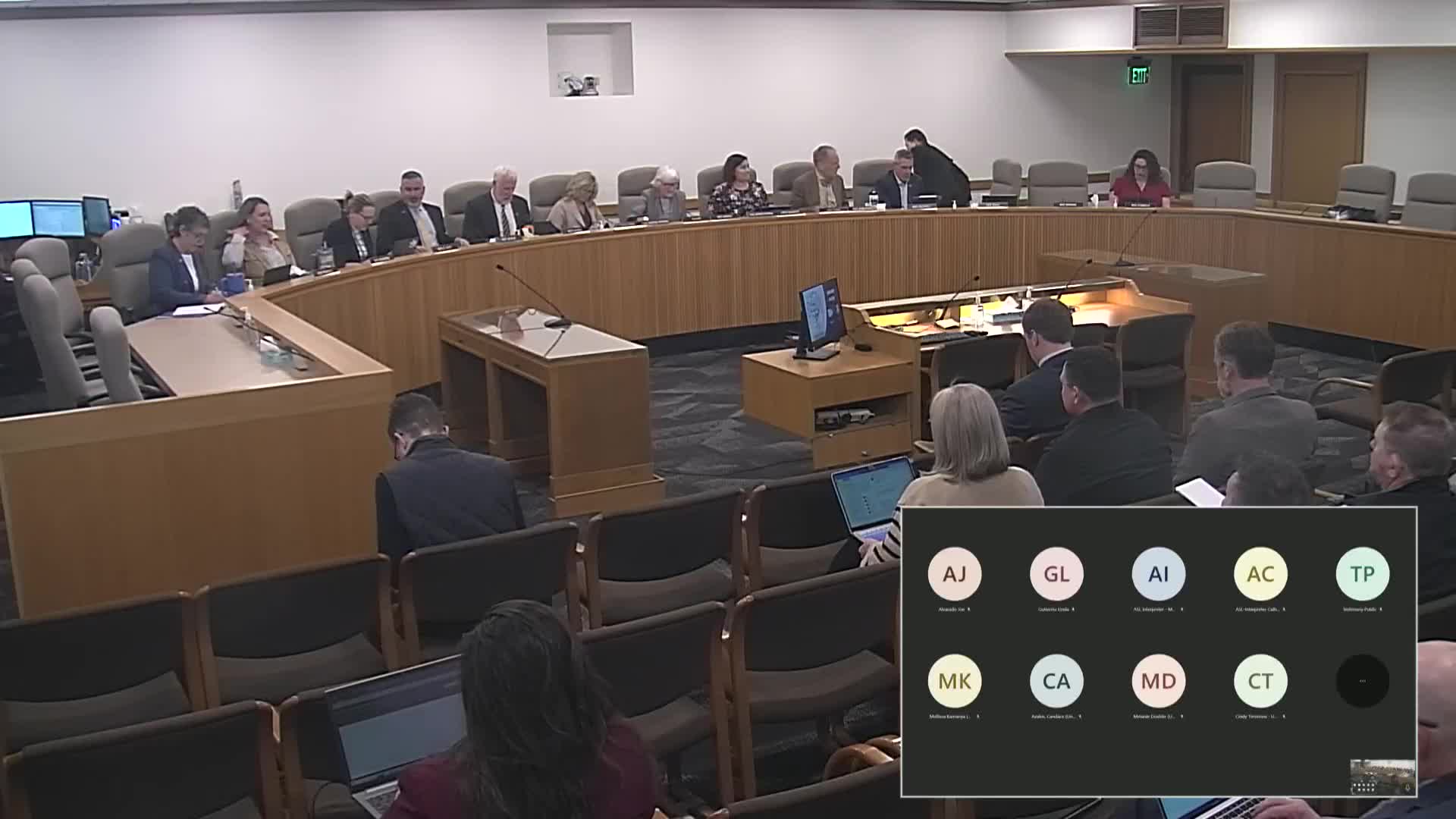
Lawmakers on the House Committee on Housing and Homelessness heard hours of public testimony Wednesday on House Bill 3,644, the governor-backed bill to create a statewide framework for shelters and shelter funding.
Supporters told the committee the bill would bring consistency and regional coordination to a patchwork of emergency responses, while preserving local flexibility. Kevin Cronin, policy and advocacy director for Housing Oregon, said the measure “is about good statecraft,” adding that it gives shelter providers “a common language making it easier to work together, measure success, and improve outcomes.”
The bill sets standards for shelter operations and eligibility while allowing regional adaptation, witnesses said. Shannon Vilhauer, executive director of Habitat for Humanity of Oregon, urged lawmakers to back the bill’s statewide shelter system, saying it would stabilize a system that has relied on ad hoc emergency responses. “Oregon shelter providers meet these humans where they are with compassion and care,” she said, and noted the scale of recent state emergency response work: “By June of this year support over 4,800 shelter beds. We house 3,300 households and prevent another 24,000 households from experiencing homelessness.”
Cities and local providers described shelter types that have not historically qualified for state funding but that produce good outcomes. Alexandra Ring, housing and land use lobbyist for the League of Oregon Cities, highlighted the bill’s inclusion of the Safe Temporary Emergency Placement Sites (STEP) category, saying tiny-home villages, pod villages and safe parking programs should be eligible for state funds. Ring also referenced a funding figure tied to the shelter framework, saying “Included in this bill is 217,000,000 for this newly created shelter framework.”
Mayor Karen Knudson of Eugene — which she said averages “more than 3,500 people experiencing homelessness in a city of just under 180,000 people, with only about 1,000 shelter spaces available” — described a local, diverse shelter network and urged state support for models that meet local needs. A video submitted by Eugene illustrated city-operated drop-in shelters, vehicle sites, village-style shelters and other approaches; the city asked that STEP-eligible models be funded so local programs can continue past June 2025, when some local funding runs out.
Smaller and rural providers and continuums of care said common terminology, outcome measures, and regional coordination would improve data tracking and service delivery. Melanie Dozier, chief human services officer for Access (the Jackson County continuum lead), said the lack of statewide shared language and standardized outcome expectations has “created inconsistencies” and made data tracking difficult.
Advocates also flagged safety and client needs: Sybil Hebb of the Oregon Law Center urged attention to survivors of domestic or gender-based violence and welcomed the bill’s alignment with best practices and inclusion of day centers in regional planning.
The committee paused public testimony after speakers from faith-based organizations, cities and nonprofit developers detailed local shelter efforts and urged passage. Chair Marsh closed the public hearing on HB 3,644 and moved on to a separate bill later in the session.
The record for the hearings remains available through the committee; lawmakers indicated more work will follow as the bill moves through amendment and budget processes.