Get Full Government Meeting Transcripts, Videos, & Alerts Forever!
Get email alerts on the Federal Funding topic
No spam. Unsubscribe anytime.
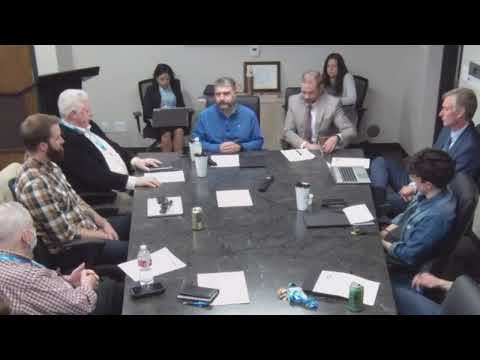
Casper council authorizes submission of six requests for congressionally directed spending
Summary
Casper city council gave staff direction to submit six congressionally directed spending requests covering stormwater, police technology, a firing range, bus sheltering, roadway improvements and a large sewer repair; councilors asked staff to return with prioritization and match details before committing to any local funding.
The Casper City Council directed staff to submit six congressionally directed spending requests to the city’s U.S. House member, covering stormwater and flood prevention, police technology, improvements to a live firing range, covered parking for transit buses, Robertson Road traffic improvements and repairs to the North Platte interceptor sewer.
Councilors said they supported making the applications so the congresswoman could consider them, but repeatedly pressed staff for details on required local matches and program-specific timelines before committing local funds.
The requests would use the congressionally directed spending process to seek federal support for infrastructure and public-safety needs. City staff described the six categories and said some requests could be routed through different federal programs (for example, water/wastewater pipe programs, FEMA, or public-safety grant tracks), which affects whether a local match will be required. Staff said some discretionary requests may carry no match while programmatic grants often do.
City staff outlined the six requests and key context: stormwater collection and flood prevention; police-technology investments (described as broadly covering body cameras, digital forensics and aerial drones); improvements at a live firing range for law-enforcement training; covered parking and gate upgrades for federally funded transit buses; roadway improvements on Robertson Road intended to address traffic flow near a proposed bridge and development; and continued federal support for the North Platte interceptor sewer, a long-running sanitary-sewer rehabilitation estimated by staff at roughly $40,000,000 for the whole project.
Councilors focused most of their questions on the police-technology request, where staff and Chief Black explained possible uses and limits. The police chief described drone capability for quick scene assessment, saying drones could “get there within 90 seconds” and provide a hovering aerial view that first responders could use before officers arrive. Councilors raised privacy and policing-style concerns and emphasized that technology should not replace frontline staffing; staff said the grant would not reduce sworn staffing levels and that cloud storage and digital-forensics tools would create ongoing operating expenses.
Councilor Gamroth and others asked what the typical local match would be if a program required one; staff said that matches vary by program and that some discretionary funds the congresswoman controls have required no match while other federal programs can require a 20% match or other amounts. Staff and councilors discussed an example figure: a hypothetical $3,000,000 award with a 20% match would require $600,000 of local or other funding. For the North Platte interceptor sewer, staff said the full project is far larger than any single congressional request, so the city would seek a portion of needed funding.
After discussion, the council gave staff direction to move forward with submitting all six requests and to return to council with prioritization guidance and clearer match estimates before the city would commit local funds for any required match. Several councilors asked staff to treat prioritization as a second-stage decision point if the congresswoman indicated support for some requests but not others.
Councilors and staff noted the federal process remained uncertain and could require multiple application cycles to secure funds; staff said the congresswoman’s discretionary support can produce quicker answers, while programmatic grants may require repeated attempts.
The city manager and other staff said they would coordinate next steps with the congresswoman’s office and bring additional details back to council on timelines, likely matches and which federal programs each request would be routed into.
Planning and budgeting questions were left open: councilors asked staff to avoid promising local match funds now and to return with specific funding commitments if any match obligations arise.
Ending: Councilors agreed the city should at least pursue the opportunity of congressional directed spending and then re-evaluate commitments once program and match details are known.